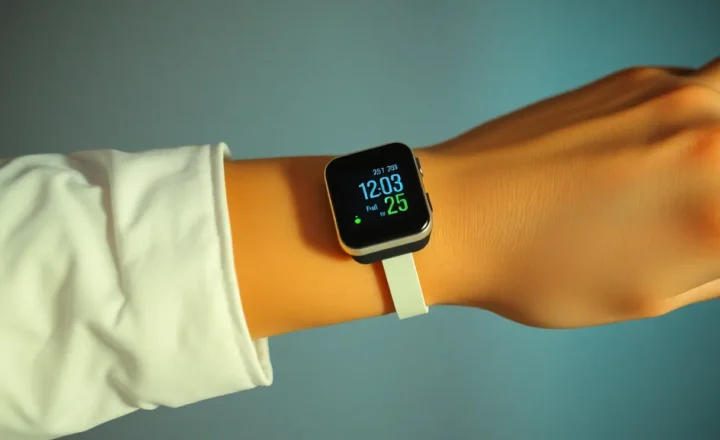
Why Your Fitness Tracker’s Calorie Count Is Almost Always Wrong

Maya Chen
March 1, 2026

You finish a run, glance at your wrist, and feel a rush of satisfaction: 487 calories burned. You log lunch in your app—maybe a sandwich and an apple—and watch the numbers balance. By evening, you’ve hit your target almost perfectly. Except you almost certainly haven’t. The calorie counts on your fitness tracker and in your food app are, in most cases, wrong. Sometimes wildly wrong.
That’s not because the companies are lying. It’s because estimating energy expenditure and intake is genuinely hard. Understanding why your numbers are off—and what to do about it—is one of the most practical things you can learn about wearable tech.
How Your Tracker “Knows” What You Burned
When you wear a fitness tracker, it’s not measuring calories. It’s measuring proxies: heart rate, movement, sometimes skin temperature. Those signals get fed into algorithms—often proprietary, sometimes based on decades-old research—that try to guess how much energy your body used.
The math usually goes something like this: your heart rate correlates with oxygen uptake. Oxygen uptake correlates with metabolic rate. Metabolic rate, over time, correlates with calories burned. In lab conditions, with chest-strap heart rate monitors and controlled exercise, that chain holds up reasonably well. On your wrist, during real life, it breaks down.

Optical heart rate sensors—the green LEDs on the back of your watch—read blood flow through your skin. They’re great for detecting that your heart is beating. They’re much less precise at measuring exactly how fast, especially during high-intensity activity, in cold weather, or on darker skin tones. Even small errors in heart rate compound quickly when you’re extrapolating to calories. A 5-beat-per-minute mistake over an hour can swing your burn estimate by 50 to 100 calories.
Then there’s the baseline. Most devices estimate your resting metabolic rate from age, weight, height, and sex. That’s a population average. Your actual resting metabolism might be 10 or 15 percent higher or lower. If the baseline is wrong, everything built on top of it is wrong too.
The Individual Variation Problem
Your body is not the average body. Two people who weigh the same, run the same pace for the same time, can burn noticeably different amounts of energy. Running economy, muscle mass, fitness level, genetics—all of it matters. Fitness trackers don’t have that data. They use formulas derived from studies of groups, then apply them to you as an individual.
Exercise calories tend to get overstated. Studies have repeatedly found that wrist-based trackers overestimate energy expenditure during activity, sometimes by 20 to 30 percent or more. The more intense or irregular the exercise, the bigger the gap. Yoga, weightlifting, and interval training are particularly hard to estimate because the relationship between heart rate and calories is less linear.

Food logging is the other half of the equation, and it’s arguably worse. When you enter “grilled chicken salad” or scan a barcode, you’re relying on a database. Portion sizes are almost always guesses. “Medium” apple or “large” apple? Did you add dressing? How much oil was in the pan? Restaurant entries are notoriously inaccurate—the same dish can vary by hundreds of calories depending on who made it. And most people underreport what they eat, studies show, sometimes by 30 percent or more.
What You Can Actually Trust
So what’s the point of tracking at all? The numbers might be wrong, but they’re often wrong in consistent ways. If your watch says you burned 2,100 calories yesterday and you’ve been maintaining weight, that 2,100 might be your effective baseline—even if your true burn is 1,900 or 2,300. The absolute number is suspect; the trend over time can still be useful.
Relative comparisons work better than absolutes. A 30-minute run probably burns more than a 30-minute walk. Your Tuesday workout likely burned more than your Monday rest day. Your tracker is decent at ranking activities; it’s lousy at giving you a precise calorie figure for any single one.
Some people find that ignoring calories entirely and focusing on steps, heart rate zones, or sleep improves their relationship with the device. Others use the numbers as a rough guide—a nudge to move more or eat a bit less—without treating them as gospel. The mistake is assuming that because the number looks precise, it is precise.
The Bottom Line
Fitness trackers are useful tools. They motivate, they gamify, and they surface patterns you might not notice otherwise. But the calorie counts—both in and out—are estimates built on shaky foundations. Treat them as ballpark figures, not scientific measurements. If your goal is weight change, use the scale and how you feel as primary feedback. Use the tracker to stay consistent and honest with yourself about activity. Just don’t let a three-digit number on your wrist define your day.