Why Semiconductor Nationalism Is Reshaping the Tech Map

Halima Okafor
February 25, 2026

For decades, chips were a global business. Design in one country, fabricate in another, package somewhere else, ship everywhere. The supply chain was optimized for cost and capability, not sovereignty. Then the shortages hit, geopolitics sharpened, and suddenly every major economy wants its own fabs, its own supply chain, and its own guarantee that it won’t be cut off. Semiconductor nationalism isn’t just policy—it’s redrawing where tech gets built and who controls it.
From Just-in-Time to Just-in-Case
The old model was lean. Chipmakers concentrated advanced fabrication in a handful of facilities—mostly in Taiwan, South Korea, and increasingly China. Everyone else designed, outsourced, or bought. When demand spiked or a pandemic disrupted logistics, the fragility of that system became obvious. Car plants idled for lack of microcontrollers. Graphics cards and game consoles vanished from shelves. Companies and governments learned that the most critical technology of the 21st century depended on a few nodes in a few places.
The response has been a push for redundancy and local control. The U.S. CHIPS Act, the E.U. Chips Act, and similar efforts in Japan, India, and elsewhere are subsidizing new fabs and R&D with the explicit goal of bringing more production home—or at least to friendly soil. It’s no longer enough to have the best design or the biggest market. You want fabs in your jurisdiction so that in a crisis, or in a conflict, you’re not at the mercy of someone else’s export controls.
Where the Fabs Are Going
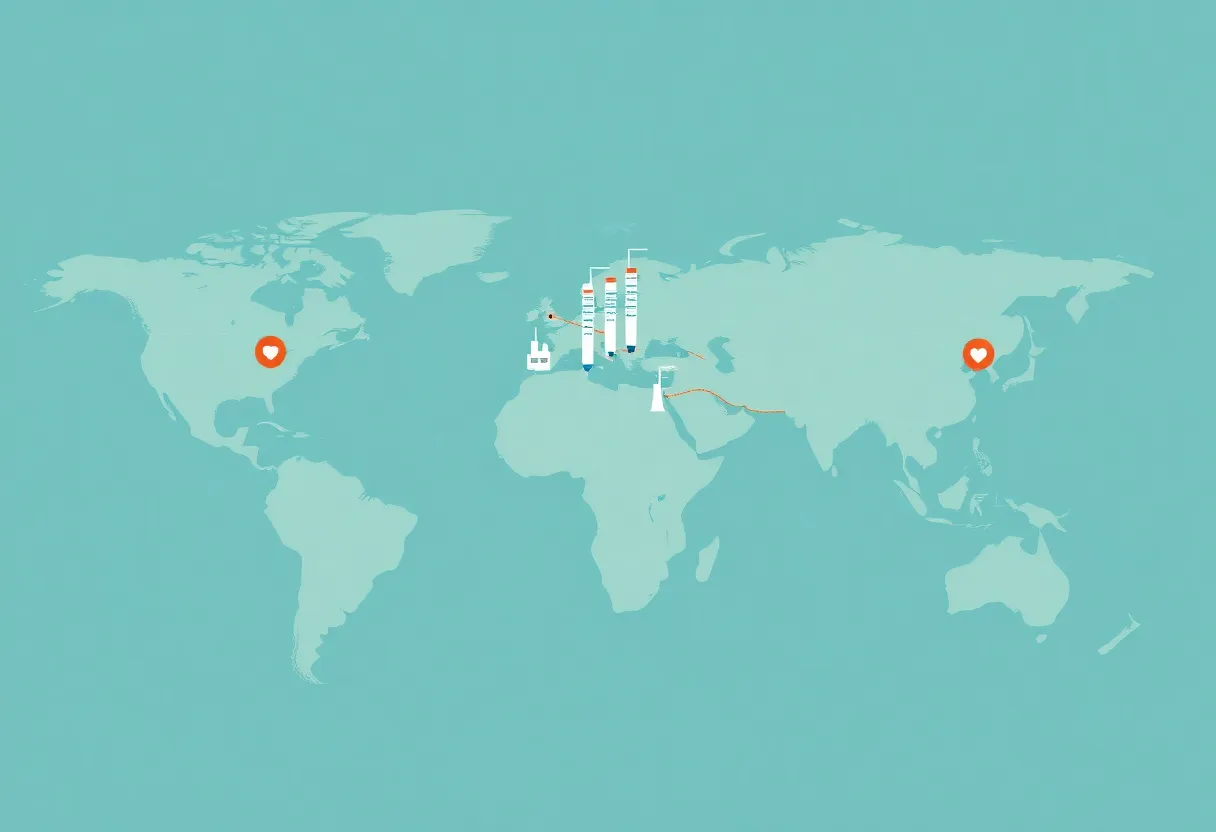
Taiwan and South Korea still dominate the cutting edge. TSMC and Samsung make the chips that power phones, GPUs, and servers. But new money is flowing to the U.S., Europe, and Japan. Intel is building in Ohio and Arizona. TSMC is building in Arizona. Samsung is expanding in Texas. The E.U. wants state-of-the-art fabs on the continent. Japan is pouring billions into reviving its semiconductor base. China is racing to build capacity and reduce dependence on Western tools and Taiwanese production.
Each of these moves is expensive and slow. A leading-edge fab costs tens of billions and takes years to bring online. Subsidies help, but they don’t guarantee success. Talent, water, power, and supply chains for materials and equipment all have to align. What you get is a more distributed map: not one or two centers of gravity, but several. That means more resilience and more competition for the same pool of engineers and equipment.

What It Means for Tech
For the industry, nationalism means higher costs and more complexity. Duplicating fabs across regions is inefficient. Companies that once sourced from the best bidder now have to balance politics, subsidies, and supply security. Export controls on advanced tools and designs have already restricted what can be sold to China; that, in turn, accelerates China’s push for self-sufficiency. The result is a splintering of the global market—not quite separate tech spheres, but a world where geography and policy matter as much as performance and price.
For consumers and businesses, the short-term effect is mixed. In the best case, more capacity and redundancy mean fewer shortages and more stable supply. In the worst case, duplication and protectionism mean higher prices and slower innovation as resources are spread across more projects. Either way, the era of treating chips as a purely global commodity is over. Where your chip is made, and under whose rules, is now part of the equation.
The Talent and Tool Squeeze
Building fabs isn’t just about money. It requires specialized engineers, process know-how, and access to the extreme ultraviolet (EUV) and other equipment that only a handful of companies make. As more regions race to stand up fabs, they’re competing for the same pool of talent and the same queue of machinery. That can mean delays, wage inflation, and bottlenecks. It also means that “onshoring” or “friend-shoring” isn’t a flip you switch—it’s a multi-year build that depends on global supply chains for the tools that build the chips. The nationalism is real, but the ecosystem is still global.
The Long Game
Semiconductor nationalism is reshaping the tech map for the long haul. It’s a bet that security and sovereignty are worth the cost of redundancy—and that the next crisis or conflict will make that bet pay off. Whether it leads to a more resilient global supply chain or a more fragmented and expensive one depends on how far governments go and how well the new fabs perform. One thing is clear: the map is no longer what it was, and it won’t go back.