Why Esports Leagues Have Struggled to Build Sustainable Business Models

Kevin Lam
July 7, 2026
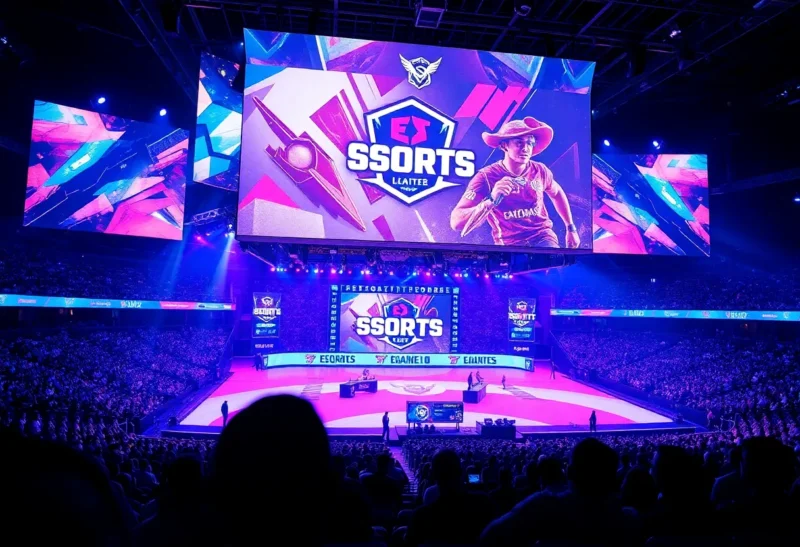
Esports had a moment where it seemed on the verge of achieving parity with traditional sports as a live entertainment business. Riot Games’ League of Legends Championship Series, Activision Blizzard’s Overwatch League, and Valve’s tournament ecosystem all pointed toward a future where city-franchise models, media rights deals, and stadium events would create an entertainment industry with the durability and revenue profile of the NFL or the Premier League.
That future has not arrived, and the path toward it has proven to be far more difficult than the venture capital and media rights deals of 2017–2021 suggested. The Overwatch League in particular—the most ambitious attempt to directly replicate traditional sports franchise models—has effectively wound down. Team Liquid, FaZe Clan, and other major organisations have undergone significant restructuring. The promised media rights windfalls have not materialised at the scale that made franchise slot prices defensible. Understanding why illuminates the genuine structural differences between esports and traditional sports that the boom-era optimism overlooked.
The Franchise Model Assumption
The North American franchise model for sports—stable team membership, no promotion/relegation, shared revenue from centralised broadcasting and licensing—has produced enormous value for franchise owners in traditional leagues. The Dallas Cowboys, New England Patriots, and New York Yankees are worth billions of dollars as franchises, partly because franchise scarcity creates value that grows with the league’s overall revenue.
Esports operators in 2018–2020 explicitly modelled this. The Overwatch League sold city-franchise slots for $20 million for initial markets, rising to $30–60 million for expansion slots. The Valorant Champions Tour partnership program, Call of Duty League, and League of Legends Partnership Program (LCS/LCK/LPL) all required substantial buy-in from teams in exchange for league stability and a share of league revenue.
The assumption was that centralised league control by the game publisher would produce the same dynamic as the NFL’s commission structure: stable membership, rising franchise values, and revenue growth from media rights and sponsorship that would reward early slot purchasers. This assumption had a fatal flaw: in traditional sports, the league owns the sport. In esports, the publisher owns the game.
The Publisher Control Problem
Riot Games owns League of Legends. Activision Blizzard owns Overwatch. Valve owns Counter-Strike. The game that a league is built around can be abandoned, changed, or damaged by decisions the team owners have no input on. This creates a structural risk that doesn’t exist for a Dallas Cowboys owner—the NFL won’t fundamentally change the rules of football or discontinue the sport.
Blizzard demonstrated this risk concretely. Overwatch 2, launched in October 2022, replaced Overwatch with a free-to-play version that moved from 6v6 to 5v5 gameplay, changed the hero roster and balance, and altered the viewing experience. The transition damaged player enthusiasm for competitive Overwatch, reduced viewership, and was effectively a unilateral decision by the publisher that team franchise owners had no ability to influence or veto. The teams had purchased franchise slots in one game and found themselves competing in a materially different one.
This isn’t unique to Overwatch. Valve’s Counter-Strike 2 replaced CS:GO in 2023, forcing all CS:GO tournament ecosystems to adapt to a different game. Riot’s constant balance changes to League of Legends and Valorant change the competitive meta in ways that affect the quality of the on-screen product without team input. Publisher control over the game—the core product—means esports franchise owners are permanently dependent on a third party for the core of their value proposition.

Viewership and the Media Rights Gap
Traditional sports generate substantial revenue from media rights—broadcasters pay billions of dollars for the right to televise NFL, NBA, or Premier League games because those audiences are large, demographic desirable, and loyal. ESPN, Fox, NBC, and their equivalents compete aggressively for these rights.
Esports viewership is real—major tournaments like the League of Legends World Championship and CS:GO Majors draw millions of concurrent viewers on streaming platforms. But converting that viewership into media rights revenue has been difficult for several reasons:
First, esports viewership skews toward younger, ad-blocking-heavy audiences who watch on Twitch and YouTube rather than traditional broadcast TV. Traditional media companies have been unwilling to pay significant media rights fees for content that doesn’t deliver traditional TV audiences. Streaming rights deals (Twitch’s exclusive deal with Riot, YouTube’s deal with Activision Blizzard’s esports) have been modest compared to traditional sports rights—typically in the single-digit millions per year rather than the hundreds of millions that traditional sports leagues command.
Second, esports viewership is fragmented across games. The League of Legends audience is partly distinct from the CS:GO audience, which is partly distinct from the Valorant audience, which is largely different from the Fortnite competitive audience. Traditional sports have unified their properties under league umbrellas that deliver coherent audiences; esports audiences are distributed across many titles with different demographics and viewing behaviours.
Third, Twitch itself—the primary platform for esports viewership—has reduced exclusivity deals and changed revenue sharing terms in ways that reduced the revenue that publishers and leagues could extract from streaming rights. The platform’s advertiser revenue has been volatile, and the competitive streaming landscape (YouTube Gaming, Kick) has fragmented audiences further.
Sponsorship as the Primary Revenue and Its Limitations
Without substantial media rights revenue, esports teams and leagues have been primarily sponsorship-funded. Sponsor logos on team jerseys, naming rights for leagues and tournaments, and integrated brand activations within broadcasts and events are the core revenue. This model works in bull markets for brand spending and fails in contractions.
The 2022–2023 tech spending pullback reduced esports sponsorship significantly. Cryptocurrency companies—which had become major esports sponsors during the crypto boom of 2021—largely withdrew after the crypto market collapse. FTX, Celsius, and other crypto sponsors that had signed significant deals defaulted or disappeared. The loss of crypto sponsorship income directly coincided with league revenue shortfalls that contributed to team restructuring and league contraction.
Endemic gaming sponsors (hardware manufacturers, gaming peripherals companies, energy drinks, fast food) have remained, but at CPMs and deal sizes that don’t support the cost structure of large franchise organisations. Non-endemic sponsors—traditional consumer brands that might spend on traditional sports advertising—have been slow to enter esports at scale, partly because brand safety concerns and partly because the audience measurement tools for esports sponsorship are less developed than for traditional media.
Player Salaries and the Cost Structure
During the franchise investment boom, player salaries in top-tier League of Legends, Overwatch League, and CS:GO escalated significantly. LCS salaries in the $300,000–$500,000+ range for established players became common; Overwatch League minimum salaries were contractually guaranteed at $50,000 per year with health benefits included. Teams competed on salary to attract talent.
When revenue failed to match projections, these cost structures became untenable. Teams that had built rosters at peak-boom salaries found themselves with fixed costs that exceeded incoming sponsorship and prize money. The restructuring cycle—rosters cut, organisations contracted or dissolved—followed the pattern of any industry that overextended based on projected rather than actual revenue.
The talent market has since corrected: salaries have declined significantly in most titles compared to peak-boom levels. Some teams have moved to profit-sharing or revenue-sharing models that give players upside when the team performs well commercially rather than guaranteeing fixed salaries that exist regardless of revenue. These structures are more sustainable but require convincing talented players to accept risk alongside their organisations.

What’s Actually Working
The structures that have proven sustainable in esports are typically smaller in scope and closer to the existing gaming content economy than the traditional sports franchise model assumed.
Content creator integration. Teams that treat their players as content creators—generating streaming, YouTube, and social media content in addition to competing—have built revenue streams that aren’t dependent on tournament prize money or league sponsorship. FaZe Clan’s business model is primarily creator-driven; the competitive teams are a brand-building activity whose value comes from the content their players generate. This model scales with creator audiences rather than requiring live event attendance or broadcast rights deals.
Game-specific ecosystem tournaments. Valve’s CS:GO/CS2 Major system, which Valve funds and promotes but doesn’t directly control, has proven more durable than publisher-controlled leagues because the underlying game has a loyal competitive audience that doesn’t depend on organised franchise league infrastructure. The Major tournament format—eight tournaments per year with significant prize pools—supports teams and players without requiring the overhead of permanent league operations.
Regional grassroots ecosystems. In South Korea, China, and increasingly Southeast Asia, gaming culture and competitive infrastructure are integrated with broader entertainment economies in ways that provide more diverse revenue streams. LCK (the Korean League of Legends league) remains commercially healthy partly because Samsung, SK Telecom, and other Korean conglomerates have historical relationships with the gaming industry that produce stable sponsorship independent of global esports boom-bust cycles.
The Adjusted Expectations
Esports in 2026 is a meaningful entertainment category with real audiences and viable career paths for skilled players and creators. The adjustment is in scale: it’s not the $50 billion industry that boom-era projections suggested; it’s a niche entertainment business that works at modest scale within the gaming content economy, not at the scale of traditional major league sports.
The franchise model failures demonstrate that esports is structurally different from traditional sports in ways that matter for valuation. The game is not owned by the league. The platform is not controlled by the league. The audience is younger and watches differently. The sponsorship market is smaller and more volatile. A business model built on traditional sports assumptions applied to esports consistently produces shortfalls, while models built around the actual economics of gaming content—creator economies, game-specific ecosystems, endemic sponsorship—have proven more durable.
That recalibration is healthy. An esports industry scaled to its actual economics, rather to the projections of its peak investment phase, can sustain itself. It just looks different from the NFL—and that’s fine.