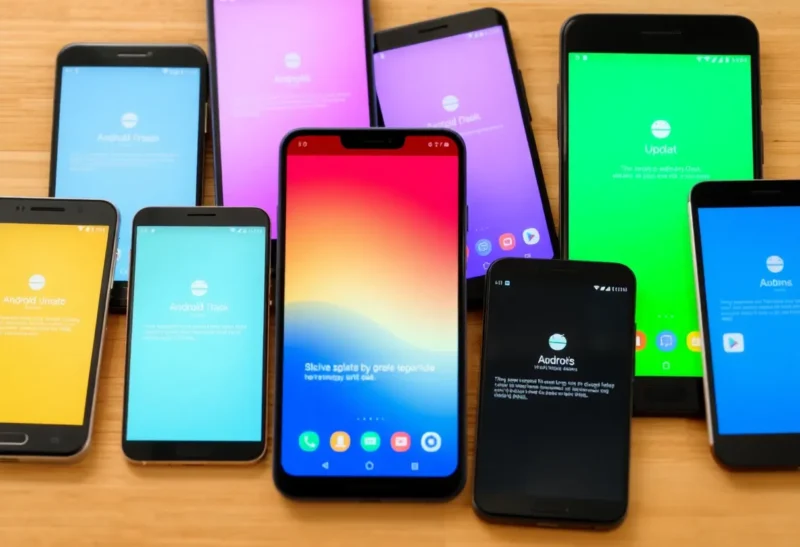
Android runs on billions of devices, but “Android” isn’t one thing—it’s a base (AOSP) that OEMs and carriers customize, test, and ship on their own schedules. The result is fragmentation: different phones get updates at different times, or not at all. Years after Google tried to fix this with Project Treble and faster security patches, the update experience is still a mess for most users. Here’s why fragmentation persists and what it actually costs you.
The Update Chain Is Long and Brittle
When Google releases a new Android version or a security patch, it doesn’t land on your phone immediately. It goes to chipset vendors (Qualcomm, MediaTek, Samsung Exynos), who adapt drivers and board support. Then it goes to device makers (Samsung, Xiaomi, OnePlus, etc.), who add their skins, apps, and carrier-specific tweaks. Then it often goes to carriers, who do their own testing and approval. Each step adds delay. A flagship might get the update in a few weeks or months; a mid-range or budget phone might wait a year or never get it at all. So “Android 15” on a Pixel and “Android 15” on a carrier-locked Samsung are not the same timeline or the same build.
That’s fragmentation: not just “different versions in the wild,” but different paths to the same version, with different quality and different timing. You can’t assume that because a security fix is in AOSP, your device has it. You can’t assume that a feature Google announced will show up on your phone in any predictable window. The update experience is still dictated by who made your phone and who sold it to you.
Treble Helped—It Didn’t Fix It
Project Treble, introduced with Android 8, separated the Android OS framework from vendor-specific hardware abstraction (HAL). The idea was to let Google push framework updates without waiting for chipset or OEM code. It did improve the situation: more devices get more updates, and the pace of major-version adoption has gotten better. But Treble doesn’t control when OEMs ship. It doesn’t control carrier approval. It doesn’t control how many devices each manufacturer chooses to support or for how long. So you still have a landscape where a Pixel gets years of fast updates, a Samsung flagship gets a few years on a slower schedule, and a budget or carrier-locked device might get one or two major updates—or none.
Security patches are a slightly different story. Google has pushed OEMs to ship at least monthly security updates for many devices, and some manufacturers have committed to longer support. But “committed” isn’t the same as “delivered.” Delays, skipped months, and devices dropped from the program are still common. So even on the security front, fragmentation means your experience depends on your brand and model. If a critical vulnerability is patched in AOSP today, your phone might get the fix in a week, a month, or never—and you often have no way to know until the update actually arrives.
How Long Will This Last?
Fragmentation is baked into Android’s model. Google has improved the plumbing with Treble and longer update commitments from some partners, but the fundamental chain—SoC vendor, OEM, carrier—isn’t going away. The only way to get a unified update experience would be for Google to ship directly to more devices (as with Pixel) or for OEMs and carriers to give up control. Neither is likely at scale. So expect fragmentation to persist. The best outcome is that more manufacturers extend support windows and speed up rollout; the worst is that budget and carrier segments continue to lag. Either way, the update experience will remain uneven for the foreseeable future.

What It Costs You
Fragmentation costs you in a few ways. First, security: if your device doesn’t get patches on time (or at all), you’re exposed to known vulnerabilities longer than someone on a faster-update path. Second, features and apps: newer Android versions and APIs enable better behavior in apps; if you’re stuck on an older version, you miss out or get a worse experience. Third, predictability: you can’t plan when you’ll get an update or whether you’ll get the next one. That makes it harder to trust the platform for anything that depends on staying current—privacy controls, new app features, or security hygiene.
For power users who care about updates, the practical advice is still to buy a Pixel or a device with a strong update promise (and even then, carrier variants can lag). For everyone else, the update experience is a lottery. Fragmentation isn’t just annoying—it’s a structural limit on how good Android can be for the majority of users.
Why OEMs Don’t Fix It
OEMs have little incentive to support every device for years. Testing and certifying updates cost money; so does maintaining code for old hardware. The business model is to sell new phones, not to keep old ones perfect. Carriers add another layer: they want to test and approve builds for their networks, and that adds delay and sometimes blocks updates entirely. So the fragmentation problem is economic and organizational, not just technical. Google can improve the base; it can’t force Samsung or a carrier to ship faster. Until the economics change—or until more buyers demand update guarantees—fragmentation will keep ruining the update experience for most Android users.
The iOS Comparison
Apple controls the full stack: hardware, OS, and rollout. When a new iOS version ships, it goes to all supported devices at once (or in quick waves). There’s no carrier approval delay for the OS, no OEM skin to maintain. The result is that most iPhones get updates for many years, on a predictable schedule. Android’s openness is a strength in other ways—different devices, price points, and features—but it’s a structural weakness for updates. The open ecosystem means many hands in the pipeline, and that pipeline is what keeps fragmentation alive. If you’re comparing platforms and updates matter to you, that difference is real.
What You Can Do
If you care about updates, vote with your wallet: buy devices with clear, long update commitments (Google Pixel, some Samsung flagships, and a handful of others) and avoid carrier-locked variants when you can. Check the manufacturer’s update policy before you buy—how many major versions, how many years of security patches. Unlocked phones often get updates before carrier versions. And don’t assume that “Android” means you’ll get what Google just announced. On most devices, it still doesn’t. Fragmentation isn’t going away soon; the best you can do is choose a device that’s on the right side of it.