What the Latest Brain-Computer Interface Trials Mean for Accessibility

Zara Nader
March 15, 2026
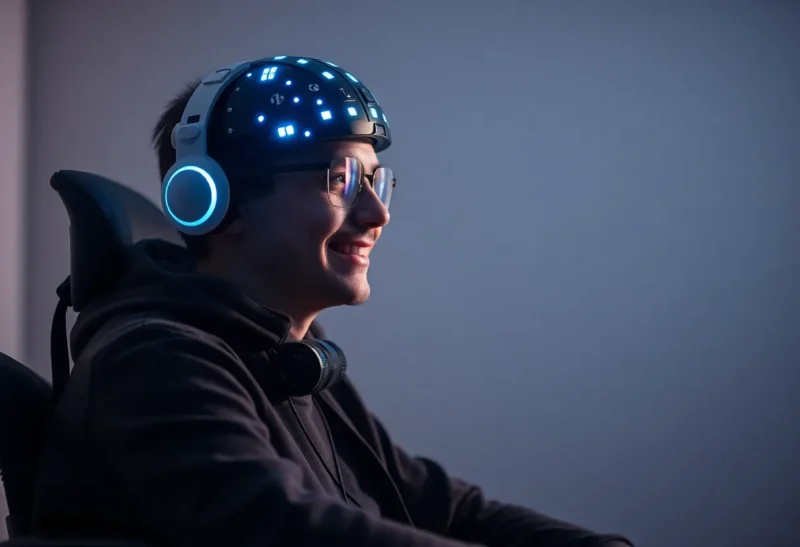
Brain-computer interfaces (BCIs) have moved from lab curiosities to human trials with real participants. Neuralink, Synchron, and academic groups are testing implants and non-invasive systems that let people control devices with their thoughts. For accessibility, the promise is huge: communication and control for people with severe motor impairment, ALS, or spinal injury. But the latest trials also show how far we are from general availability—and what has to go right for BCIs to become a real option for disabled users.
What the Trials Are Actually Showing
Recent BCI trials have demonstrated that people can control cursors, type, and even play games using signals decoded from the brain. Invasive implants (electrodes in or on the cortex) offer the highest bandwidth and precision; non-invasive options (EEG caps, for example) are easier to deploy but noisier and slower. The headline results are impressive: a participant with paralysis using a neural implant to type or move a cursor. What gets less attention is the long setup, calibration, and the fact that performance varies a lot between users and over time. The latest trials mean that the technology works in principle for accessibility—but “works in a lab with intensive support” is not the same as “available at scale.”

Why Accessibility Is the Right Frame
BCIs are often discussed in a general “human enhancement” or “future of computing” way. But the near-term use case that justifies the risk and cost of surgery (for invasive BCIs) is restoring communication and control for people who have lost it. For someone who can’t speak or move, a BCI that enables typing or operating a wheelchair is life-changing. Regulators and ethicists are right to focus on accessibility first: it’s where the benefit is clearest and the risk-benefit balance is most defensible. The latest trials are mostly aimed at that—people with severe motor impairment—and the results are a proof of concept that the pathway is viable.
Gaps Between Trial and Product
Trials run in controlled settings with expert support. Participants are carefully selected; calibration and tuning take time. Turning that into a product that a hospital or a family can deploy—and that works reliably at home—requires durability, easier setup, and better robustness. Invasive devices also face the challenge of long-term stability: tissue response, signal drift, and the need for repeat surgeries or revisions. The latest trials don’t yet solve those problems; they show that the core capability is there. Closing the gap to a deployable, maintainable product is the next phase.
Non-invasive BCIs avoid surgery but currently offer lower bandwidth and higher latency. They’re easier to try and scale, but they’re not yet at the point where they can match the communication speed that invasive systems can offer. For accessibility, both paths matter: invasive for those who can and want to pursue the highest performance, non-invasive for broader reach and lower barrier to entry. The latest trials include both; the accessibility story will depend on how both mature.
What Would Make BCIs a Real Accessibility Option
For BCIs to become a real option for accessibility, several things have to align. Regulation has to allow them for therapeutic use and ensure safety and efficacy. Payers (health systems, insurers) have to see enough evidence to support access. The devices have to be reliable enough that users and caregivers aren’t constantly debugging. And the interface—software, training, support—has to be designed with disabled users and clinicians in mind, not just engineers. The latest trials are a necessary step; they’re not yet sufficient for broad accessibility. But they do show that the direction is right and that the field is moving from “could it work?” to “how do we make it work for more people?”
Ethics and consent are especially important when the users are people with severe disability. Trials have to ensure that participants and families understand the risks and the experimental nature of the technology. Hype can create false hope; the responsible message is that BCIs for accessibility are promising and advancing, but not yet a standard of care. The latest trials add evidence; they don’t yet make the case for routine use. That balance—optimism about the trajectory and honesty about the timeline—is what the latest brain-computer interface trials mean for accessibility.
What the latest brain-computer interface trials mean for accessibility is this: the technology is real, the proof of concept is there, and the focus on restoring communication and control for people with severe impairment is the right one. The path from trial to product is still long—but for the first time, it’s a path that looks plausible. That’s what the latest trials mean: not “BCIs are here,” but “BCIs for accessibility are on the map.”