Using a Raspberry Pi as a Zigbee Backup Coordinator (Failover Basics)

Drew Morrison
April 7, 2026
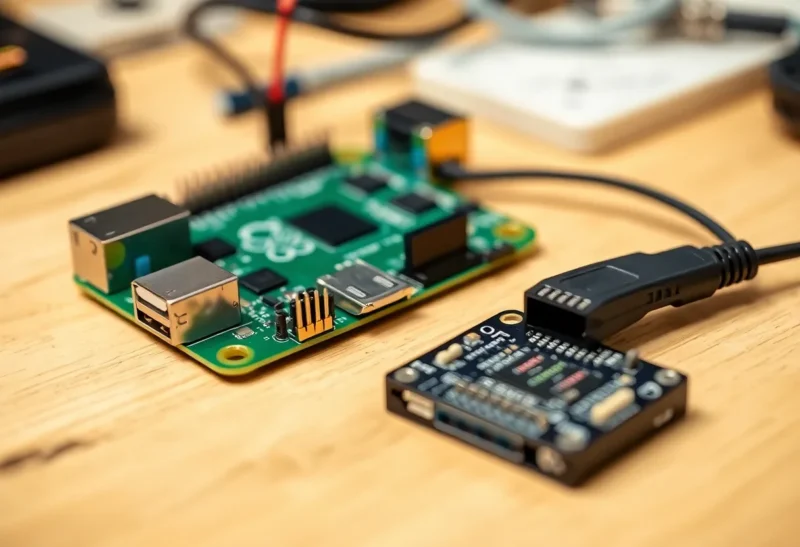
If you run a Zigbee mesh at home, your coordinator is the quiet tyrant of the whole system. Lights, sensors, and switches can chatter happily node-to-node, but when the coordinator goes away—USB stick dies, Pi SD card corrupts, power blip at the wrong moment—your evening suddenly becomes a troubleshooting seminar.
A Raspberry Pi is a popular home for coordinators because it is cheap, flexible, and easy to tuck near the center of the house. It is also a single board computer with storage that can fail. “Failover” in Zigbee is not as plug-and-play as adding a second Wi-Fi access point with the same SSID. Consumer Zigbee networks generally expect one active coordinator. That does not mean you cannot prepare for failure; it means your backup strategy is usually about recovery time and known-good backups, not magical hot-swapping.
This article covers practical basics: what a Pi-based backup plan looks like, what you can realistically expect, and the mistakes that turn a spare dongle into a second disaster.
We will not promise five-nines uptime for a $45 board. We will promise a calmer failure mode—one where you are following a checklist instead of factory-resetting your house.
Ground rule: one coordinator, one network identity
Zigbee’s topology is not a secret club rule—it is part of why the mesh works. The coordinator owns forming the network and holds key material. You cannot typically run two coordinators against the same logical network like clustered servers. What you can do is keep a standby path that restores the network identity quickly: a spare Pi imaged and ready, a known-good coordinator backup, documented steps, and disciplined hardware choices.

Think “fire drill,” not “live replica.”
What “backup coordinator” usually means in real homes
In practice, people mean one of these patterns:
- Cold spare hardware: a second Raspberry Pi plus a second coordinator radio, pre-tested but powered off, ready to receive a restored configuration.
- Coordinator NVM backup discipline: regular exports/backups from your automation platform (Home Assistant and similar) so you can rebuild the radio state after replacing hardware.
- Staged migration: moving the coordinator role intentionally during upgrades, with a checklist so you do not factory-reset your mesh by accident.
Automatic failover—two coordinators sharing load—is generally not the baseline DIY story. If you want true redundancy at higher complexity, you are usually looking at different architectures, multiple meshes, or commercial gear outside the Pi hobby lane.
Home Assistant reality: ZHA, Zigbee2MQTT, and what you are actually backing up
Most Pi-based coordinators sit under Home Assistant with either ZHA or Zigbee2MQTT. The operational details differ, but the backup principle is the same: your mesh is not “in the cloud”; it is a combination of radio firmware state and your automation configuration. Platform backups are necessary, but you should know whether they include coordinator network data the way you assume—verify for your integration and version rather than trusting vibes.
If you run additional services on the same Pi (Frigate, Plex, databases), you increase blast radius. A backup coordinator plan that ignores CPU contention and I/O latency is a plan that discovers mysterious dropouts later. Segregating “hub duties” onto a dedicated Pi is often cheaper than the time cost of intermittent RF weirdness.
RF hygiene: the backup Pi cannot fix a bad install
USB 3.0 noise is the classic Zigbee villain. A coordinator on a short cable jammed against a USB 3 disk enclosure can look “fine” until it is not. Use a quality extension, keep the stick away from SSDs and chargers, and treat antenna orientation as part of the design. Your spare hardware will inherit the same physics—if your primary site is RF-hostile, your failover will be hostile too.
Also remember Wi-Fi coexistence: if your Zigbee channel overlaps 2.4 GHz Wi-Fi in a noisy way, no amount of Pi redundancy fixes constant retries. Sometimes the best “failover” is actually stability engineering: channel planning, router placement, and reducing self-interference.
Why a Pi is both appealing and risky
The Pi wins on price and community knowledge. It loses on implicit reliability assumptions: SD wear, sudden power loss, thermal throttling in tight enclosures, and the fact that your “router for Zigbee” is also running other services because, well, it can.
A backup plan should address the Pi’s failure modes explicitly:
- Storage: quality SD or SSD boot, backups of the host, and a tested image restore.
- Power: a small UPS for the Pi and the network gear that keeps MQTT or your hub reachable—otherwise you “survive” the blip but lose orchestration anyway.
- RF placement: your spare Pi is useless if the coordinator sits behind a metal desk panel or next to a noisy USB 3.0 port without extension.
Network dependencies: the coordinator is not the whole system
Even a perfect Zigbee restore fails silently if your home’s DHCP/DNS story is broken, your MQTT broker will not start, or your reverse proxy lost certificates. A Pi coordinator plan should list upstream dependencies the way a small IT runbook would: static IP or DHCP reservation for the hub, time sync (NTP) working, and a way to reach the UI without hunting for the device on the LAN.
If you use VLANs or IoT segmentation, confirm mDNS/Bonjour behaviors and firewall rules before an incident. The worst failures are “the mesh is fine but nothing can talk to it.”
Testing that respects your family’s patience
You do not need monthly fire drills. You need one serious test and then lightweight checks: verify backups are fresh, verify the spare boot image still applies updates, and periodically confirm the spare coordinator is recognized when plugged into the bench Pi. If you never touch the spare for a year, you may discover incompatible OS changes or forgotten password rotations.
The minimum viable backup checklist (boring and effective)
- Document your stack: coordinator model, firmware, extension cable length, channel, and which machine owns MQTT credentials.
- Automate backups of your automation config and coordinator data on a schedule you actually monitor.
- Keep a spare coordinator of the same family when possible—radio quirks are real.
- Test restore on a bench once: prove you can rebuild from backup without touching production on a panic night.
- Label hardware so “spare Pi” does not become “mystery Pi” six months later.
Add a final item if you share the house with non-nerds: write the “who to wake up” note—where backups live, what must never be unplugged, and what blinking LED is normal versus not. That small piece of paper prevents more midnight disasters than most automation tricks.
What not to do
- Do not plug two coordinators into two powered Pis and hope Zigbee “picks one.”
- Do not assume a cloud integration saves your mesh if the local radio state is gone.
- Do not relocate the coordinator frequently; the mesh is a map built around RF reality.
A sane recovery narrative (what “good” looks like)
Picture a dead USB stick on a Tuesday night. The good version of events is: you power down calmly, swap to the spare radio you already tested, restore the coordinator backup onto the replacement stick or reload the platform backup onto the spare Pi, bring the stack up, and verify that routers reconnect without a mass re-pair. The bad version is: you factory reset everything because panic clicked faster than documentation.
Write the steps when you are not stressed. Store them next to the backups. Include “what to check first” (link lights, MQTT broker up, coordinator recognized) so your future self does not improvise.
When a second mesh is the real answer
Sometimes homes outgrow one coordinator’s reliable footprint or you hit device limits / mixed ecosystems. A second Zigbee network on purpose—separate channel, separate coordinator, separate logical grouping—can be more stable than forcing one mesh to span an impossible floor plan. That is not failover in the IT sense; it is architecture. It still benefits from the same Pi discipline: backups, UPS, and documented boundaries.
Buying decisions that make backups easier later
Favor coordinator hardware with a strong community track record and well-documented firmware update paths. Weird one-off radios can work—until they become the single component you cannot replace quickly. Keep a short list of “approved replacements” so a dead stick does not turn into a research project at midnight.
If you standardize on a particular dongle family, your spare is interchangeable. If you chase novelty, your spare becomes a museum.
Closing
A Raspberry Pi is a perfectly reasonable coordinator host—as long as you treat it like infrastructure. Backup coordinator planning in Zigbee is less about Hollywood failover and more about adulting: backups, spares, UPS power, and a restore path you have practiced once while calm.
Do that, and the next time a stick dies, your evening might still be annoying—but it will not be existential.
And if you finish this article with one action item, make it the smallest high-leverage one: set backup notifications, then prove a restore on a rainy Saturday when you still have patience, coffee, and enough time to fix whatever you forgot to document last time.