Thread vs Zigbee for New Smart Home Builds: A Buyer’s Guide Without the Marketing

Ryan Collier
April 6, 2026

Walk into any big-box store in 2026 and you will see the same cheerful promise on half the boxes: “Works with Matter.” Thread is underneath a lot of that story, while Zigbee still powers a huge share of affordable sensors, bulbs, and buttons that people actually buy. If you are starting fresh—new apartment, new house, or a deliberate reset of a flaky setup—the honest question is not which acronym wins on Twitter. It is which stack will still make sense after you own twenty devices instead of three.
This guide compares Thread and Zigbee for new buyers without the tribal marketing. You will get practical differences in how devices join a network, how they repeat signals, what Matter changes (and what it does not), and how to pick a direction you will not regret when you add a door lock next year.
The thirty-second version
Zigbee is a mature, low-power mesh radio protocol. Devices talk to a coordinator (often your hub or USB stick), and many mains-powered gadgets act as repeaters that extend coverage. It has been the workhorse of DIY and prosumer smart homes for years.
Thread is also a low-power mesh radio protocol, built on the same underlying radio technology as Zigbee (IEEE 802.15.4) but with different networking rules—most notably, IPv6-style addressing and a design that plays nicely with modern router ecosystems. In consumer land, Thread is tightly coupled to Matter, the interoperability layer that lets certified accessories work across Apple, Google, Amazon, and Samsung ecosystems with less bespoke integration work.
That does not mean Thread replaces Zigbee overnight. It means you are choosing between a mature, broad accessory universe and a newer lane that is getting heavy industry investment—especially for “Matter-first” devices.
Also worth stating plainly: the radio is only part of the product experience. A mediocre Thread device can still drop offline because of bad firmware, weak antennas, or aggressive power saving. A well-made Zigbee sensor on a well-planned mesh can feel instantaneous for years. Protocol gives you a shape; implementation fills in the quality.
Why Matter matters—but is not magic
Matter is often explained as “one standard to rule them all,” which oversells it in ways that create bad purchases. Matter is primarily an application layer agreement: device types, commissioning flows, and how controllers speak to accessories. It reduces some integration fragmentation, but it does not erase business incentives, firmware quality differences, or the fact that not every feature you want is in the Matter spec today.
For buyers, the useful mental model is simpler: Matter is the handshake. Thread (or Wi-Fi, or Ethernet) is the transport. Zigbee can still exist happily in homes that also run Thread—provided you accept multiple networks and hubs where needed.
When you read product packaging, translate jargon aggressively. “Matter over Wi-Fi” is not the same shopping lane as “Matter over Thread,” and mixing them without a plan can mean some accessories never appear where you expect them in your preferred app. If a listing is vague, search for the exact model number plus “Matter transport” before you buy.
Mesh behavior: what actually determines reliability
Both Zigbee and Thread are mesh protocols, which means many devices can help relay messages. Reliability still comes down to density and placement of “router-class” nodes, interference from Wi-Fi, and whether your coordinator or border router is positioned like an afterthought behind a metal TV stand.
Zigbee’s ecosystem includes a long tail of cheap repeaters—smart plugs, in-wall switches, dedicated routers—so experienced users often stabilize networks by adding mains-powered nodes until the weak spots disappear. Thread’s consumer story is increasingly tied to border routers built into speakers, TVs, routers, and hubs; coverage can be excellent in homes already full of Thread-capable infrastructure, or frustrating if you assumed one tiny hub would blanket a three-story house.
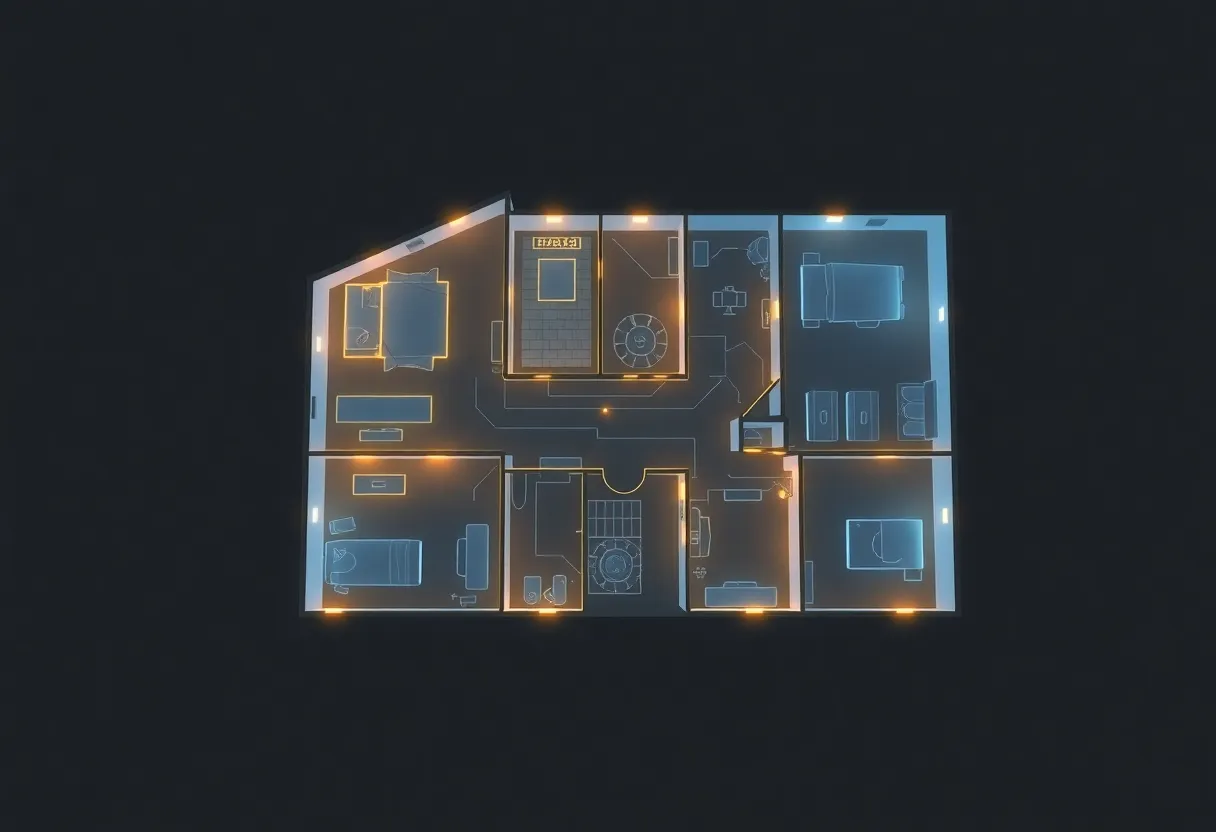
Translation: before you romanticize either protocol, plan for physical reality. Add routers near the garage, the far bedroom, and anywhere exterior walls sit between your hub and battery-powered sensors.
Ecosystem fit: pick your “gravity well” deliberately
If your household is mostly Apple HomeKit, modern Google Home, or Amazon Alexa with recent hardware, Thread/Matter accessories often slot in cleanly because those platforms push updates that expand border-router coverage over time. If you live in Home Assistant land, you can run Zigbee with a coordinator stick today with enormous flexibility, and you can add Thread border routing as a parallel project when you are ready—just budget time for tinkering.
If you are deep in a vendor-specific Zigbee hub ecosystem, switching protocols is not just a hardware swap; it is a migration of automations, naming, and sometimes cloud dependencies. That is not a reason to avoid Thread—it is a reason to decide once, then buy consistently for a year so you are not bridging three worlds accidentally.
When Thread is the better default for a new build
Thread tends to be the smoother long-term bet when:
- You want Matter-certified devices that show up similarly across phone ecosystems.
- You already own (or plan to own) multiple Thread border routers from major platforms.
- You prefer buying new products that vendors are clearly prioritizing for updates.
- You want to minimize reliance on a single proprietary Zigbee hub—without giving up mesh benefits.
Thread is not “future-proofing” in the fairy-tale sense. It is alignment with where mass-market accessory volume is moving.
When Zigbee still wins on practicality
Community knowledge is an underrated asset. Years of forum threads, compatibility matrices, and “known good” router pairings mean you can troubleshoot Zigbee problems with a playbook. Thread and Matter are catching up fast, but the long tail of odd edge cases is still being discovered in public—often one firmware release at a time.
Zigbee remains hard to beat when:
- You need inexpensive sensors in quantity—motion, door, leak, temperature—right now.
- You want the widest selection of niche devices and community-tested hardware lists.
- You run Home Assistant or another controller where Zigbee MQTT setups are cookbook-simple.
- You already invested in stable Zigbee routers and your network is boring—in a good way.
There is no shame in choosing Zigbee because the device you actually want exists, is well reviewed, and fits your budget. The goal is a home that works, not a protocol badge collection.
One more practical note: availability varies by region. A Thread border router bundle that is common in North America might be a different SKU elsewhere, and Zigbee frequency plans differ globally in ways that matter for legal compliance. Always confirm the model matches your country before importing “a deal” from another market.
Security and maintenance: the boring stuff that saves you
Both ecosystems depend on vendors shipping sane firmware. Matter adds structure around commissioning and encryption expectations, which helps reduce the worst old habits of “pair this camera with an unknown cloud.” Still, you should:
- Keep hub firmware and router firmware current.
- Segment IoT devices on a separate VLAN if your router supports it.
- Avoid mixing dead brands into critical paths—door locks and leak sensors deserve vendors with a track record.
Protocol choice does not replace those basics. It only changes which app you tap when something needs an update.
If you are renting, think about reversibility. Landlords vary; some welcome switch replacements, others do not. Thread/Matter battery devices and plug-in routers can be a gentler path than swapping in-wall hardware—while still giving you enough mesh density to avoid the classic “sensor on the fridge that never reports” problem.
A buyer checklist before you click “add to cart”
- Count your floors and exterior walls. If the answer is more than one floor, plan repeaters or border routers accordingly.
- List your platforms. Apple/Google/Amazon/Samsung/Home Assistant—write them down and verify Matter/Thread support for the exact model year.
- Pick a primary network strategy. “Mostly Matter over Thread” vs “Zigbee coordinator + selective Wi-Fi” vs “hybrid with eyes open.”
- Budget for stability nodes. Mains-powered switches and plugs are network infrastructure disguised as convenience.
- Buy in waves. A coherent wave of purchases beats one-off oddities that never quite integrate.
Hybrid homes are normal
Real homes often end up hybrid: Thread/Matter for new living-room gear, Zigbee for a attic sensor pack, Wi-Fi for cameras that need bandwidth. The failure mode is not hybrid itself—it is unplanned hybrid, where every room uses a different app and nobody remembers which hub owns the kitchen lights.
If you go hybrid, standardize automations in one place when possible (a modern platform hub or Home Assistant), and document which network owns which device. Future-you will thank present-you after a power outage.
Bottom line
Thread is the sensible forward-looking default for many new buyers—especially if Matter compatibility across ecosystems matters to your household. Zigbee remains the pragmatic choice when device selection, price, or an existing coordinator setup already points that direction. Pick based on the products you can actually buy today, the hubs you are willing to maintain, and the mesh density your floor plan demands. The best smart home is the one you can explain to a guest without apologizing.
If you are still stuck, buy one representative device from each lane, test pairing and responsiveness in the worst corner of your home, and let empirical signal strength beat internet arguments.