Third-Party Plugin APIs: Versioning, Sandboxing, and Contract Liability in Plain Language

Elena Morales
May 9, 2026
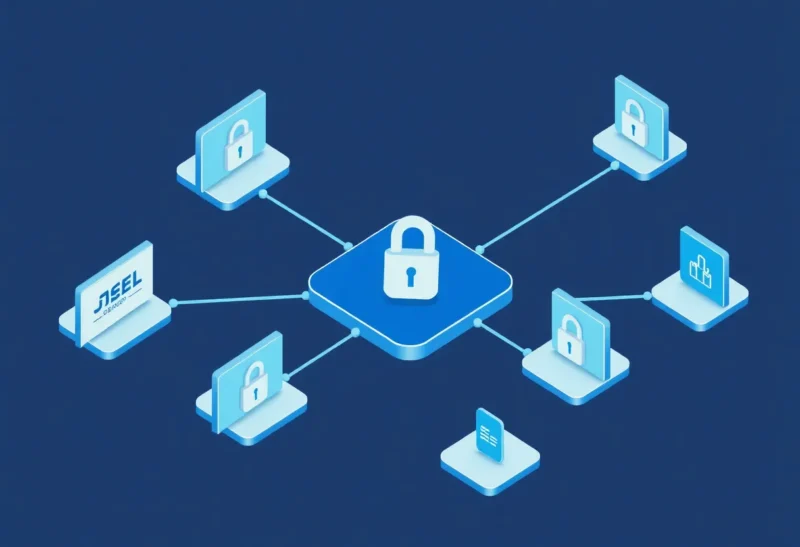
Every mature product eventually faces the same fork: stay a closed garden and lose ecosystem gravity, or open a plugin surface and inherit a new class of security, reliability, and legal problems. Third-party extensibility is not “just an API.” It is a long-running negotiation between your core team, external developers, and customers who will blame you first when a marketplace extension leaks data or bricks an upgrade.
This article walks through three pillars—versioning, sandboxing, and contract liability—in language aimed at engineers and product leaders who have to ship decisions, not debate philosophy. The goal is not exhaustive legal advice; it is a practical map of where technical choices intersect with obligations you probably already signed up for in your terms of service. If you walk away with one idea, let it be this: extensibility is a risk budget—allocate it explicitly instead of discovering it through headlines.
Versioning is a promise, not a label
Semantic versioning helps consumers reason about risk, but it only works when you define compatibility dimensions explicitly. Breaking changes in JSON fields, webhook payload shapes, authentication scopes, and rate-limit headers all look “minor” to an internal team that renamed something in a hurry. To a plugin author maintaining forty customer installs, it is a weekend of emergency releases.
Stable plugin platforms publish compatibility matrices: which host versions a plugin targets, how long deprecated endpoints remain available, and how migrations are announced. Sunsetting policy should be measured in quarters, not Slack messages. If you cannot commit to timelines, say so openly and provide runtime capability detection so extensions can degrade gracefully instead of failing cryptically at startup.
Also version your behavior, not only your symbols. Silent changes to ordering guarantees, idempotency semantics, or default timeouts are breaking changes even if the URL stayed the same. Document them like API changes because downstream authors will treat undocumented behavior as a contract anyway.
Sandboxing: where optimism meets physics
True isolation is expensive. Browser extensions run in separated worlds with permission manifests; desktop hosts often load plugins in-process for latency reasons; server-side “plugins” sometimes mean arbitrary code in your address space because someone prioritized time-to-market over process boundaries. Each choice shifts the security model.

When isolation is weak, compensate with least privilege: narrow OAuth scopes, short-lived tokens, explicit user consent screens that name data categories rather than vague “access your account,” and server-side validation that assumes the plugin is malicious. Rate limits should protect shared infrastructure, not merely annoy scrapers. If a single extension can trigger expensive fan-out calls, you have a quota design problem, not a bad actor problem.
Sandboxing also applies to build and distribution pipelines. Unsigned ZIPs from a marketplace are a supply-chain channel. Code signing, reproducible builds, malware scanning, and publisher verification are part of the product, not “security team extras.” Customers conflate malicious authors with your brand the moment credentials leave their tenant.
Contract liability: what your ToS cannot hand-wave
Terms of service that disclaim all liability for third-party code help your lawyers sleep, but they do not stop regulators from asking why your billing UI was altered by an extension, or why customer PII transited a host you controlled without adequate safeguards. Liability is layered: between you and customers, between you and marketplace authors, and between authors and mutual end users. Clarity beats maximalist caps.
Publish a developer policy that states prohibited uses (cryptomining in background tabs, exfiltration, deceptive UI overlays), enforcement mechanisms, and appeal paths. Ambiguous rules produce adversarial compliance and selective enforcement drama. Concrete examples age better than vibes-based moderation.
Insurance and enterprise procurement increasingly ask for attestations about extension review. If your answers are “we trust the community,” expect longer sales cycles. If your answers include automated static analysis, manual review tiers for sensitive scopes, and documented incident SLAs, you turn extensibility from a liability checkbox into a differentiation story—assuming you actually operate what you claim.
Incident response when the culprit is not your binary
Outages caused by first-party deploys are painful but familiar. Outages caused by a top-ten marketplace plugin require a different playbook: identify the extension version graph, freeze distribution if you can, communicate whether rollback is host-side or user-side, and coordinate with the author under time pressure. If you lack telemetry that attributes errors to extension IDs, you will flail publicly while logs insist “everything is fine.”
Correlation identifiers should cross the trust boundary: structured logs that include a hashed extension ID, permission tier, and API surface touched. Privacy teams will push back; negotiate minimization rather than absence. Without attribution data, postmortems devolve into opinion threads.
Design patterns that age well
- Capability tokens — grant narrowly scoped rights per workflow step instead of long-lived god keys.
- Schema-first events — version webhook envelopes independently from payload bodies so partial upgrades are possible.
- Compatibility shims — host-maintained adapters that let old plugins run read-only while authors migrate.
- User-visible kill switches — let admins disable a single extension without rolling back the entire platform release.
Patterns fail when nobody owns them. Assign a platform council with rotating vendor liaisons, not a single burned-out gatekeeper.
WebAssembly, sidecars, and the illusion of “zero trust” plugins
WebAssembly has become the fashionable compromise: near-native speed with memory safety boundaries—on paper. In practice, Wasm modules still call host imports for network, filesystem, and timers. Those import surfaces are your new attack plane. If you expose thirty host functions “for convenience,” authors will use all thirty, and two will turn out to be footguns. Curate imports the way you curate public REST routes: default deny, explicit grants, and audit logs when a module crosses tiers.
Sidecar processes and remote procedure calls add latency but improve blast radius. They shine when plugins wrap proprietary binaries you cannot vet—think tax calculation engines or specialized CAD exporters. The trade-off is operational complexity: more containers, more networking policies, more certificate rotation. Platform teams should budget that cost up front instead of pretending process isolation is free once Kubernetes exists somewhere in the org chart.
Enterprise SSO and “bring your own auth” extensions
Identity is where extensibility dreams go to die pleasantly. SAML and OIDC plugins often need elevated privileges to rewrite redirects, inject headers, or sync directory groups. A bug there is not a localized UI glitch; it is a cross-tenant authentication bypass waiting to happen. Require high-assurance review for anything touching login flows, mandate automated conformance tests against a matrix of IdPs, and never let marketplace newcomers ship identity plugins without human security sign-off—even if that slows launches.
Session fixation, open redirects, and token replay are classic failure modes that reappear whenever a plugin “just tweaks” the login page. Treat those code paths as core product surface, not add-on novelty.
Audit trails customers actually subpoena
Compliance buyers ask whether an admin can prove who installed which extension, when permissions escalated, and what data left the boundary afterward. If your audit log stops at “plugin enabled,” you will lose RFPs to competitors with finer granularity. Store immutable, time-synced records of configuration changes, scope expansions, and outbound webhooks initiated on behalf of tenants. Retention policies should match customer industry norms, not only your cheapest storage tier.
When legal holds arrive, you need deterministic export formats. Ad-hoc SQL by a tired engineer is not a compliance strategy. Design export APIs alongside feature APIs so you are not reverse-engineering your own product under deadline.
Economic incentives shape security outcomes
Marketplaces that rank extensions by install velocity reward dark patterns: fake reviews, upsell modals, and permission creep. Rank instead by crash rate, uninstall velocity, support ticket linkage, and time-to-patch after disclosed vulnerabilities. Developers optimize what you pay them for—literally and reputationally.
Pricing matters too. If extensions are free and support is unsupported, you inherit a graveyard of abandoned code with latent CVEs. Sustainable ecosystems include paid tiers, sponsored maintenance funds, or at minimum automated deprecation notices that reach humans, not only RSS readers from 2005.
Checklist before you announce v1 of a plugin API
Use this as a preflight gate, not as a slide deck decoration. If any item is “TBD,” you are not ready for broad marketplace marketing—private beta with contractual early adopters is the honest state you are in.
- Written compatibility and sunset policy with dates, not vibes.
- Threat model for worst-case plugin powers aligned to actual OAuth scopes.
- Telemetry plan that respects privacy while attributing failures.
- Legal review of marketplace indemnities in both directions—not only protecting you from authors.
- Customer-facing incident template that names steps when a third-party extension is suspect.
Revisit the checklist after every major host release. Plugin platforms rot quietly: endpoints stay online while semantics drift, and only long-tail integrators notice until a Black Friday checkout flow dies.
Opening your platform is a strategic bet. Done carefully, plugins extend your product faster than headcount allows. Done carelessly, they become shadow codebases that borrow your trust without borrowing your discipline. Version honestly, isolate what you can, and write contracts someone could actually follow at 3 a.m. during an outage—that is how extensibility stays an asset instead of an apology tour.