The Reality of Working as a Remote Developer in 2026: What’s Different and What Isn’t

Quinn Reed
July 7, 2026

Remote work for software developers peaked as a practice during 2020–2022, when the majority of tech company employees were fully remote. The subsequent years have seen a complicated pullback: large companies (Amazon, Google, Goldman Sachs, JPMorgan) issued return-to-office mandates with varying compliance; some companies that became fully remote-first (GitLab, Automattic, Basecamp) have stayed that way; and the market for fully remote developer roles has narrowed compared to the 2021 peak without disappearing. Here’s an honest account of what working as a remote developer actually looks like in 2026—what’s genuinely different from in-office work, what isn’t, and what has changed since the pandemic-era remote surge.
The Market for Remote Developer Roles
Fully remote developer positions exist in 2026, but the supply has contracted significantly from the 2021–2022 peak. LinkedIn’s job posting data shows remote roles as a percentage of software engineering job postings declining from roughly 65–70% at peak to roughly 30–35% in 2025–2026. The remaining remote roles concentrate in specific categories: remote-first companies (a stable group of organisations that made genuine structural commitments to async work), smaller technology companies and startups that haven’t built expensive office space, companies with global distributed engineering teams where timezone coverage requires async work anyway, and consultancies and contractors.
The roles that have pulled back hardest to in-person or hybrid requirements tend to be at large technology companies and banks—places with expensive office infrastructure and senior leadership preferences for in-person presence, and often where visa sponsorship or security clearance requirements constrain geographic flexibility anyway.
For developers explicitly targeting remote work, the most reliable path is specialisation in domains where remote-first companies are common: developer tools, open source, infrastructure, security, fintech APIs, and B2B SaaS. Consumer-facing product roles at large established companies are less reliably remote.
What’s Actually Different: The Async Discipline
The real practice of effective remote work as a developer is primarily about asynchronous communication—and this remains genuinely different from office-based work in ways that are both advantages and constraints.
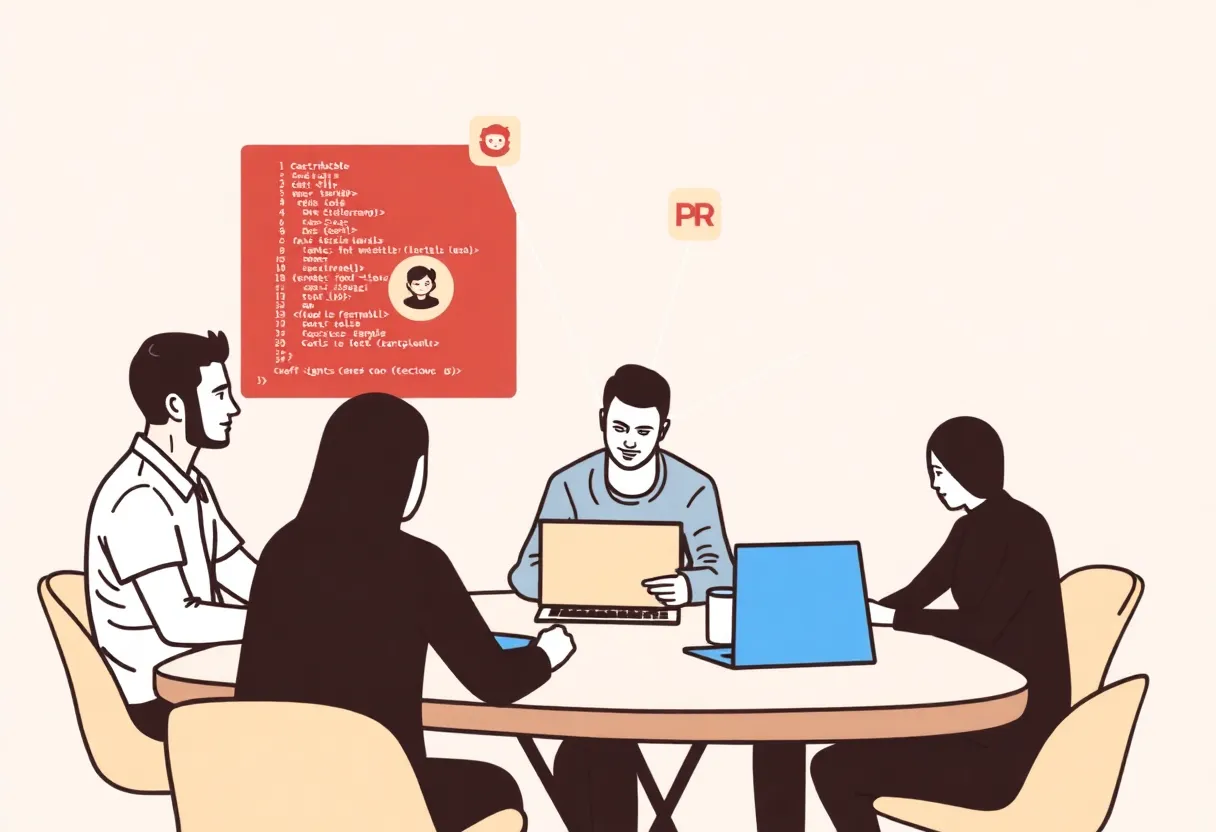
In well-run remote teams, communication happens primarily in writing: detailed GitHub PR descriptions and review comments, Slack threads with context included, Linear or Jira tickets that can be understood without a verbal conversation, Loom videos for things that are easier to show than write. The quality of written communication matters more in remote teams than in offices where you can clarify in person. A PR description that explains the “why” of a change (not just the “what”) matters more when the reviewer is in a different timezone and can’t ask casually.
The async discipline produces benefits: fewer unnecessary interruptions during deep work, a written record of decisions and rationale that in-office discussions often don’t produce, the ability to think before responding rather than reacting in real time, and more equitable participation (quieter team members have equal access to written communication channels). It also produces friction: decisions that would take five minutes in person can take a day of async back-and-forth; cultural bonding and casual relationship-building are harder without shared physical space; and some discussions that benefit from real-time whiteboarding are awkward to conduct asynchronously.
The Toolchain: What Has Changed Since 2020
The tools available for remote developer collaboration have matured substantially. GitHub Copilot and similar AI code assistants have changed individual development workflows more than remote work itself—AI pair programming that’s available to any solo developer regardless of location has shifted the productivity math in ways that don’t require physical proximity. AI assistants handle more of the “quick question” workload that previously required asking a colleague.
Async video tools (Loom, Screen.studio, Notion clips) are more integrated into developer workflows. PR descriptions routinely include short screen recordings explaining complex changes. Architecture discussions happen via async video rather than requiring synchronous calls. These tools reduce the friction of knowledge transfer that was a genuine challenge in early-pandemic remote work.
AI-generated meeting summaries (from Otter.ai, Fireflies, and built-in features in Zoom, Teams, and Google Meet) have changed how synchronous meetings are handled—people who can’t attend review AI summaries and action items rather than being blocked. This reduces the cost of timezone asymmetry for synchronous calls.
What Hasn’t Changed: The Hard Parts
Career development in remote settings remains harder than office equivalents, and this is the most consistent complaint from remote developers in 2026. Visibility to senior leadership, sponsorship (someone actively advocating for your promotion), and access to informal mentoring (learning through osmosis by being near senior engineers) are all more difficult to achieve remotely. Promotions and performance reviews in hybrid companies often favour in-office employees even when companies claim otherwise—being “out of sight” still correlates with being “out of mind” in many organisations.

Onboarding as a new developer remains harder remotely than in-person. Learning a codebase, understanding team culture, and building relationships with colleagues are all slower without physical proximity. Companies that do remote onboarding well have invested specifically in this problem—pairing programmes, structured introduction calls, explicit documentation of norms—but it’s still more effortful than new-hire osmosis in an office.
The loneliness and isolation that some remote workers experience is real and not consistently addressed by companies that default to remote without thinking about social infrastructure. Developers who live alone in cities away from their social networks, working remote on distributed teams where colleagues are in different timezones, can find the isolation significant. This is not universal—many remote developers are happy with the autonomy—but it’s a real factor that doesn’t appear in job descriptions.
The Practical Recommendation
Remote developer work in 2026 is better than it was in 2020 but narrower than the 2021 peak suggested it would become. The best remote work experiences are in remote-first organisations—companies that have built their processes and culture around async work rather than trying to replicate office dynamics online. In hybrid arrangements where part of the team is in an office and part is remote, the remote employees often get the worst of both—left out of informal conversations and decisions made in the office while not having the full flexibility of a truly async team.
If remote work matters to you, the filter to apply is: “Is this company remote-first or remote-reluctant?” Remote-first companies have async communication norms baked into their processes, invest in written documentation, and make decisions through channels that distributed team members can access equally. Remote-reluctant companies have moved some policies to accommodate remote work without changing the underlying culture—and the remote experience at those companies is usually worse than either full remote or full office work.