The Future of Smartphones: What Actually Changes in the Next Five Years

Reed Kim
February 26, 2026
Smartphones have been “good enough” for years. Incremental upgrades—slightly better cameras, a bit more RAM, another notch redesign—have left many of us wondering what’s left to change. But the next five years won’t be about polishing the same slab. Real shifts are coming: in form factors, in how we interact with devices, and in what we expect them to do. Here’s what actually changes, and what stays the same.
The Foldable Question Finally Gets an Answer
Foldables have spent the last few years as a niche: impressive engineering, high price tags, and a lot of “why would I need that?” from mainstream buyers. Over the next five years, that calculus shifts. Manufacturing costs drop as more players enter the market and production scales. Screens get more durable; hinges get simpler. The result isn’t that everyone carries a foldable—it’s that the foldable becomes a legitimate choice rather than a curiosity.
What will drive adoption isn’t the “wow” factor. It’s use cases that only make sense when your phone can be a small rectangle one moment and a narrow tablet the next: reading and annotating documents, split-screen multitasking that doesn’t feel cramped, and a device that fits in a pocket but expands when you need more real estate. If you’ve dismissed foldables as a gimmick, the next generation might change your mind. If you’ve been waiting for them to feel normal, that moment is coming.
Cameras: Less Megapixels, More Intelligence
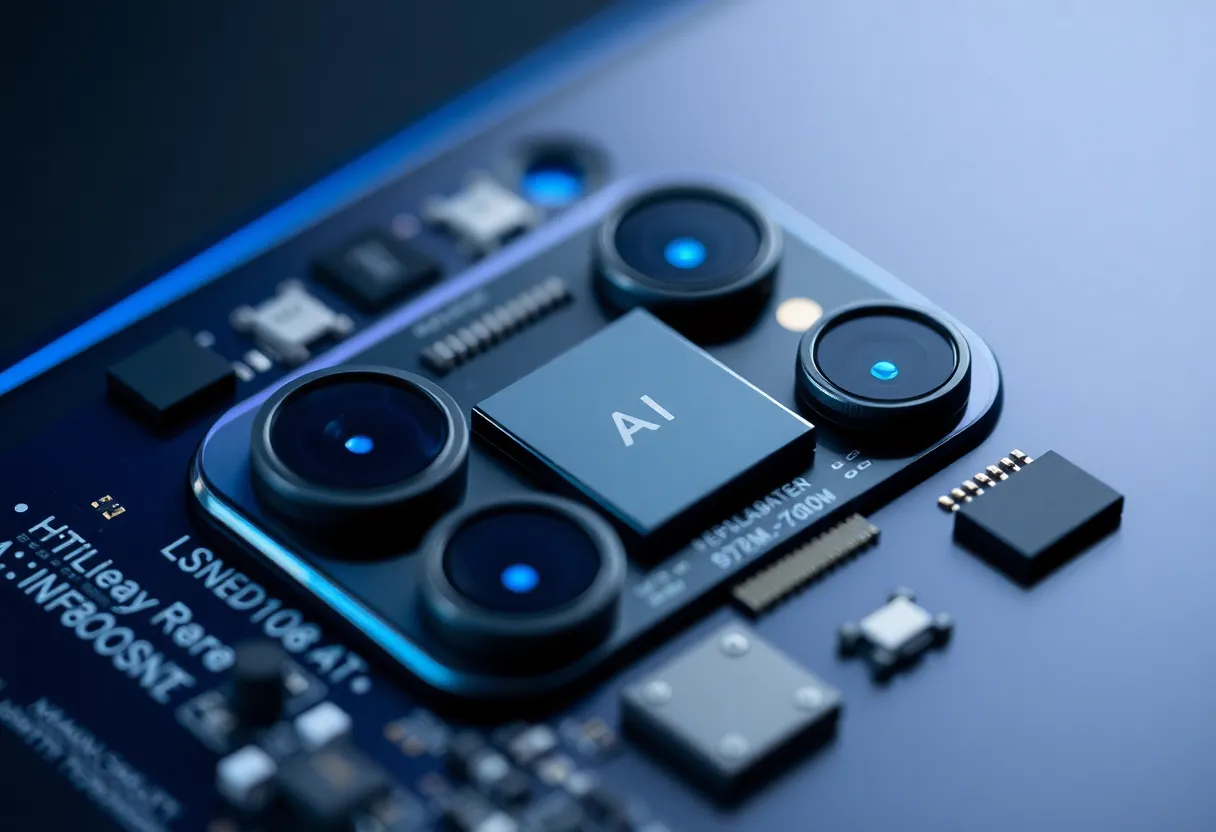
The megapixel race has largely run its course. Phone cameras are already capable of capturing more detail than most people need for social feeds and casual photography. The next five years will be less about bigger sensors and more about what happens after you press the shutter. Computational photography—HDR, night mode, portrait blur—will get smarter and more subtle. AI will handle more of the heavy lifting: better low-light fusion, more natural-looking bokeh, and perhaps the ability to reliably remove or recompose elements in a shot.
We’ll also see cameras that do more than take pictures. On-device vision models will identify objects, translate text in real time, and power augmented-reality overlays without a round-trip to the cloud. The lens becomes an input for the phone’s brain, not just a sensor for memories. That has implications for privacy and battery life—processing locally is better for both—and it reframes the phone as a seeing device, not just a photographing one.
Batteries and Charging: Incremental Gains, Fewer Surprises
Battery technology moves slowly. Solid-state cells might reach consumer devices by the end of the decade, but don’t bet on phones that last a week on a charge in the next five years. What you will see is better power management: more efficient chips, smarter software that learns your usage and throttles background activity, and perhaps smaller batteries that still get you through a day because the rest of the stack is leaner. Charging will continue to get faster where it’s safe and regulated—we’re already at “full in under an hour” for many devices—and wireless charging will improve in speed and convenience, even if it never fully replaces the cable.
The Role of AI: Assistant, Not Gimmick
AI on the phone has so far been a mix of useful (predictive text, photo search) and gimmicky (voice assistants that only work half the time). The next five years will push more of the useful stuff on-device. Language models that run locally mean better autocorrect, summarization, and translation without sending every keystroke to a server. They also enable assistants that actually understand context—your calendar, your messages, your preferences—without leaking that data. The goal isn’t a phone that replaces thinking; it’s one that handles the small, repetitive tasks so you can focus on the rest.
What Probably Won’t Change
Some things will stay familiar. The rectangular screen will remain the default for most people; radical redesigns (modular phones, projectors in your pocket) will stay in labs or very narrow segments. The app ecosystem will still dominate how we use phones—no one is tearing down the walled gardens in the next five years. And the upgrade cycle will continue to lengthen: people will hold devices for three, four, or five years because the year-over-year improvements no longer justify annual replacements. That’s not stagnation; it’s maturity.
The Bottom Line
The future of smartphones isn’t a single revolution. It’s foldables becoming normal, cameras that think as well as capture, batteries and chips that stretch every watt further, and AI that actually helps instead of performing. If you’re happy with your current phone, you can sit out a generation or two and still land in a better place when you upgrade. If you’re curious about what’s next, the next five years will give you real reasons to care again—without pretending that the slab in your pocket is about to become something unrecognizable.