Starship Orbital Refueling: The Moon Mission Step That’s Easy to Hand-Wave

Robin Hayes
April 7, 2026
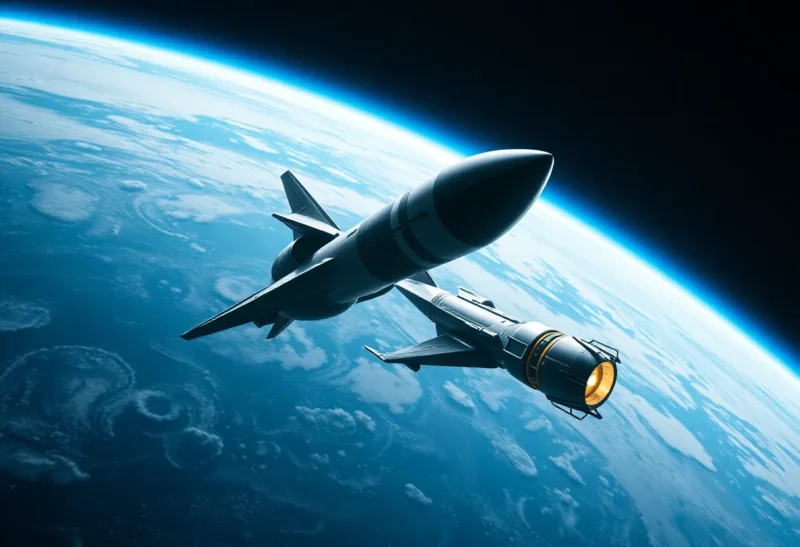
In public discussions of returning humans to the Moon, the loudest slides belong to launch, landing, and spacesuits. Fair enough: those moments are cinematic. But there is a quieter sequence that decides whether deep-space architectures are physics or PowerPoint: orbital refueling—moving cryogenic propellant from one vehicle to another while both are in space.
For SpaceX’s Starship and for NASA’s broader Artemis planning, refueling is not an optimization. It is load-path. If you cannot refuel efficiently and repeatedly in orbit, many lunar payload numbers simply do not close without building a much larger single-stage monster than anyone is willing to fund. This article explains why commentators hand-wave the step, what actually has to go right, and why timelines for lunar missions remain sensitive to progress on orbit-to-orbit logistics.
Why “just tank up in space” sounds trivial
On Earth, refueling is culturally invisible. Tanker trucks, gas stations, and hydrant carts are infrastructure we forget exists. Orbit strips away that familiarity. There is no station on every corner. Cryogenic liquids boil. Microgravity does not “pour” the way intuition expects. Leaks are not a puddle on asphalt; they are thrust you did not plan for, ice where you do not want ice, and sensors that lie politely until they do not.
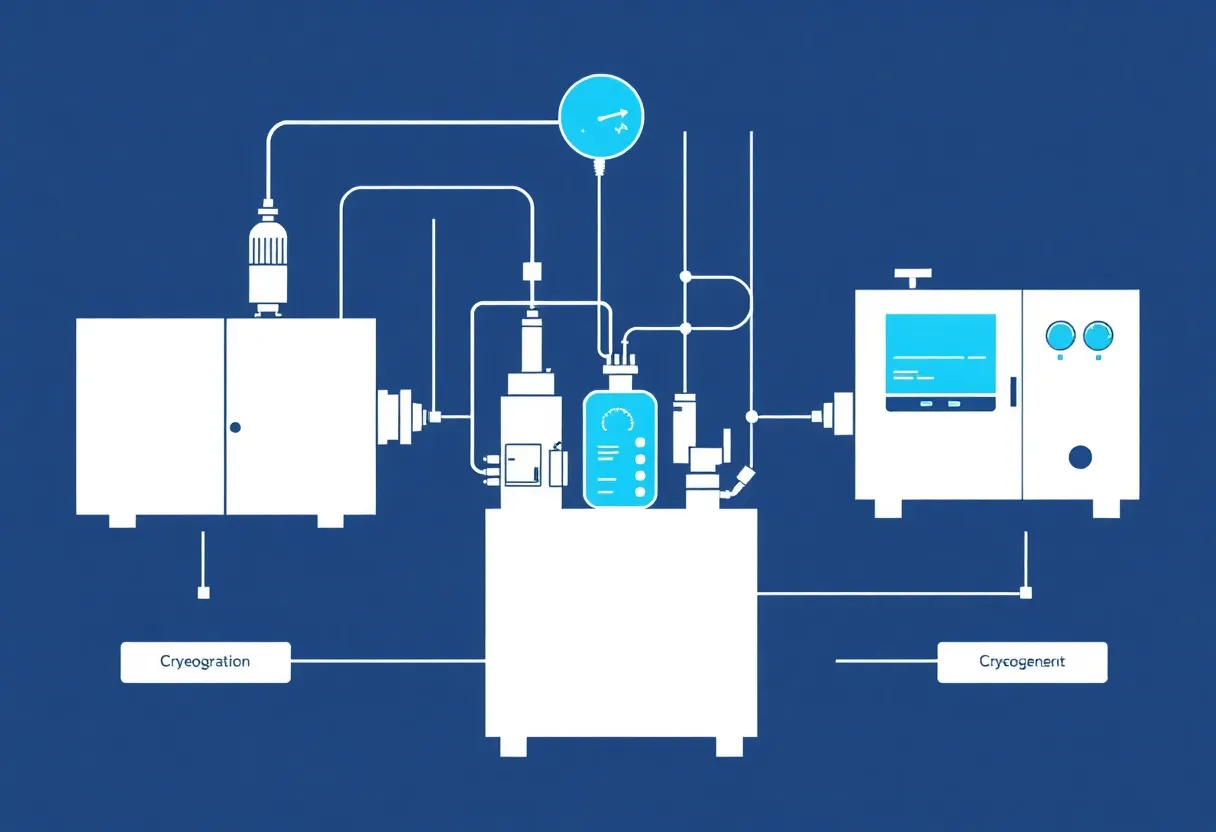
So when a roadmap graphic shows “Starship A transfers propellant to Starship B,” the brain fills in terrestrial metaphors. The hard work is translating those metaphors into qualified procedures: coupling interfaces, ullage management, thermal control, and fault detection that preserves both vehicles if a valve misbehaves.
The lunar math that forces refueling
Earth’s gravity well is deep. Escaping it with useful mass to the Moon generally demands either staging (dropping empty tanks) or refueling (filling up after you are already partway out of the hole). Starship’s architecture bets on the second approach at super-heavy scale: launch, park propellant in orbit, consolidate, then send a fueled ship onward.
Whether you prefer SpaceX’s framing or a more conservative NASA study language, the underlying trade is the same: delivered tons to TLI (trans-lunar injection) scale with how much propellant you can stage in space without flying a single monolithic vehicle that carries every drop from sea level in one shot. Refueling is how you cheat the rocket equation without breaking chemistry.
What orbital refueling is not
It is not merely “docking.” Docking is alignment and berthing—hard enough on its own. Refueling adds fluid dynamics in a world where “down” is a fiction unless you choose one. It is not the same as ISS propellant resupply at modest rates with hypergolics or established Russian heritage lines, though those programs teach lessons about interfaces and operations.
It is also not a one-off demo for headlines. A lunar transport system needs cadence: repeatable couplings, predictable boil-off budgets, and ground teams that can train the way airlines train turnarounds—without pretending failures are exotic.
Cryogenics: the rude part of the story
Starship’s deep-space ambitions lean on cryogenic fuels whose temperatures laugh at casual engineering. Managing boil-off, re-condensation (where applicable), and tank pressure while sun angles swing is a full-time job for thermal engineers. Spec sheets on Earth list insulation performance; in orbit, the sun is an oven on one side and absolute cold is a breath away on the other.
Public roadmaps rarely publish integrated timelines for “thermal equilibrium reached” or “acceptable ullage for engine start.” Those details determine whether a given launch window is real or aspirational.
Ullage, slosh, and why “settled propellant” is a whole subplot
In gravity, liquids sit at the bottom of a tank like well-behaved guests. In free fall, propellant can wander. Engines want liquid at the inlet, not a bubble. Settling propellant may involve tiny thruster firings, centrifugal tricks, or other techniques—each a tax on mass, time, and operational complexity.
During transfer, slosh couples fluid motion with vehicle attitude. A aggressive pump rate might be fine in a simulator and rude in flight if it excites modes your guidance loop did not budget for. That is why transfer is not only plumbing; it is closed-loop control with thermodynamics peeking in.
Depots versus “tanker tailgating”
Roadmaps sometimes sketch dedicated orbital depots—staged tanks with sunshields, possibly active cooling—versus a leaner model where tanker ships meet the mission ship more directly. Depots add infrastructure mass and operational rules; direct ship-to-ship transfer saves a node but concentrates risk in each coupling.
There is no eternal winner. The right answer depends on launch rate, boil-off economics, and how much schedule margin you can buy with extra hardware. What matters for observers is recognizing the trade instead of assuming “we will figure out a gas station later.” Someone pays for the boil-off budget either way.
Ground test articles and why they lag the hype
Large cryogenic tests on Earth—chill-down campaigns, quick-disconnect cycles, leak checks—rarely stream as well as launches, but they anchor flight software limits. When a program accelerates flight demos without a visible ground matrix, dig deeper: either the tests are happening quietly (good) or assumptions are riding on optimism (bad).
Look for repeated valve cycles, proof pressure histories, and non-destructive inspection cadence. Refueling is a wear problem as much as a physics problem.
Demonstrations versus operational rhythm
A successful tech demo proves that a configuration can work under controlled assumptions. Operational refueling for lunar missions requires that the procedure usually works on schedule, with margins for weather on the launch coast, pad turnaround, and the occasional bad sensor. The gap between “we transferred propellant once” and “we sustain a campaign” is where programs historically slip.
Observers should watch for milestones that stress repeatability: multiple transfers, different thermal states, and recovery from benign aborts. Those are closer to airline maintenance culture than to trophy events.
Interfaces: where agencies and companies meet reality
Even if a single operator perfects refueling internally, international lunar architectures may want standards—couplings, data exchange, safety interlocks—that resemble shipping containers more than bespoke jewelry. Standards slow down early, then accelerate ecosystems. The tension between proprietary speed and interoperable safety is an under-reported subplot in Artemis-era logistics.
Risk registers the public rarely sees
Program offices track debris from accidental releases, over-pressurization, and runaway ice formation. They track software states where a pump command arrives out of order. They track crew proximity—human-rated systems demand failure modes that protect people even when robots do the wet work.
None of that is unsolvable; it is simply why “refueling” deserves more airtime than a single arrow on a roadmap. Treating it as solved early is how schedules quietly absorb optimism bias.
What to watch in 2026 without becoming a fan account
Ignore launch hype for a moment and look for:
- Transfer rates and durations discussed with numbers, not adjectives.
- Instrumentation that closes mass balance—knowing how much moved, not guessing.
- Ground testing that mirrors on-orbit constraints (thermal cycling, slosh, valve cycles).
- Abort paths that protect both vehicles if a seal misbehaves mid-transfer.
If those elements mature in public view, the hand-wavy arrow becomes engineering. If they stay opaque, maintain skepticism about downstream lunar dates regardless of how shiny the renderings look.
Why this matters beyond SpaceX
Even if your favorite architecture is not Starship-heavy, orbital propellant transfer is a generic capability: it affects how nations think about depots, commercial tankers, and eventually Mars-class missions. Getting good at cryogenic logistics in LEO is a civilization-scale skill—boring on stream, decisive in trajectory plots.
Artemis, commercial partners, and the paperwork of propellant
NASA’s lunar ambitions intentionally mix government oversight with commercial speed. Refueling sits at that interface: safety cultures that evolved around discrete launches must now reason about sustained orbital operations. That means new certification language, training simulators, and fault trees that include “stop pumping” as a first-class outcome, not a panic mode.
For taxpayers and enthusiasts alike, the productive question is not which logo is on the tanker, but whether the operational envelope is documented and exercised. Paperwork is not glamour; it is how you keep campaigns from resetting to zero after the first anomaly.
A sanity check for roadmap readers
When you see a lunar landing date, mentally add a prerequisite line item: “Assumes orbital refueling (or equivalent mass delivery) at rate X with reliability Y.” If you cannot locate evidence for X and Y, treat the date as an aspiration anchor, not a promise. That is not cynicism—it is the same discipline engineers use when they refuse to sign a load analysis without boundary conditions.
Conclusion
Orbital refueling is the step easy to draw and hard to earn. It binds launch cadence, thermal management, robotics, and operations culture into one chain. Hand-waving it turns lunar roadmaps into motivational posters; taking it seriously explains why quiet progress in tanks and valves can move the Moon farther—or closer—than any single landing animation.
The next time a timeline slides across your feed, zoom in on the small print between “launch” and “TLI.” If orbital transfer is treated as a solved formality, keep watching the test campaigns. If it is treated as a measured, repeated discipline, you are looking at a program that respects the rocket equation—even when the graphics look effortless.