Starship Cargo to the Moon: What Has to Go Right Before Astronauts Ride Again

Robin Hayes
April 7, 2026
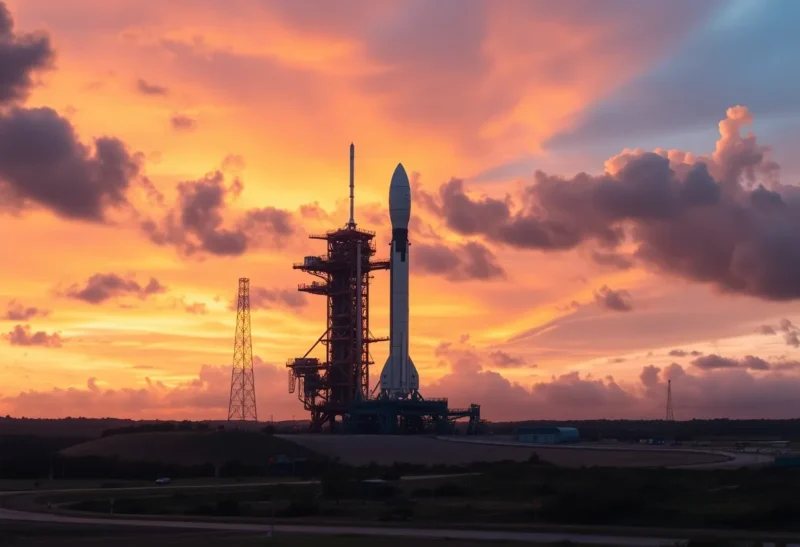
Public imagination jumps straight from a towering rocket on the pad to boots in gray dust. Program reality inserts a long middle chapter: tons of cargo, repeated landings, interfaces that must work when no astronaut is there to MacGyver them, and a certification culture that treats every new vehicle as guilty until the data makes it boring. If Starship-class vehicles are to support Artemis-scale ambitions, cargo flights are not a sideshow—they are the rehearsal where the Moon learns your habits before humans bet their lives on them.
This article walks through what has to go right in that cargo phase, and why “we landed once” is a different claim from “we can land again, on schedule, with the right mass margins, and integrate what we delivered.”
Cargo first is not caution theater—it is systems engineering
Crew missions consume mass and complexity budgets that cargo can spend on iteration. Flying supplies, experiments, and robotic precursors lets teams validate guidance profiles, plume-surface interactions, and unloading concepts without simultaneous life-support risk. It also exercises the ground side: range workflows, recovery or refurbishment assumptions, and the paperwork chain that turns a successful test into a certified operational capability.
That does not mean cargo is easy. A cargo lander still has to hit a landing ellipse that respects terrain hazards, survive thermal cycles, and prove it can shut down engines without digging a trench through something you care about. It has to communicate, navigate, and—if the architecture demands it—transfer propellant or power in ways we have never sustained at lunar scale.
Repeatability beats spectacle
A single spectacular success is a milestone; a program needs cadence. Cadence reveals manufacturing variance, operational drift, and the mundane failures—valve sluggishness, sensor bias, software edge cases—that single-shot demos can dodge through heroics. Cargo missions force the organization to confront refurbishment times, launch manifests, and whether the vehicle can be treated as a transport system rather than an event.
For astronauts to “ride again,” program leaders need confidence not only in ascent and entry but in the boring repeats: berthing adapters that mate under lunar lighting constraints, power umbilicals that survive regolith dust, and comms relay paths that do not assume ideal antenna pointing from a tired crew at the end of a long EVA day.
Precision landing and surface sensing
The Moon is not flat and not empty. Shadows hide rocks; slopes punish landing gear; dust levitated by plumes can blind sensors and coat radiators. Cargo missions must validate terrain-relative navigation, hazard detection, and perhaps pre-placed beacons or orbital recon tie-ins. Each layer adds mass and software complexity—and each layer is cheaper to debug without a crew waiting in the loop.
What has to go right is correlation between preflight maps and reality. Orbital imagery ages; impacts happen; ice prospecting targets shift interpretation. Cargo flights are the feedback loop that turns models into trusted tools.
Logistics interfaces: the real long pole
Delivering a pallet is one problem; making its contents usable is another. Power interfaces, data networks, robotic offloading arms, and human-compatible packaging standards must converge. International partners bring module designs conceived under different assumptions; commercial providers optimize for their business case. Cargo flights surface those mismatches early—preferably as irritating paperwork rather than as an EVA emergency.

Propellant, power, and the architecture behind the headlines
Many lunar architectures lean on orbital transfer stages, depots, or pre-positioned tanks. Even when Starship is treated as a single-stage-to-surface narrative in popular coverage, engineering teams still wrestle with boiloff, ullage management, and the thermal environment in space versus on the surface. Cargo flights test those behaviors under operational timelines rather than in isolated lab cells.
Power beaming, fission surface power demos, and large battery packs each impose new failure modes. Before crew rides, someone needs to watch those systems run through nights that last two weeks and days that punish radiators. Cargo provides the clock hours.
Commercial speed versus agency patience
Cargo programs sit at the intersection of two clocks: commercial teams that iterate quickly to preserve runway, and agency partners that translate success into requirements language auditable years later. Friction shows up in test artifacts, configuration control, and the definition of “done” for a landing. What has to go right is not a one-off handshake photo—it is a repeatable process where changes are tracked, hazards are closed with evidence, and subcontractors cannot drift out of alignment without someone noticing in a review board.
That sounds bureaucratic because it is. It is also how you keep astronauts from becoming the beta testers for undocumented software forks.
Communications blackouts and ground autonomy
Lunar operations still contend with geometry: Earth can be inconveniently placed, relay satellites may lag deployment, and surface features block links at the worst moments. Cargo missions should force maturity in autonomous safing—vehicles that can pause, power-manage, and wait without human micromanagement. Before crew rides, you want stories where a cargo lander handled a comms dropout without drama, not where mission control earned overtime redeeming a stuck state machine.
Regolith, plumes, and the stuff that eats schedules
Lunar regolith is sharp, clingy, and disrespectful of seals. Engine plumes excavate and spray it across anything nearby—including hardware you hoped to reuse. Cargo flights must characterize plume effects at relevant thrust levels and educate siting rules for future pads. Robotic offloaders need dust-tolerant mechanisms; optical windows need wipe strategies or clever shielding. These are textbook paragraphs until you pay for a rover camera obscured on sol three.
Debris, traffic management, and good neighbors
More landings mean more risk of hardware scattered across approaches and sites of scientific value. Cargo campaigns should rehearse disposal plans, no-fly attitudes during sensitive operations, and the boring cataloging of what got left where. Astronauts inherit that geography; shortcuts taken for a single demo become constraints—or hazards—for traverses and construction.
Radiation and reliability: data beats bravado
Humans amplify design requirements for shielding, storm shelters, and abort philosophies. Robotic cargo still has to survive radiation environments that flip bits and age electronics. Flight heritage matters: parts qualified on Earth still misbehave when single-event upsets cluster during solar weather. A steady cargo program builds the statistical confidence that reliability models need—especially for vendors new to human-rating cultures.
Human rating is a trailing indicator
“Human rating” is not a sticker; it is the accumulation of evidence that procedures, margins, and culture align with acceptable risk. Cargo success does not automatically transfer—life support, emergency return, and crew escape add systems—but it collapses uncertainty in the parts that overlap: launch, transit, landing, and surface stay of equipment. Astronauts ride when the organization can tell a coherent story with data, not when social media declares the rocket cool enough.
Science payloads and the integration squeeze
Cargo manifests are political as well as technical. Instruments need thermal stability, pointing budgets, and cleanliness standards that conflict with low-cost shipping instincts. Before crew rides, teams must prove they can preserve science value through vibration, landing shocks, and the thermal soak of transit. A broken sensor on a cargo flight is a schedule hit; the same failure with astronauts on the clock is a mission reshuffle. Sorting those interfaces during robotic deliveries buys margin for the human timeline.
Sample return and reverse logistics
Sustainable presence implies not only delivery but return—samples, failed hardware for forensics, and eventually reusable components. Even if early cargo focuses one-way mass to the surface, architectures should not paint corners. Handling ascent propellant accounting, containment for planetary protection debates, and Earth entry loads all benefit from incremental practice. Astronauts are not just passengers on the way up; they participate in a chain that includes what leaves the Moon.
What success looks like from the outside
Observers should watch for boring metrics: time between flights, mass delivered per mission, percentage of payloads operational 30 days after landing, and reduction in landing ellipse size over a sustained campaign. Those numbers forecast crew readiness better than hype videos or single-event livestreams. When cargo manifests include precursors for habitats, rovers, and science instruments that integrate cleanly, the arc is bending the right way.
Training and simulators ride the cargo learning curve
Crew simulators lag reality without flight data. Every cargo landing that streams telemetry, video, and post-touchdown health checks feeds the models instructors use, sharpens fault trees, and retires paper risks that lingered too long on slide decks. Astronauts train against procedures that must match the vehicle they will fly—not a best guess from marketing renders. Closing that gap is invisible to the public and decisive on launch day.
Conclusion
Starship-scale cargo to the Moon is a prerequisite narrative for sustainable return, not because astronauts are an afterthought, but because they are the most expensive and sensitive payload you can put on top of a chaotic physics stack. Getting cargo right means repeatability, interfaces that work in regolith and shadow, and the patient accumulation of flight history. The public will cheer the first crew landing again—but engineers will know the real win was the unglamorous freight that taught the Moon how to receive them.