Software-Defined Radio for Developers: What You Can Learn Without the Ham Mythology

Halima Okafor
April 8, 2026
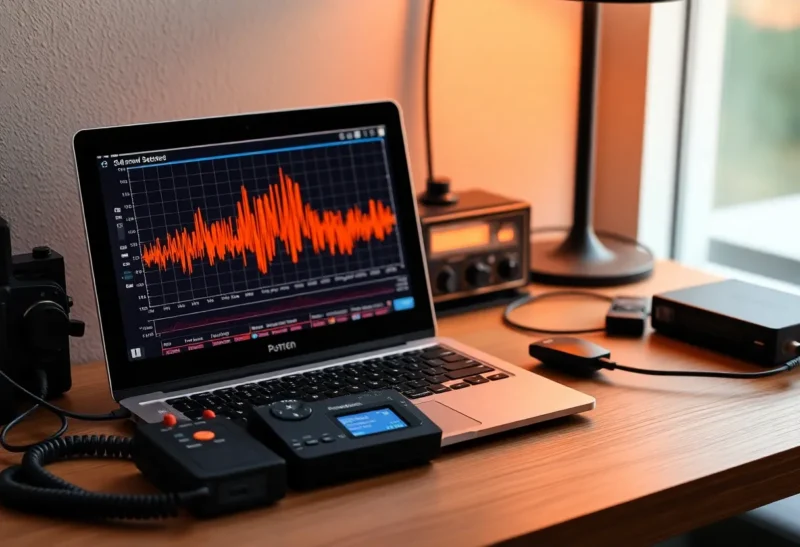
Software-defined radio (SDR) sounds like a hobby for people who own soldering irons and call frequencies by memory. Under that surface is something more broadly useful: a lesson in how analog reality becomes digital bits, how bandwidth and sampling actually work, and why wireless systems behave the way your Wi-Fi diagnostics vaguely suggest. You do not need an amateur radio license to learn from SDR—but you do need to peel away the mythology and focus on the systems thinking.
This article is for developers who build networked products, debug flaky connectivity, or simply want a grounded mental model of RF without drowning in forum lore. The goal is practical literacy, not a certificate.
What SDR is, in developer terms
Traditional radios fixed their behavior in hardware: specific bands, modes, and filters baked into circuits. Software-defined radio moves the “what do we do with this signal?” part into software. A front end still has to capture electromagnetic energy and digitize it, but demodulation, decoding, and visualization can run on a general-purpose machine.
That separation is why SDR feels familiar if you think in layers. You have a physical interface, a sampling boundary, DSP-ish processing, and then higher-level protocols—except the “wire” is literally the air, and the impairments are messier than a flaky Ethernet cable.
Why developers should care at all
Most application code treats wireless as an opaque service: connect, send, pray. That works until you need to reason about interference, regulatory constraints, antenna placement, or why a device works in the lab and dies on a factory floor. SDR experiments make those abstractions concrete. You can see crowded spectrum, compare signal strength across bands, and observe how real environments differ from datasheets.
Even if you never ship radio code, the intuition transfers. Sampling rates, Nyquist limits, noise floors, and filter trade-offs show up across domains—audio, graphics, sensors—not just RF.
There is also a cultural benefit: teams that speak one shared language across mechanical, electrical, and software disciplines ship fewer “not our layer” incidents. SDR is a cheap bridge for software folks who want to participate in those conversations without pretending to be something they are not.
The learning path without the gatekeeping
Communities around radio hobbies are generous, but they can also be jargon-dense. You do not need to memorize every mode acronym on day one. A productive on-ramp looks like this: start with a cheap USB SDR receiver, use established open-source software to visualize spectrum, and pick one narrow question—what does Bluetooth look like in my office? How wide is a Wi-Fi channel in practice? What happens when I move the antenna a few centimeters?
Document what you see. Screenshots of waterfalls and spectrum plots age well as personal references. They beat vague memories of “it looked noisy.”
Sampling, bandwidth, and why your waterfall matters
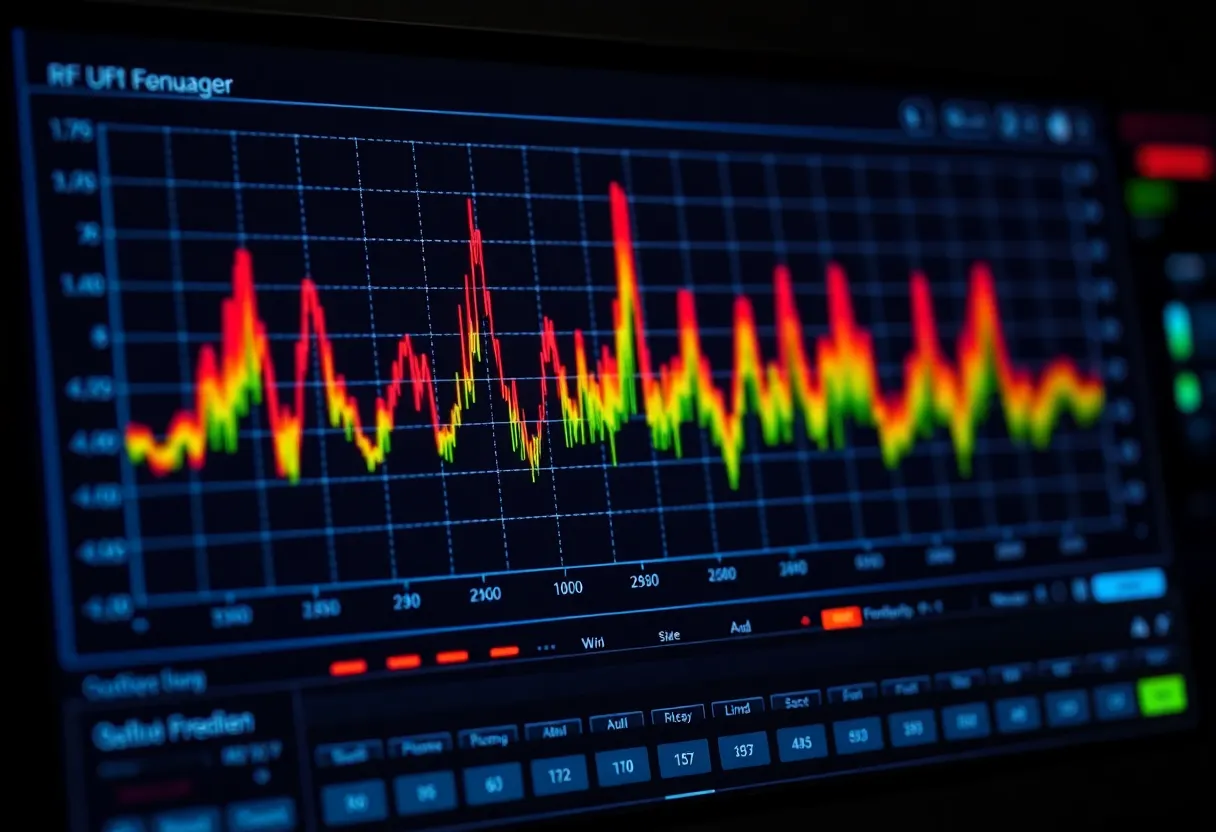
When you look at a waterfall display, you are seeing power over time and frequency. The width of a bright trace is not cosmetic—it reflects how much spectrum a signal occupies and how stable its carrier is. A Bluetooth hop looks different from a continuous narrowband tone because the protocol behaves differently, not because the screen is decorative.
Nyquist’s idea—that you need enough samples per second to represent a band—shows up immediately when you crank the bandwidth too low and aliases appear. You do not need to derive equations on a whiteboard; you need to recognize the symptom when your capture settings lie about reality. That instinct helps when you debug digital audio pipelines, camera sensors, or any system where “we undersampled something” is a live possibility.
Tools and workflows without endorsing a single vendor
Most beginners pair inexpensive receive-only hardware with open-source desktop software for spectrum views and basic demodulation. The exact brand matters less than a repeatable workflow: save your settings, note your antenna, and label captures with date and location. RF is situational; a plot without context is half a story.
Expect a learning curve around drivers and USB throughput. Those are not radio-specific problems—they are the same class of annoyances as any niche peripheral. Budget time for boring setup, not only for “the science.”
What you learn that transfers to product work
Spectrum is a shared resource. Everything is fighting for quiet airtime. If your product assumes pristine conditions, SDR will humble that assumption quickly.
Antennas are not decorative. Orientation, proximity to metal, and human bodies change performance. Debugging “bad Wi-Fi” without considering physical placement is guessing.
Bandwidth costs power and complexity. Wider channels carry more data and collide more easily. Trade-offs are not moral; they are physics and regulation.
Regulatory boundaries are real engineering inputs. Transmitting is not the same as listening. Developers rarely need to operate transmitters to learn, but they should know why products ship with region locks and power limits.
Interference is often local. A crowded spectrum at your desk is not identical to a warehouse, a hospital, or a stadium. If your product logs show time-of-day patterns, think about human activity and nearby devices, not only server-side issues.

Common misconceptions to discard early
Misconception one: “SDR is hacking.” Listening and learning within legal frameworks is not a movie plot; it is instrumentation. Misusing captured data or interfering with services is a different category—ethics and law still apply.
Misconception two: “More expensive hardware equals instant understanding.” Better front ends help, but confusion scales with unclear questions. Start cheap; upgrade when you know what limitation hurts you.
Misconception three: “RF is pure math.” There is math, but there is also impulsive noise, multipath reflections, and that one microwave oven two desks away.
Misconception four: “If I cannot decode it, it is encrypted.” Plenty of signals are simply using modes you have not configured yet, or sitting at a power level near your noise floor. Jumping to security conclusions without checking basics leads to wild stories. Measure first; narrate second.
How far to go before diminishing returns
If your job is full-stack web development with no device component, you can stop at conceptual literacy—enough to collaborate with hardware folks without glazing over. If you ship IoT, wearables, or anything with OTA updates, deeper familiarity pays off: you will ask better questions in design reviews and read field reports with sharper eyes.
If you become genuinely interested, the hobby rabbit hole is deep: digital modes, satellite passes, direction finding, and more. Enjoy it—but separate exploratory fun from project-critical learning so deadlines do not collide with antenna experiments.
Working effectively with radio specialists
When you talk to RF engineers, bring specifics: frequency band, regulatory region, power source, enclosure material, and failure symptoms tied to environments. “It drops sometimes” is not actionable; “it fails within two meters of our metal kiosk” is.
Share traces from your product logs alongside physical context. SDR plots can bridge language gaps between software metrics and electromagnetic reality.
Wired debugging vs wireless debugging: different muscles
On a wired network, packet captures often tell a nearly complete story. Wireless adds stochastic behavior: retries, rate changes, and hidden nodes you cannot see from the client alone. SDR does not replace protocol logs, but it helps you stop blaming application code for a saturated channel. When software and spectrum disagree, trust the physics first, then hunt for bugs.
IoT, firmware, and OTA updates
If your devices update over the air, you already depend on radio links for security-critical operations. Weak signal margins can masquerade as “random” corruption. SDR literacy helps you ask whether failure modes match low SNR, co-channel interference, or firmware timeouts—three different remediation paths.
Field diagnostics also benefit from humility: a customer’s home is a lab you do not control. Teaching support staff to collect basic environmental notes—what else is running nearby, router placement, whether the issue happens in one room—pairs well with engineering deep dives.
Safety and legality in plain language
Rules vary by country. Generally, passive listening on many bands is permitted with appropriate hardware; transmitting is tightly controlled. Do not improvise transmit setups because a forum said it was fine. If your employer has a compliance team, treat them as partners early, not as a speed bump after a prototype radiates energy into the wrong place.
When in doubt, stick to receive-only experiments in your office or lab until someone who owns compliance signs off on anything that emits. The goal is learning, not broadcasting.
Closing take
Software-defined radio will not turn every developer into a radio engineer. It will make you a better systems thinker about anything that moves through the air: why latency spikes, why throughput collapses in crowds, and why “just add a repeater” is not always innocent. Peel away the ham mythology, keep your curiosity practical, and you will ship fewer wireless surprises.
Start small, stay legal, and treat the spectrum as a shared resource you are learning to observe—not a playground where software rules suspend. That mindset is the difference between a gimmick purchase and a durable skill.