Sizing a UPS for Your Homelab: A Practical Guide

Jesse Cole
March 1, 2026
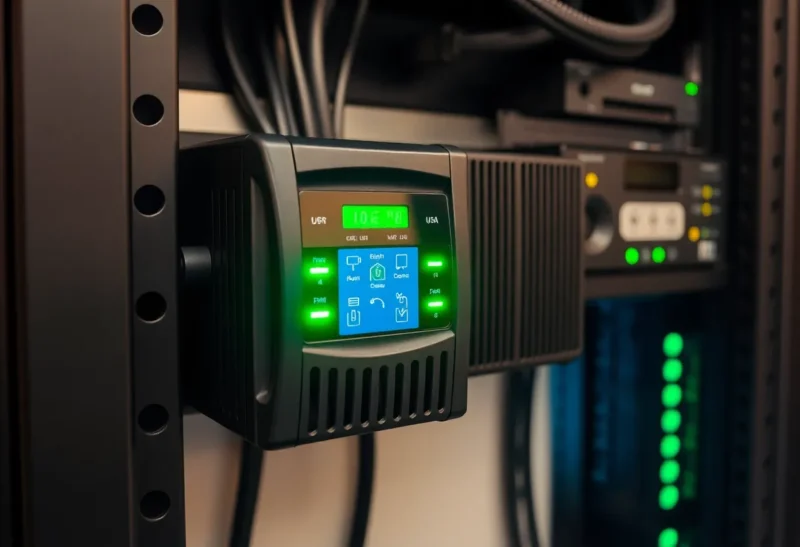
Your homelab runs 24/7. A NAS, a Pi or two, maybe a small server. When the power flickers or goes out, everything goes dark—and when it comes back, you might be restoring from backup instead of just rebooting. A UPS (uninterruptible power supply) buys you time: enough to shut down gracefully, or enough to ride out a short outage. The trick is sizing one that fits your load and your budget.
Why a UPS matters for homelab
Consumer-grade power is messy. Brownouts, voltage dips, and brief outages happen more often than most people notice. Computers and drives don’t love sudden power loss. A NAS doing a write when the power cuts can corrupt data. A server mid-update can end up in a bad state. A UPS smooths the ride: it conditions power during normal operation and switches to battery when the line fails, giving you minutes—or more—to decide what to do.
Most homelabs don’t need hours of runtime. You need enough time to notice the outage, trigger a graceful shutdown, or ride out a 30-second blip. Sizing for 10–15 minutes of runtime at full load is usually sufficient. That keeps the UPS physically smaller, cheaper, and easier to manage.
Measure your load first
Before buying, measure what you actually draw. A Kill A Watt or similar meter between the wall and your gear will give you watts. Add up everything that will run on the UPS: NAS, router, switch, Pis, server, modem. Don’t guess—measure. A typical small homelab might draw 50–150W. A beefier setup with a desktop-grade server could hit 200–400W.
Once you have watts, add 20–30% headroom. Spikes happen. Also, UPS capacity is usually stated in VA (volt-amps); real power in watts is typically 60% of VA for consumer UPS units (power factor around 0.6). So a 600 VA unit might handle ~360W. Check the specs for your model’s wattage rating.
Understanding VA, watts, and runtime
VA and watts aren’t the same. VA is apparent power; watts is real power. For switching power supplies (what most homelab gear uses), the power factor is often 0.6–0.7, so watts = VA × power factor. A 1000 VA UPS with 0.6 PF might only support 600W. Always use the watt rating when sizing.
Runtime scales with load. Double the load, roughly halve the runtime. Manufacturer runtime charts show this: a 1500 VA unit might give 20 minutes at 150W but only 5 minutes at 400W. Use the chart for your target load to confirm you’ll get the runtime you need.
Line-interactive vs double-conversion
Line-interactive UPS units are the norm for homelabs. They pass utility power through, correct minor voltage issues, and switch to battery only when the line fails. They’re efficient, quiet, and affordable. Double-conversion units continuously convert AC to DC and back to AC; they offer the cleanest power but use more energy and cost more. For a homelab, line-interactive is usually the right choice.
Battery replacement
UPS batteries last 3–5 years. After that, runtime drops. Plan to replace them; factor that into the total cost of ownership. Some units make replacement easy; others require opening the case. Check reviews. Also consider whether the UPS can communicate with your server—USB or network—to trigger shutdown scripts when the battery gets low.
Picking a size
For a 100W load wanting 15 minutes of runtime, a 600–900 VA unit typically works. For 200W, look at 1000–1500 VA. For 300W+, you’re in 1500 VA or higher territory. Brands like APC, CyberPower, and Tripp Lite have solid options in the consumer/small-business range. Read the watt rating and runtime chart, not just the VA number.
Sizing a UPS for your homelab isn’t complicated once you know your load. Measure, add headroom, pick a unit that delivers the runtime you need at that wattage, and plan for battery replacement. Your future self—the one not restoring from backup—will thank you.