Right-to-Repair Schematics: What OEMs Publish vs What Technicians Need

Rita Okon
April 7, 2026

Right-to-repair laws and OEM promises have pushed more manuals, parts lists, and diagnostic flows into public view. That progress is real — and still oddly hollow for anyone holding a multimeter next to a dead board. The gap is not always malice; it is a mismatch between what a legal team will release and what a technician needs to complete a safe, efficient fix. Schematics sit squarely in that gap: the Rosetta Stone between voltage rails, test points, and the silicon you cannot see.
This article names what vendors typically publish after pressure, what independent repair still begs for, and why the difference matters for shops, schools, and hobbyists trying to keep hardware out of landfills in 2026.
If you have ever watched a ten-minute teardown video just to find one fuse location, you already understand the inefficiency we are discussing. Multiply that by every school district maintaining laptops and every small shop quoting a flat-rate board repair.
The published bundle: better than nothing, thinner than it sounds
Common “repair kit” drops include exploded views, torque specs for case screws, battery removal sequences, and high-level block diagrams. Those help triage and reassembly. They rarely answer the question that burns labor hours: which FET died because a rail sagged? Block diagrams show boxes labeled “PMIC” or “charging subsystem” without the net names that let you probe intelligently.

When schematics appear, they are often partial: reference designs trimmed of security-sensitive pages, or PDFs scanned at angles that hate zoom. Technicians learn to treat official releases as hints, not gospel — especially when multiple revisions of a motherboard share a model number while carrying identical marketing names in online listings.
What technicians actually need on the bench
- Net names and rail voltages — So a shorted line is identifiable without guessing.
- Test point maps — Expected DC levels in boot vs sleep states, not just “TP12.”
- Bill of materials tied to PCB markings — The tiny silkscreen codes that match real MOSFETs.
- FW update and pairing dependencies — So a replaced module does not brick pairing security.
- Known failure modes — Even a bullet list reduces shotgun rework.
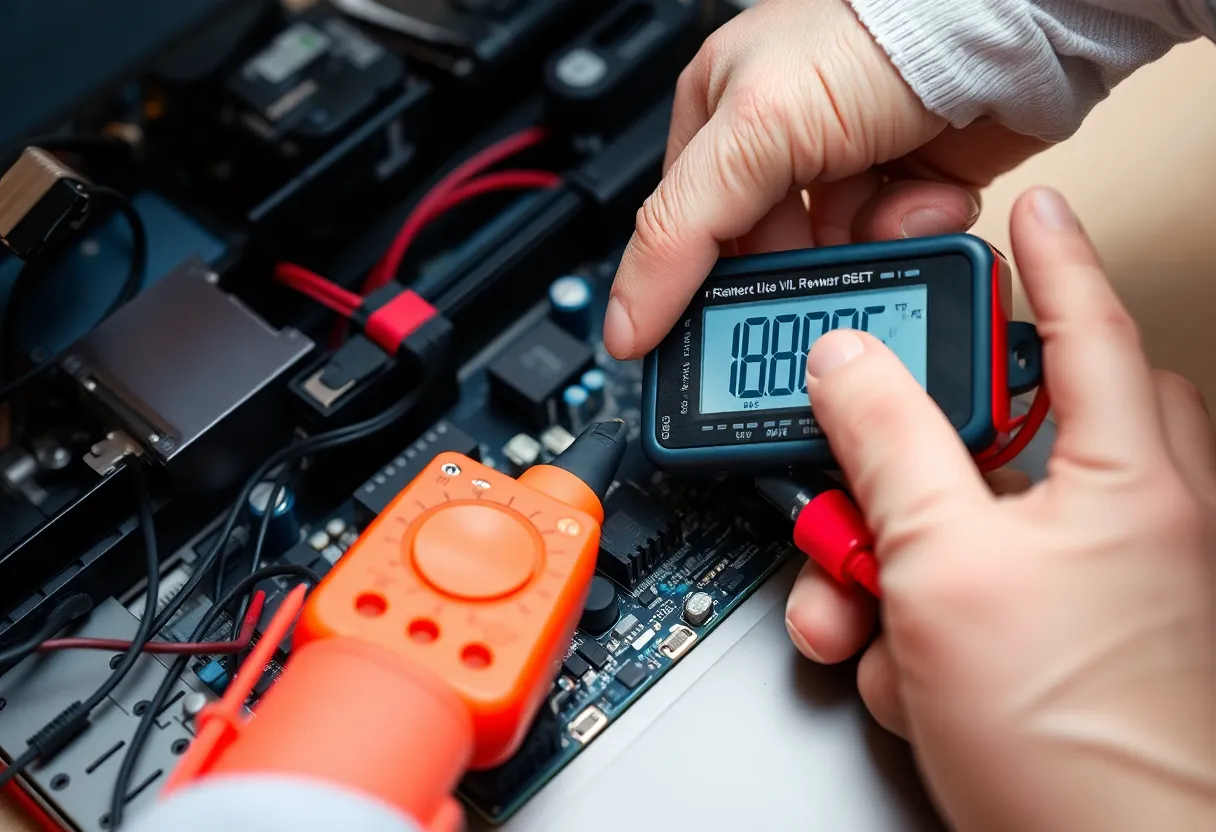
Without that stack, repair becomes archaeology: inject power cautiously, sniff heat, swap suspicious clusters, hope. Skilled techs succeed anyway — that is the insult. The job is possible despite missing docs, not because of generous ones.
Why OEMs hesitate (beyond cartoon villainy)
IP leakage, clone manufacturers, and regulatory safety concerns genuinely exist. So does fear of liability if a third-party misreads a schematic and damages property. The counterpoint is practical: reverse engineers already photograph layers; partial transparency often slows cloners less than it slows legitimate repair. Policy arguments will continue; your bench reality is unchanged — you still need rails and test points that match the exact revision on your bench, not a sanitized generic.
Third-party schematics and the ethics of gray knowledge
Independent communities trade boardviews, donor scans, and CAD reconstructions. Quality varies from lifesaver to hazard. Shops develop heuristics: cross-check net names against continuity, never trust a single crowd-sourced PDF under live mains, log source provenance for warranty disputes. Legal exposure differs by region; this article is not legal advice — it is a plea for primary sources to reduce gray-market dependence.
Education and workforce effects
Trade schools can teach soldering and workflow, but scarce schematics cap skill transfer. Students who might become excellent diagnosticians instead learn swap-the-board economics because that is what documentation supports. Publishing real schematics is how you grow a repair labor pool without mysticism.
Software locks and the schematic half-truth
Even perfect paper cannot fix parts-pairing nightmares: fingerprint modules, cameras with serialized calibration, batteries with authentication ICs. Schematics help you understand electrical health; software policy still decides whether the device accepts a fix. Right-to-repair advocacy increasingly targets calibration tools alongside PDFs — the schematic fight is necessary but not sufficient.
What to demand next from regulators and brands
- Machine-readable BOM correlation — Searchable, not JPEG mosaics.
- Revisioned schematics — Tied to serial ranges, not mystery spins.
- Post-repair verification steps — Official self-tests where safety allows.
Also ask for signal integrity context where high-speed lanes exist: impedance notes, coupling capacitor locations, and keep-out zones around RF shields. You may not need them for a charging fault — until you do, and then absence costs days.
Independent repair and warranty theater
Sticker warnings about voided warranties scare users more often than law supports, depending on region. Schematics reduce fear by making diagnostics legible: a documented test point turns “mystery damage” into measurable fact. Manufacturers who actually welcome repair publish evidence, not threats.
Supply chain knock-on effects
When technicians cannot identify a regulator package from silkscreen alone, they order guesswork parts, increasing returns and counterfeit exposure. Precise BOM mapping tightens the supply funnel, shrinking the counterfeit window. Documentation is a quality control instrument, not just a kindness.
Bottom line
Published repair packs are progress, but until schematics align with bench needs, independent repair remains unnecessarily expensive and risky. Technicians should keep advocating for net lists and test maps, not just torque diagrams. OEMs serious about sustainability can prove it by shrinking the gap between what they release and what a careful human with a meter actually requires.
Treat every new OEM portal like a product: if search is broken, versioning is unclear, and downloads expire, the documentation program is not serious yet — it is compliance cosplay with a CDN attached.
Shop workflows that survive bad docs
Document everything photographically before disassembly — connector orientations, shield stack order, screw lengths. Thermal camera passes catch shorts before they cook neighbors. Inject current-limited bench supplies on isolated subsections when you lack rail clarity. None of this replaces schematics; it buys time while you hunt leaks in the information pipeline.
Insurance, liability, and customer expectations
Shops should spell out what “no schematic” means for warranty on microsoldering: higher uncertainty, possible secondary failures, longer turnaround. Customers rarely understand board-level risk until someone explains it without condescension. Transparency converts arguments into informed consent.
Refurbishers and the scale problem
High-volume refurb houses amortize guesswork differently than neighborhood shops. They might cherry-pick boards with known-good recipes. That efficiency hides systemic cost: models deemed “uneconomic” become e-waste despite superficially repairable damage. Better OEM docs shift the economic frontier outward.
Security research and unintended allies
Security researchers sometimes publish analyses that incidentally illuminate power paths or UART pads. Citation hygiene matters — do not confuse a research blog with a service manual — but cross-disciplinary reading occasionally unlocks a stubborn rail mystery. Communities benefit when legal threats do not chill benign technical description.
Environmental accounting beyond slogans
Carbon math favors longer device lifetimes when repair is efficient. Incomplete schematics force broader component swaps and more trial heat cycles, increasing energy and material waste per successful fix. Sustainability reports should mention documentation depth, not only recycled packaging, because glossy boxes do not resurrect dead power rails.
Design-for-repair from the engineer’s desk
Internal design teams know test pads exist before marketing names a product. Advocacy that reaches hardware engineers — not only comms teams — changes outcomes. Testability hooks, labeled I2C buses, and consistent connector families cost BOM pennies relative to support load.
Until that culture spreads, technicians will keep doing what they have always done: improvise with skill, share fragments, and push policymakers for the PDFs that should have shipped in the box.
Regional law vs global supply chains
A repair law in one jurisdiction does not magically retcon hardware built for another. Global SKUs may omit schematics in markets without enforcement while quietly enriching docs where regulators bite. Technicians notice — the same laptop family behaves like two different products on paper. Harmonized requirements for documentation depth would reduce that whiplash, but politics moves slower than freight containers.
Medical and industrial equipment: a different bar
Life-critical devices rightly carry heavier documentation and calibration rules. Consumer electronics should not hide behind medical-grade caution as an excuse for opacity. The honest split is: publish what is safe to publish, channel restricted access for genuinely sensitive subsystems through verified partner programs — not through blanket PDF absence for charging ICs.
DIY enthusiasts and the safety line
Hobbyists benefit from schematics too, but must respect voltage stores, battery puncture risks, and mains-adjacent designs. Good documentation includes explicit warnings where energy can bite after unplugging. Technicians are not immune; clearer docs reduce ambiguous “is this line live?” moments that drive accidents.
Tooling literacy the PDFs assume you have
Even generous OEM drops assume oscilloscope literacy, hot-air rework skill, and microsoldering vision. Community repair spaces and libraries can close that gap if legal knowledge sharing keeps pace. Schematics without training still beat mystery meat boards — but pair releases with basic interpretive guides when possible.
Long-term archives and format rot
PDFs age better than proprietary viewers, yet link rot kills portals dead. Advocacy should include archival mandates: stable URLs, checksums, version history. A schematic dump that vanishes after two years is theater, full stop. Repair needs libraries that outlast a single product VP’s tenure.