Make.com Data Stores vs External Databases: Where Visual Automation Stalls at Scale

Sam Rivera
April 7, 2026

Make.com (formerly Integromat) gives teams a generous canvas: routers, iterators, error handlers, and native modules that feel closer to programming than some competitors. The Data Store feature sweetens the deal—key-value-ish storage without provisioning a server. For many scenarios, that is the right abstraction. For others, it becomes a gravity well that hides design debt until invoices and incident retrospectives get loud.
This article compares Make.com Data Stores with external databases for growing automations: where the native option wins, where it stalls, and how to migrate without drama.
What Data Stores are good at
Data Stores shine when you need lightweight persistence tied to scenario logic:
- Cursors and checkpoints for polling integrations.
- Short-lived flags coordinating between scenarios.
- Small entity caches to cut duplicate API calls.
- Prototyping before you know your final schema.
They reduce time-to-value. You stay inside one UI, one billing relationship, and one mental model. For solo operators and small teams, that cohesion matters.

Where the ceiling shows up
1. Relational truth
Business data is rarely a bag of keys. Customers have orders; orders have line items; subscriptions have phases. Modeling that in a Data Store means conventions, duplicate keys, and fragile integrity. You can fake relations until the first partial update corrupts a chain.
2. Concurrent writes and analytics
When multiple scenarios write related records under load, you want transactions or explicit locking patterns. Visual tools can orchestrate retries, but you are still implementing database semantics without database primitives. Separately, BI tools want SQL or warehouse exports—not click-through record browsing.
3. Compliance and retention
PII in a Data Store without a formal retention policy is technical convenience with legal tail risk. External databases let you apply encryption policies, row-level access, and backup strategies your security reviewer recognizes.
4. Cost optics
Operations that look cheap per module can get expensive at volume. External databases shift some spend to infra providers but often reduce scenario complexity and operation counts—sometimes paying for themselves in cleaner graphs.
Patterns that bridge the gap
Teams that succeed usually adopt a staged approach:
- Prototype in Data Stores to learn the shape of data in motion.
- Extract stable entities once fields stop churning weekly.
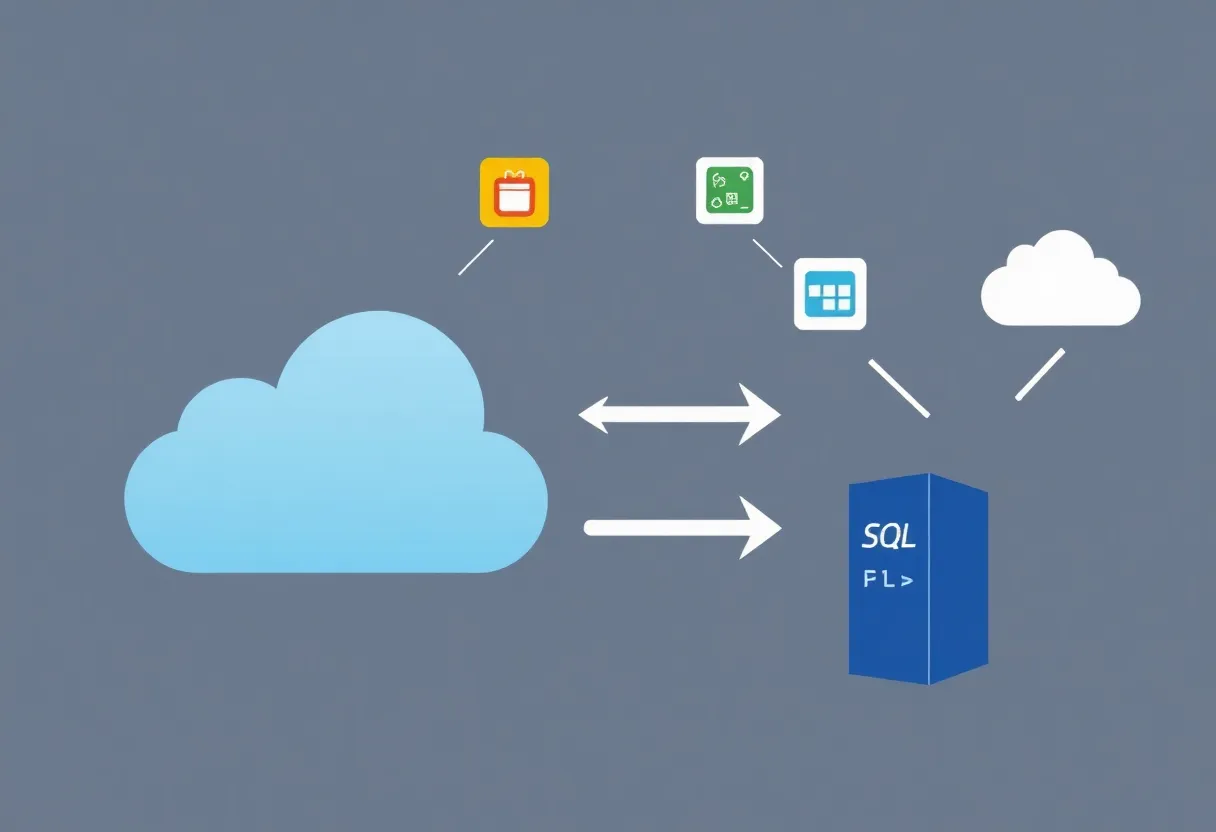
- Introduce Postgres, MySQL, or a managed document store with a thin API layer or direct SQL modules.
- Keep ephemeral scratch data in Make.com; keep durable facts outside.
The anti-pattern is copying the entire relational model into keys because migration feels scary. Rip the bandage once schema volatility drops.
Migration tactics without freezing the business
- Dual-write briefly—new records land in SQL while legacy reads finish draining from Data Stores.
- Checksum critical keys after migration to catch encoding surprises.
- Version scenarios so rollback is a toggle, not archaeology.
When external DB is the day-one choice
Skip the intermediate step if you already know you need multi-user CRUD surfaces, audit trails, or reporting joins. The hours “saved” avoiding Postgres will reappear as stringly-typed keys and midnight fixes.
Scenario sprawl and the “invisible schema”
Visual platforms make it easy to fork logic: duplicate a scenario, tweak a branch, ship. Each copy may introduce its own Data Store keys with slightly different naming. Six months later, nobody knows which scenario owns canonical customer state. External databases force a single front door—even if multiple scenarios write to it—because table definitions and migrations create shared truth. You can still sprawl scenarios, but the data model stops lying about uniqueness.
Observability and debugging at scale
When operations misfire, SQL lets you run explain plans, inspect slow queries, and attach standard monitoring. Data Store debugging often means stepping through scenario history and inferring intent from module bubbles. That is fine at small scale and exhausting at enterprise incident pace. Structured logs emitted from a small service layer around your database can correlate IDs across SaaS webhooks, retries, and human approvals in ways native storage rarely matches without export pipelines.
Choosing Postgres vs document stores
If your automations mostly move rectangular business objects—accounts, invoices, tickets—Postgres is the boring correct default. If payloads are heterogeneous JSON blobs from dozens of SaaS APIs with unpredictable fields, a document database can reduce migration friction. Either way, the decision belongs outside the scenario designer once those blobs become operational sources of truth rather than pass-through buffers.
Security boundaries for mixed teams
Low-code tools democratize access. That is a feature until finance data lives next to marketing experiments without row-level controls. Moving sensitive entities to a database with role-based access lets you expose Make.com scenarios to builders who should orchestrate—not read every row. Pair with views or stored procedures if you need guardrails without giving raw credentials to every editor.
Performance: operation counts vs query latency
Make.com pricing and throttles care about operations. A chatty pattern that reads Data Stores in a tight loop can spike costs even when each read is “small.” Batching, caching on the edge service, or pushing aggregations into SQL reduces both latency and module churn. Measure weekly operation totals when debating whether “we will optimize later” is still true.
Living with hybrid architectures
Mature stacks often stay hybrid forever: Data Stores for ephemeral coordination, SQL for durable records, object storage for attachments. Document the boundary in your internal wiki—future you should not need to reverse-engineer which scenario invented which key during an outage.
Conclusion
Make.com Data Stores are a pragmatic on-ramp, not a substitute for a database when your automation touches core business truth. Use them for agility early; graduate deliberately when concurrency, analytics, or compliance knock. The stall point is not Make.com itself—it is the moment your diagrams secretly became a poorly indexed schema wearing a purple UI.