Kobo Sage vs Kindle Scribe: Sideloaded EPUB Libraries Without Amazon’s Storefront

Walter Greene
August 25, 2026
A personal EPUB library is a folder with opinions. Calibre, a backup disk, covers you chose, series you named. Kindle Scribe will take those files if you convert and smile at Amazon’s pipeline. Kobo Sage will take those files as if they were already books. That difference is why people leave the Kindle store and then keep a Kindle anyway. The Scribe is a better notebook than the Sage. The Sage is a better citizen of a sideloaded library than the Scribe. If the tablet is Android and the vendor reader fights EPUB, that next fight is KOReader versus NeoReader.
I loaded the same 400-title Calibre library onto both. I did not care about stylus latency for this test. I cared about collections, series, fonts, and whether a book I bought from a small press still looked like the file I paid for. The Sage behaved like a library device. The Scribe behaved like a Kindle that had been asked to host guests.
Calibre to each device, without romance
Kobo plus Calibre is a long marriage. Drivers, collections, kepub if you want Kobo’s nicer pagination, series columns that actually show. It is fiddly the first Saturday and then it is a weekly send of new titles. The Sage, as an 8-inch stylus Kobo, sits in that marriage. It is not a Boox computer. It is a reader that speaks EPUB without asking Amazon to ingest it.
Kindle plus Calibre is a negotiation. Formats, Send-to-Kindle, USB, personal documents that lose series information, covers that vanish, collections that you rebuild in Amazon’s UI. The Scribe’s large screen is lovely for PDFs and for writing. For a novel library you already own, the extra inches do not fix the guest-host problem. You are still a guest.
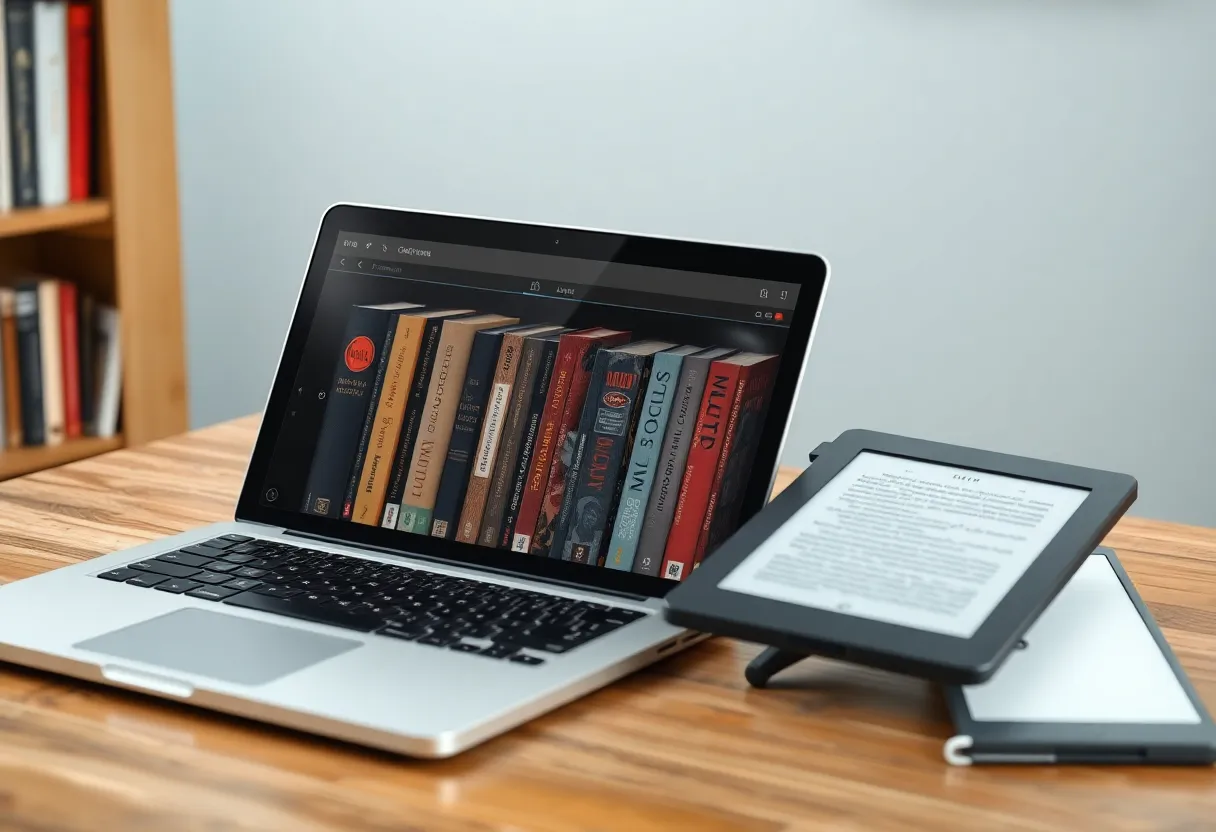
What “sideloaded” must mean
Sideloaded means the file on the device is recognizably the file on the disk. Metadata you set is metadata you see. You can remove the book by deleting a file. You are not waiting for a cloud to forget it. Kobo comes closer. Kindle personal documents can work and can also become “documents” that are not books in the same way purchased titles are books. That caste system is the storefront leaking into your folder.
OverDrive and library loans are a separate Kobo strength in some regions. I will not pretend every country is the same. I will say: if your life is public-library EPUBs plus a Calibre archive, Kobo is the default I recommend before I recommend a Scribe. If your life is Kindle Unlimited plus a few sideloads, the Scribe is the default and this article is not for your main library — it is for the sideloads you keep fighting.
Writing versus reading as the primary job
Sage has a stylus and people bought it as a note device. It is not a reMarkable and it is not a Scribe. Notes are adequate. The screen size is a reader size. If notes are why you want 10 inches, the Scribe wins and you should accept Amazon’s library caste. If notes are a margin habit and books are the job, Sage wins the sideload argument even if the Scribe is nicer to hold as a clipboard.
I kept the Sage in the bag for novels. I kept the Scribe on the desk for papers and journals. Two devices again. If I could keep one for a Calibre life, it would be the Kobo. If I could keep one for mixed papers and Kindle purchases, it would be the Scribe. The title of this piece is the first life.

Fonts, hyphenation, and the small-press EPUB
Sideloaded EPUBs from small presses sometimes ship with fonts and CSS that Kindle’s converter “improves.” Improvement is how a verse play becomes a paragraph. Kobo’s renderer has its own opinions, but I have had fewer smashed poems after a kepub send than after a Send-to-Kindle conversion. I test one weird file on both before I trust a trip. The weird file is the test, not the Penguin classic.
Publisher CSS on Kobo can be toggled more like a reader talking to a file. Kindle personal docs vary with the path you used this quarter. I keep a note of which path I used for the weird file. I should not have to. I do.
Collections, series, and the 400-title problem
A library that size without series metadata is a junk drawer. Calibre’s series column to Kobo is a reason people stay. Kindle collections are a manual sport if the sideload did not carry the series. I will not maintain 400 collections by hand. I will maintain a Calibre column. Therefore I will prefer the device that reads the column.
Covers: both can show them. Kindle personal docs have ghosted on me after a reboot. Kobo has too, after a failed sync. I keep covers in Calibre as the truth. The device is a cache of covers. When a cover dies, I resend the book. I do not redesign the storefront.
Battery, size, and the bag
Sage is easier in a jacket. Scribe is a slab. For a Calibre library of novels, I want the jacket. For PDFs, I want the slab. Sideloaded novels do not need 10.3 inches. They need a renderer that respects the file. People buy the Scribe for the slab and then are surprised the library feels like Amazon. They bought a notebook that is also a store.
Battery on both is e-ink easy if you are reading books. The Scribe’s extra features and the Sage’s stylus wake-ups are not the story. The story is whether you will sideload or you will tap Buy. The storefront is always closer on Kindle. That is a feature if you like it. It is a leak if you are trying to read the files you already have.
DRM you already escaped
This article assumes files you are allowed to move. If your books are locked to Kindle, the Sage will not save you without a process I will not treat as casual. Stay on Scribe or stay in the store. Sideload comparisons are for owners. Ownership is a legal and a file-format fact. I am not your lawyer. I am the person who got tired of converting the same novel twice because Amazon wanted a different wrapper in March.
OverDrive, Pocket, and other side doors
Kobo’s extra doors (library, Pocket, a store that is not Amazon) make the Sage a better “I read files and also sometimes borrow” machine. Those doors can also distract you into another account. I keep them if I use them monthly. I ignore them if I do not. A sideload purist can turn the radio off and live in USB. That is a valid Sage life. It is a harder Scribe life.
Highlights that leave the device
A sideloaded library is not finished until highlights can leave. Kobo’s export of annotations from sideloaded books has been more file-like for me: I get a thing I can file. Kindle highlights on personal documents depend on the path and the week. I have copied highlights by hand from a Scribe because the export was a picture of a thought. That is fine once. It is not a library practice.
I keep highlights I care about in the vault the same week. I do not build a second brain on the e-reader. The reader is for reading. The vault is for keeping. Both devices will lose a highlight in a software season. The vault will not if I did the work.
Dictionaries on sideloaded books: Kobo has generally let me use the dictionary I expect. Kindle personal docs have sometimes behaved like texts without a proper language tag. I set language in Calibre. I still hit a file that looks like English and looks up like noise. I fix the metadata and resend. Metadata is part of sideloading. People who skip it blame the device for a column they left empty.
If you will not maintain Calibre, you will not have a sideloaded library. You will have a pile. A pile is fine on a cheap reader. It is a waste of a Sage or a Scribe. Buy the software habit or buy the storefront. The middle is where files go to be renamed “Personal Document.”
The choice I would make again
For a Calibre-shaped life, I would buy the Sage and I would not look at the Scribe except when I need a desk notebook. For a Kindle-shaped life with a few guest EPUBs, I would buy the Scribe and I would keep those guests on USB without expecting series nirvana. I would not buy the Scribe to escape Amazon. That purchase is a joke you tell with your wallet. Escape is a Kobo or a Boox or a folder of EPUBs on a cheap reader. The Sage is the escape that still feels like a grown reader, stylus and all, without asking a storefront to host your guests like they might steal the silver. Guests should feel at home. On Kobo they do. On Kindle they wipe their feet and wait.