How Waterproof Ratings Actually Work—And What IP68 Really Means

Tyler Marsh
July 7, 2026
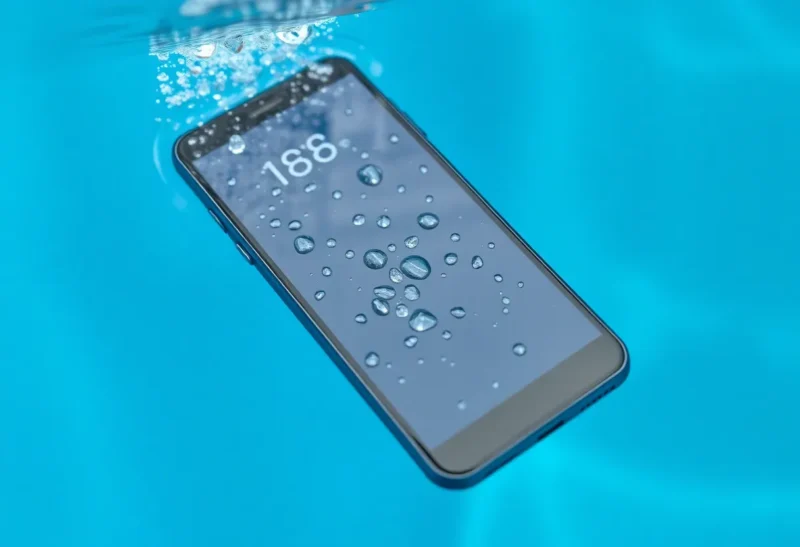
“IP68 water resistant” appears on the spec sheet of most premium smartphones, smartwatches, and earbuds. It sounds comprehensive—68 sounds like a high number. What it actually means is more specific, more limited, and more variable than the marketing language conveys, and understanding it matters because water damage that falls outside the rating’s parameters typically isn’t covered by manufacturer warranty even on devices that are explicitly marketed as water resistant.
What IP Stands For and How the Code Works
IP stands for Ingress Protection—defined by the IEC 60529 international standard, which specifies a testing framework for how well an enclosure protects against solid particles (dust) and liquids (water). The rating consists of two digits: the first specifies solid particle protection, the second specifies liquid protection.
First digit (solid particle protection):
- 0: No protection
- 1: Protection against objects larger than 50mm
- 2: Protection against objects larger than 12.5mm
- 3: Protection against objects larger than 2.5mm
- 4: Protection against objects larger than 1mm
- 5: Dust protected (limited ingress, no harmful deposit)
- 6: Dust tight (complete protection against dust ingress)
Second digit (liquid protection):
- 0: No protection
- 1: Dripping water (vertical)
- 2: Dripping water at 15° tilt
- 3: Spraying water (up to 60° from vertical)
- 4: Splashing water (from any direction)
- 5: Water jets (12.5L/min at 30kPa)
- 6: Powerful water jets (100L/min at 100kPa)
- 7: Immersion up to 1 metre for 30 minutes
- 8: Immersion beyond 1 metre (manufacturer specified depth and duration)
- 9K: High-pressure, high-temperature water jets
So IP68 means: dust tight (6) and immersion-capable at depth and duration specified by the manufacturer (8). The “68” doesn’t specify the depth or time—those parameters are set by the manufacturer and disclosed separately. The iPhone 15 Pro’s IP68 rating specifies 6 metres for 30 minutes. The Samsung Galaxy S24 Ultra’s IP68 specifies 1.5 metres for 30 minutes. Both are IP68, but the specifications are different.
What the Testing Actually Involves
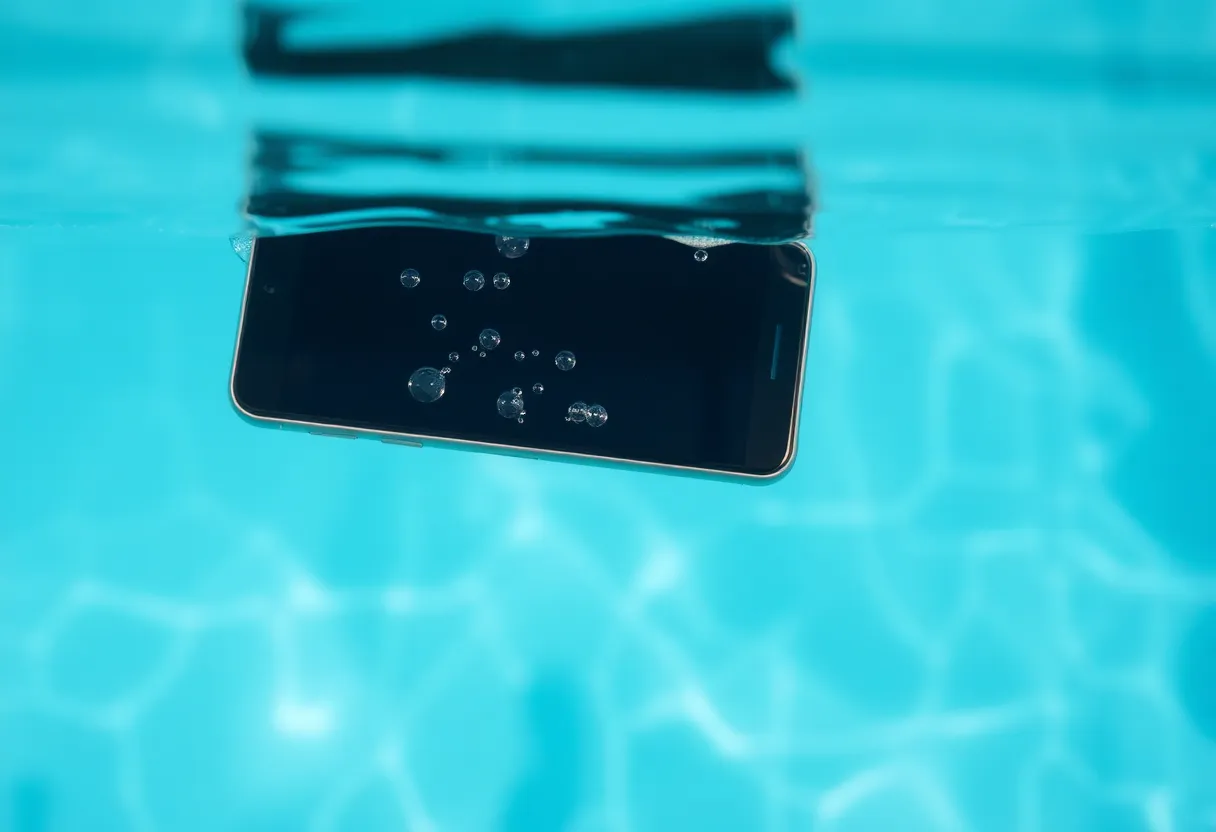
IP ratings are based on specific standardised tests defined in IEC 60529. For the IPX8 (level 8 liquid protection) test that most premium smartphones carry:
The device is placed in fresh water at room temperature and submerged to the manufacturer-specified depth. It stays there for the manufacturer-specified duration (typically 30 minutes). After retrieval, it’s inspected for water ingress. If no harmful ingress occurred, it passes.
Several important points about what this test doesn’t include:
Fresh water only. The IEC 60529 tests use fresh water. Saltwater (ocean, swimming pool chlorinated water) is more corrosive and has different surface tension properties than fresh water. A phone rated IP68 in fresh water lab conditions may perform differently in saltwater—and saltwater damage typically voids the warranty even if the device claims IP68.
Static conditions, not dynamic. The test involves static immersion—placing the device at depth without movement. Dropping a phone into moving water, swimming with it as water jets against seals during movement, or using it in high-pressure shower spray creates dynamic pressure conditions not covered by the IPX8 test. High-pressure water jets require an IPX6 rating or the separate IPX9K (which is a different test for high-pressure, high-temperature jets).
Room temperature water. The test uses water at approximately 20°C. Very cold water (winter lake) or very hot water (hot tub, shower steam) may affect seal materials and gasket performance in ways the standard test doesn’t evaluate.
New condition only. The device is tested in new condition before any use. Drops, scratches, and normal wear can compromise seals and adhesive gaskets over time. A phone with a hairline crack from being dropped may admit water at depths it would have survived when new. The IP rating reflects the device at time of manufacture, not after two years of use.
Why Warranties Don’t Cover Water Damage Even on IP68 Devices
This is the part that frustrates consumers most: the manufacturer warranty on an IP68-rated phone typically explicitly excludes water damage. This seems contradictory—if the phone is rated IP68, how can water damage not be covered?
The explanation is that IP ratings certify that the device passed the test at time of manufacture under the specific test conditions. They don’t certify that the device will survive any water exposure in real-world conditions. Apple’s warranty statement says liquid damage isn’t covered; Samsung’s says the same. The IP rating is a marketing feature and a manufacturer claim, not a warranty coverage commitment.
Many modern phones include liquid contact indicators (LCIs) in the SIM tray slot—small white or silver strips that turn red when exposed to water. Technicians check these during warranty service to determine if water exposure occurred; a pink or red LCI typically results in a warranty denial regardless of the device’s IP rating.
Some manufacturers offer AppleCare+ or Samsung Care+ extended warranty programs that do cover accidental damage including water damage, with a deductible. This is the correct product for users who want genuine coverage against water damage—not reliance on the IP rating alone.
The MIL-STD-810 Rating You See on Rugged Devices
Some outdoor and rugged-oriented devices list MIL-STD-810 (Military Standard 810) compliance alongside or instead of IP ratings. MIL-STD-810 is a US Department of Defense testing standard that covers a broader range of environmental stresses: temperature extremes, humidity, altitude, vibration, shock, and water exposure.
MIL-STD-810 compliance is self-certified—there’s no independent certification body, and the standard itself specifies dozens of individual test methods that a device may or may not undergo. When a device claims “MIL-STD-810 compliance,” you’re seeing a manufacturer’s claim that the device passed certain tests from the standard, but which tests were run and under what conditions is at the manufacturer’s discretion. It’s a less standardised and less comparable claim than IP ratings, and the specific subset of MIL-STD-810 tests run varies significantly between products.
What Ratings Different Use Cases Actually Need
Translating IP ratings into purchase decisions by use case:
Casual water exposure (hand washing, rain, accidental spills): IPX4 (splash protection from any direction) is sufficient. Nearly all modern smartphones, even budget ones, meet this level. The premium from IP68 over IPX4 is substantial in marketing terms and modest in everyday practical terms for most users.
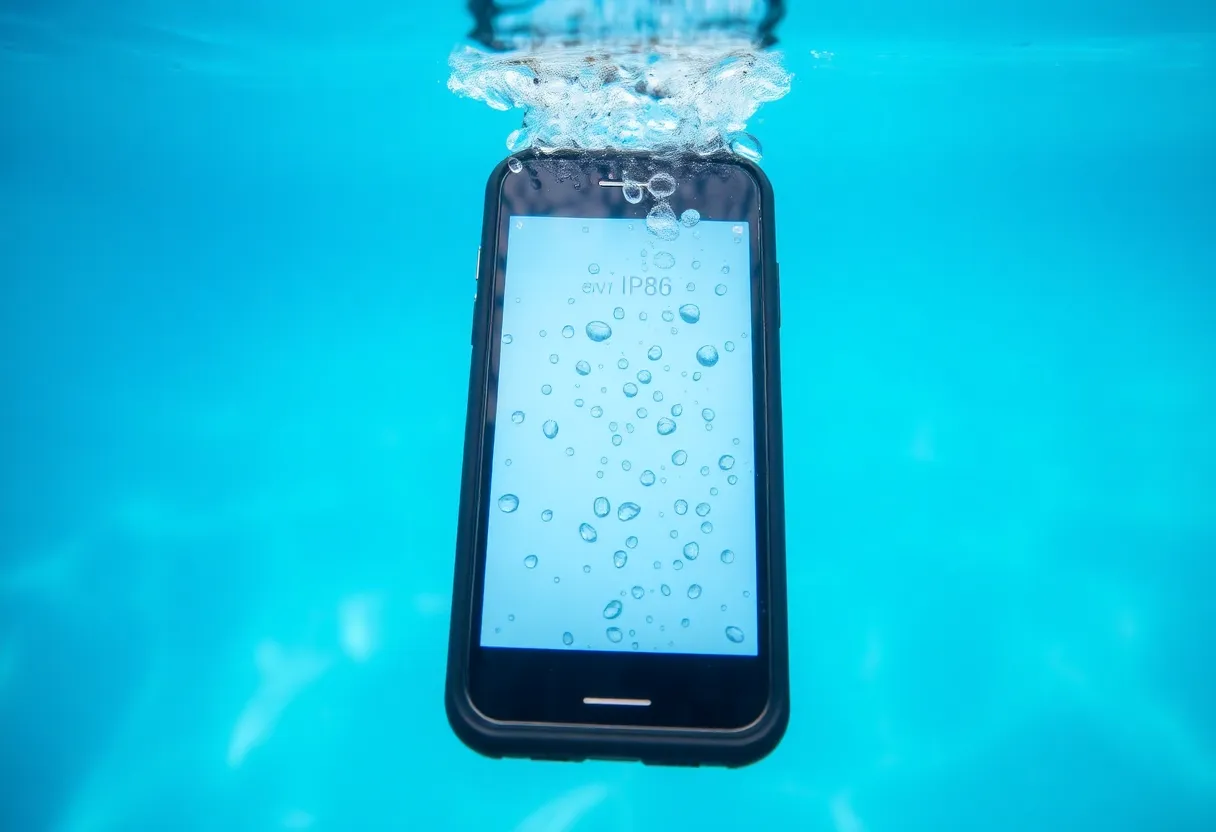
Swimming (pool, calm freshwater): IPX7 (1 metre for 30 minutes) is the minimum useful specification. IP68 at the manufacturer’s specified depth is suitable. Apple Watch Series (rated 50 metres WR for swimming) and the Apple Watch Ultra (100 metre WR) are rated to international swimming standards (ISO 22810), which is actually a more rigorous certification for swimming than standard IP68.
Snorkelling or shallow diving: Consumer electronics IP ratings don’t cover this reliably. Specialised housings or purpose-built dive computers with dive-rated certifications are appropriate. IP68 doesn’t certify for repeated immersion, pressure variation with depth changes, or saltwater conditions.
Dusty environments (construction, outdoor work): The first digit matters. IP6X (dust tight) is what you need; IP5X (dust protected but not tight) may not be sufficient for fine sawdust or similar particulates.
Outdoor rugged use: A device with both a high IP rating and meaningful shock/drop resistance (expressed via the manufacturer’s stated drop rating in feet/meters, MIL-STD-810 compliance for shock, and tempered glass specifications) is more relevant than IP rating alone. Water resistance and drop resistance are separate specifications.
The Practical Takeaway
IP68 is a meaningful specification that indicates the device passed a specific water immersion test in controlled conditions. It doesn’t mean you can take your phone snorkelling, use it confidently in saltwater, or that repeated or long-duration immersion is safe. The warranty typically won’t cover water damage anyway, so IP68 is best understood as an accident margin—protection from the dropped-in-toilet or caught-in-rain scenarios—rather than a license for intentional water use beyond the tested depth and duration.
When buying a device for genuine water sports or outdoor use, look for products with explicit swimming certifications (ISO 22810 for timepieces, ATM depth ratings with tested saltwater performance), or invest in a quality waterproof case for devices you need to use around water regularly. The IP68 label on a phone spec sheet is a floor, not a ceiling, for what you’re planning to do with it.