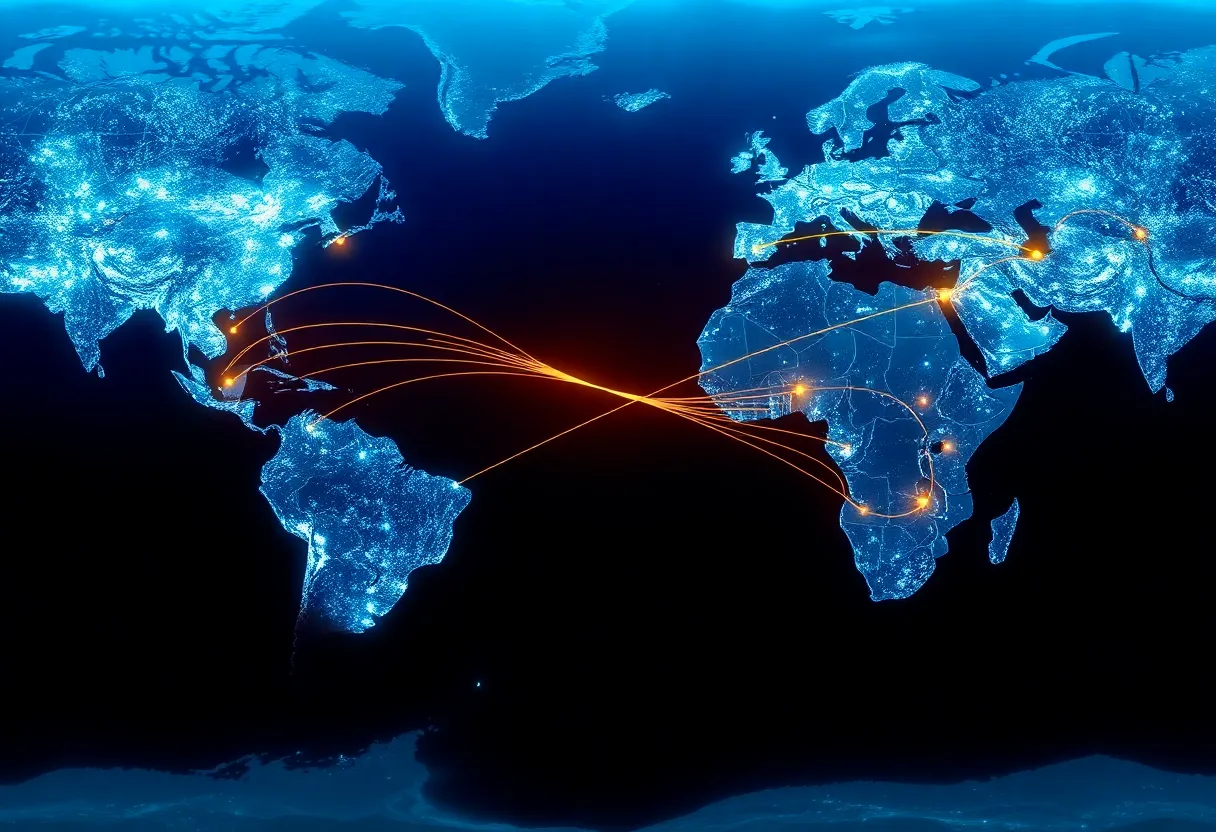
Most of the internet feels weightless—clouds, wireless, satellites. But the vast majority of cross-border data travels through cables on the ocean floor. Undersea (submarine) fiber-optic cables carry over 95% of intercontinental internet traffic. When you video-call someone on another continent, stream a show from a server overseas, or load a page hosted in another country, the bits almost certainly passed through one of these cables. They’re the backbone of the global internet—and most people have no idea they exist.
Here’s how undersea cables work, who builds and owns them, and why they still beat satellites and every other alternative for moving data across oceans.
Why Cables Beat Satellites (and Everything Else)
Satellites get the glamour, but they can’t match the bandwidth and latency of fiber under the sea. Light in a fiber-optic cable travels at roughly two-thirds the speed of light in a vacuum; it’s fast and you can push enormous amounts of data through a single strand using multiple wavelengths (dense wavelength-division multiplexing). A single modern submarine cable can carry dozens of terabits per second. Satellites in low Earth orbit are improving, but they’re still orders of magnitude behind on capacity and are more expensive per bit. For bulk international traffic—the kind that connects data centers, carriers, and continents—cables are the only game in town.
Latency matters too. A signal crossing the Atlantic in a cable takes about 60–70 milliseconds round-trip. Geostationary satellites add hundreds of milliseconds; even LEO constellations add more delay and variability than a straight cable path. For finance, gaming, and real-time collaboration, those milliseconds matter. So the internet’s physical layer is overwhelmingly submarine cable.
What’s Inside the Cable
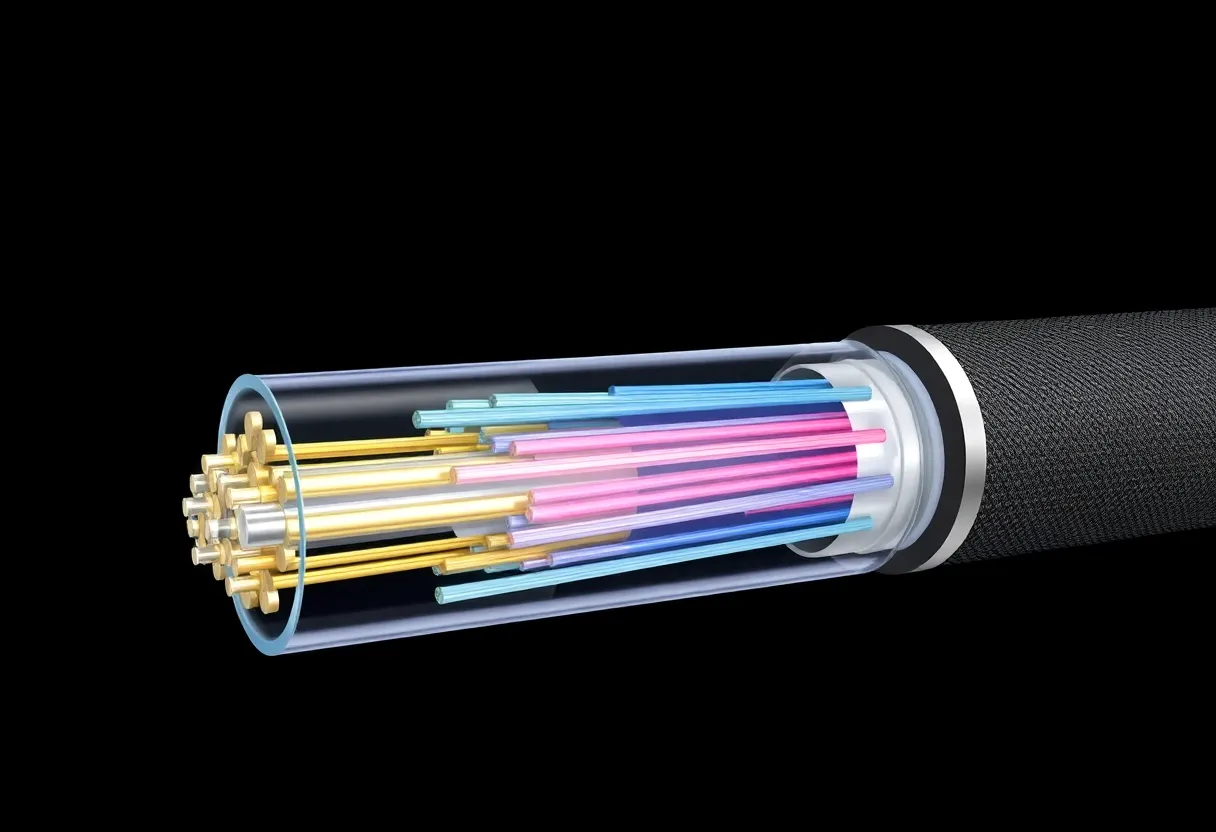
A submarine cable might look like a single rope from the outside, but it’s a carefully engineered stack of layers. At the core are thin strands of glass—optical fibers—that carry light. Around them: gel or other material to protect and isolate the fibers, copper or aluminum for power (repeaters along the route need electricity), steel armor for strength, and polyethylene for insulation and abrasion resistance. Cables laid in shallow water or near shore are often more heavily armored against anchors and fishing gear; deep-sea stretches can be lighter. The whole thing is typically a few inches in diameter—surprisingly thin for something that carries a large share of the world’s data.
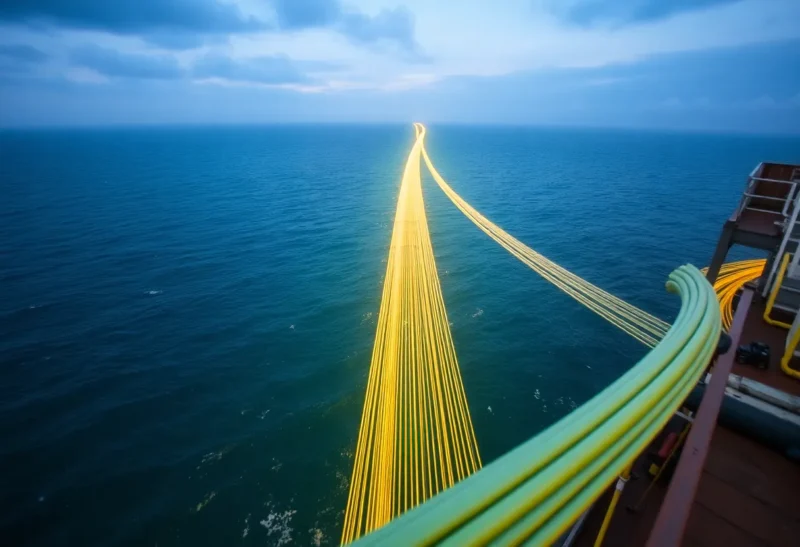
Every 50–100 kilometers, repeaters (optical amplifiers) boost the signal so it can travel thousands of miles. Power is fed from landing stations on shore, so the cable is one long electrical loop. Repairing a broken cable means sending a specialized ship to find the fault, haul the cable to the surface, and splice in a new section. That can take days or weeks, depending on location and weather—which is why redundancy (multiple cables on different routes) is critical.
Who Builds and Owns Them
Submarine cables are built by consortia or single operators. A consortium might include telecom carriers, tech companies (Google, Meta, Microsoft, Amazon all own or co-own cables), and regional operators. They share the cost—often hundreds of millions of dollars per cable—and the capacity. Ownership doesn’t mean exclusivity; capacity is usually sold or leased to other carriers and content providers. So even if you’re not a cable owner, your traffic may ride on a cable owned by a big tech company, because your ISP or carrier buys capacity on it.
New cables are planned years in advance. Route surveys check the seabed for hazards; permits and landing rights are negotiated with every country the cable touches. Installation is done by a handful of specialized ships that lay the cable (or bury it in shallow areas) and then bury or protect it where needed. The whole process from planning to operation can take half a decade. It’s one of the largest and most coordinated infrastructure projects in the world—and it happens largely out of sight.
Risks and Redundancy
Cables can break. Fishing nets, ship anchors, earthquakes, and even occasional sabotage can cut a cable. When that happens, traffic is rerouted over other cables—if they exist. Redundancy is why major routes (e.g. across the Atlantic or Pacific) have many cables; a single cut is a blip. But some regions depend on one or two cables, and a cut there can cause major outages or severe congestion. The industry tracks faults and repairs them as quickly as possible; there’s a small fleet of cable ships dedicated to that job.
Understanding undersea cables also helps explain geopolitics and security. Governments care about who controls cable routes and landing stations. Some countries have tried to restrict or monitor cable landings; others see cables as critical infrastructure to protect. The physical geography of the internet is a reminder that “the cloud” is still a set of very real wires—and that keeping the internet running depends on the people and ships that lay and maintain them.
The Bottom Line
Undersea cables are the invisible backbone of the global internet. They carry almost all intercontinental traffic, offer unmatched capacity and latency, and are built and maintained through a mix of consortia, tech companies, and specialized ships. Next time you send a message across an ocean in milliseconds, remember: it almost certainly traveled through a cable on the seafloor. The internet is still, in the end, a network of physical things—and undersea cables are the most important physical layer we’ve got.