Hard conversations at work — and the ones that follow you home. What I’d practice first

Tobias Werner
September 21, 2026
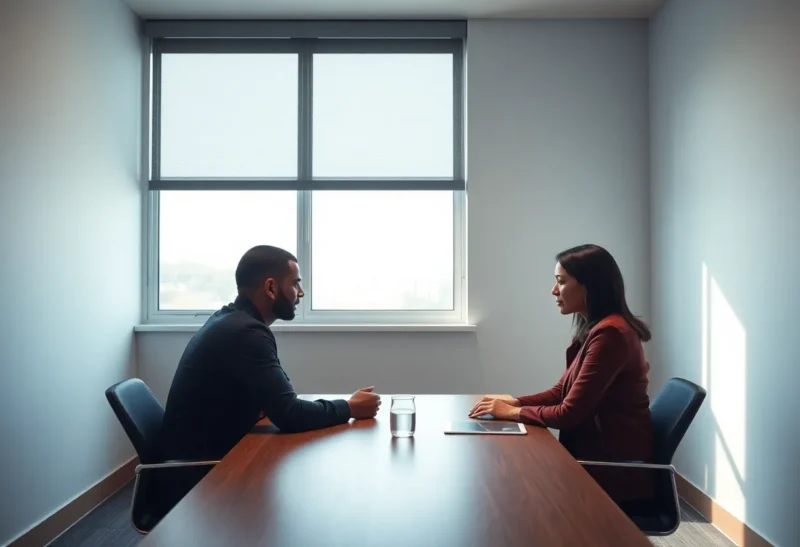
I used to think hard conversations were a personality trait. Some people were “good at conflict.” The rest of us waited until the problem was expensive, then apologized our way through a messy meeting.
That story was wrong. Hard conversations are a practiced skill with a few repeatable moves. The ones that wreck your evening are usually not the ones where you said something sharp. They are the ones you delayed, softened into mush, or “won” in the room and lost in the relationship.
I am an engineering manager who still writes code some weeks. The conversations that follow me home are rarely about syntax. They are about missed trust, unclear ownership, and feedback I delivered too late to be kind. This is what I practice first now — at work, and on the walk afterward.
What makes a conversation “hard”
Hard does not mean rude. Hard means there is a real chance the other person will feel threatened, disappointed, or exposed — and you still need a clear outcome.
In tech teams, the common shapes are:
- Performance that is not landing, said early enough to matter
- A design decision you disagree with, without turning it into a status fight
- Scope you cannot accept without lying about the date
- Behavior that is eroding the team, even when the person is “high output”
- Your own mistake, named without self-flagellation theater
If the only risk is mild inconvenience, you do not need a speech. Send the note. Save the hard-conversation energy for moments where avoidance will cost more than discomfort.
What I practice before the meeting
I used to prepare by rehearsing clever lines. That made me sound sharp and land less. Now I prepare four things on paper:
- The observable facts. What happened, when, and what evidence I would accept if I were wrong.
- The impact. Who was affected, and how — customers, teammates, timeline, trust.
- The ask. One clear change or decision, not a personality renovation.
- The listening question. What I still do not know about their constraints.
If I cannot write those four without adjectives like “always” and “never,” I am not ready. I am loaded.
I also decide the venue. Public Slack threads are for coordination. Private rooms are for dignity. Ambiguous hallway chats are how both people leave with different stories.

The opening I trust
My opening is deliberately dull:
“I want to talk about X because Y is happening, and I need Z. I may be missing context — tell me what I’m not seeing.”
Dull is a feature. Dramatic openings make people defend their identity. Dull openings make people engage the problem.
Then I stop talking. The urge to fill silence is how I used to talk myself out of the ask. Silence is where the other person’s real model of the world shows up.
During the conversation: stay on the decision
Hard conversations go sideways when they become trials. I watch for three derailments:
Story inflation. “You don’t care about quality” is a story. “The last three releases shipped without the checklist we agreed on” is a fact pattern. Stay with the pattern.
Scorekeeping. Dragging in every annoyance from the last year feels thorough and lands as an ambush. If older patterns matter, name one representative example and the trend — not a dossier.
False peace. “Let’s just move on” can be mercy or avoidance. If the underlying commitment is still unclear, moving on is how the same talk returns next month with more heat.
When emotions rise — mine or theirs — I name the state without diagnosing the person: “I’m getting heated, and I want to stay useful. Can we slow down and separate the facts from the interpretation?” That line has saved more relationships than any clever rebuttal.

The conversations that follow you home
Some talks end cleanly in the room and still rattle around your kitchen. That is not always a sign you failed. It is often a sign the stakes were real.
What follows me home, specifically:
- Feedback I delayed until the only remaining option was a formal path
- Moments I protected my comfort instead of the team’s clarity
- Times I “won” the argument and lost the person’s willingness to bring me bad news
What helps on the walk home is a short debrief with myself — not a rumination spiral:
- Did I say the true thing kindly enough to be heard?
- Did I leave with a shared next step?
- What will I do in the next forty-eight hours to show the conversation was about the work, not a verdict on the person?
If the answer to (3) is nothing, the conversation was incomplete. Trust is rebuilt in ordinary interactions after the hard one: a fair review comment, a public credit, a check-in that is not another correction.
Practice drills that actually transfer
You cannot only practice hard conversations when careers are on the line. I use smaller reps:
- Disagree in design review with a recommendation, not a veto vibe. “I recommend X because of Y; here’s what would change my mind.”
- Name a miss early. “This estimate was wrong; here’s the new plan.” Early ownership is a milder hard conversation that trains the muscle.
- Ask for feedback when you still like the person. Waiting until you are resentful makes the ask radioactive.
- Role-play once with a trusted peer before a truly high-stakes talk. Ten minutes. Not a committee.
I also practice writing the message I wish I had sent, then deleting the performance and keeping the clarity. Drafting is rehearsal. Sending the first draft while angry is how private frustration becomes a permanent record.
Special case: the “message after the meeting”
A lot of engineers are fine in the technical debate and terrible in the follow-up. I was. I would leave a meeting thinking alignment existed, then write a vague summary that let every person keep their private interpretation.
Now the follow-up is part of the hard conversation, not an afterthought. Within a few hours I send: decision, owners, open questions, and the date we will revisit if needed. If I cannot write that, we were not aligned. The discomfort of clarifying is cheaper than the discomfort of discovering divergence in production.
What I will not practice
I will not practice cruelty dressed as candor. “I’m just being direct” is not a license to humiliate. Directness without care is laziness about impact.
I will not practice conflict avoidance dressed as kindness. Softness that leaves the other person confused is not kindness. It is deferred harm.
I will not practice making every disagreement a values referendum. Sometimes it is just a trade-off, and the adult move is to pick, record, and move.
A first-week practice plan
If this skill feels rusty, do not wait for a crisis:
- Write the four-part prep for a real, medium-stakes conversation you have been avoiding.
- Have it within five days.
- Send a clear written follow-up the same day.
- Do one ordinary trust-repair action in the next two days.
- Note what followed you home — and whether the follow-through shortened that echo.
Hard conversations are not proof you are a harsh person. Avoiding them until the org chart has to intervene is how kind people become accidental cowards. Practice the dull opening, the clean ask, the honest listen, and the written close. The talk may still follow you home. At least it will follow you home for the right reasons — because you told the truth in time, not because you waited until truth was the only blunt instrument left.