Edge AI in Consumer Gadgets: On-Device Inference vs Cloud in 2026

Casey Holt
April 8, 2026

Every consumer gadget pitch in 2026 wants an AI angle. Cameras want scene understanding, phones want smarter keyboards, earbuds want noise profiles that adapt to your commute. Behind the marketing slides sits a real engineering fork: run the model on the device—burning battery and thermals—or ship pixels and audio to the cloud, trading latency and privacy for scale.
Neither choice is universally correct. Edge AI wins some battles; cloud inference wins others. The useful question is what your product actually needs: responsiveness, cost predictability, offline survival, or the latest giant model that will not fit in a pocket.
Consumers hear “AI” as a monolith; engineers know it is a stack of preprocessors, models, postprocessors, and policy filters. This article keeps the stack invisible when possible but flags the seams where marketing often overclaims—especially around privacy, parity, and what happens when networks fail.
What “edge” means in plain language
Edge inference usually refers to running a neural network on local silicon: a phone’s NPU, a dedicated accelerator in a camera, or a microcontroller in a sensor. The model weights live on or near the user, and outputs appear without a round trip to a remote datacenter—though the device may still phone home for telemetry, model updates, or secondary processing.
Cloud inference means the heavy lifting happens on servers you operate or rent. Clients send features, embeddings, or raw media; servers return results. That model scales with GPUs in the cloud, not with the user’s battery budget.
Between those poles sits a spectrum of “near edge” deployments—on-prem servers in stores, campus gateways, and telco points of presence—useful for latency-sensitive enterprise workloads even when full on-device inference is impossible. Consumer gadgets mostly highlight phone versus cloud, but the same trade-offs echo in larger systems.
Why vendors push on-device AI
Latency is the headline. Speech and vision features feel magical when feedback is immediate. Privacy is the second headline: data that never leaves the device never transits someone else’s network—though “never” still depends on honest implementation and secure storage.
There is also cost shifting. If a billion phones each run a small model locally, the cloud bill for daily inference drops compared with centralizing every query—at the expense of engineering effort to optimize models for NPUs and to ship updates safely.
NPUs and the hardware lottery
Not all “AI phones” allocate silicon the same way. Some NPUs excel at convolutions for camera pipelines; others target transformer-friendly operations. A model that flies on one vendor’s stack may need re-architecture on another. That fragmentation shapes which features ship globally versus regionally, and it explains why two flagship phones feel different even with similar marketing numbers.
Thermal budgets matter as much as peak TOPS. A burst of inference for a photo effect is easy; continuous inference for live translation taxes cooling. Product managers should pair feature specs with worst-case environmental tests, not only demo-room conditions.
Why cloud still dominates some workloads
Large models with rapid iteration cycles often live in the cloud first. Training and fine-tuning still cluster there; serving can follow. If your feature depends on a frontier-class model that changes monthly, shipping weights to every handset may be impractical.
Cloud inference also simplifies aggregation: personalization across devices, cross-user analytics, and fraud detection that needs global context. Edge excels at local perception; cloud excels at global pattern matching—when you can afford the data path.
Hybrid pipelines: the quiet default
Many products blend both. A phone might extract embeddings locally, then send compact vectors for ranking or personalization. A camera might denoise on-device, then upload a lower-resolution preview for sharing. The user-facing story is often “AI,” but the split is engineered. Understanding hybrid designs helps you evaluate performance claims: where is the latency, and what is still uploading?

Trade-offs buyers should actually weigh
Battery and heat. Sustained on-device inference can throttle CPUs and annoy users who wonder why their phone warms up during a “simple” filter.
Storage and updates. Models are not free megabytes. OTA updates must be staged carefully, especially on constrained gadgets.
Quality variance. Compressed models may hallucinate differently than cloud versions. If your UX promises parity, test both paths.
Connectivity assumptions. Cloud features fail gracefully—or they do not. Edge features should degrade when offline if that matters for your story.
Security surface. On-device models can still be extracted or probed; cloud endpoints can be abused. Threat models differ, but neither is “automatically safe.”
Developer and maker angles
If you prototype features with cloud APIs, plan a porting path if you later move weights to the edge. Tooling ecosystems differ; quantization steps that work in one stack may need re-tuning in another. Document assumptions about numeric precision and runtime differences early to avoid “works in cloud demo, fails on device” weeks.
Benchmarks that mislead
Synthetic scores for NPUs do not capture sustained performance under thermal throttling, parallel workloads, or simultaneous camera and modem activity. Real devices juggle radios, displays, and background sync. When vendors publish impressive inference times, ask whether they disabled competing subsystems and whether the test matches your usage—ten-second bursts differ from thirty-minute sessions.
Privacy marketing vs privacy engineering
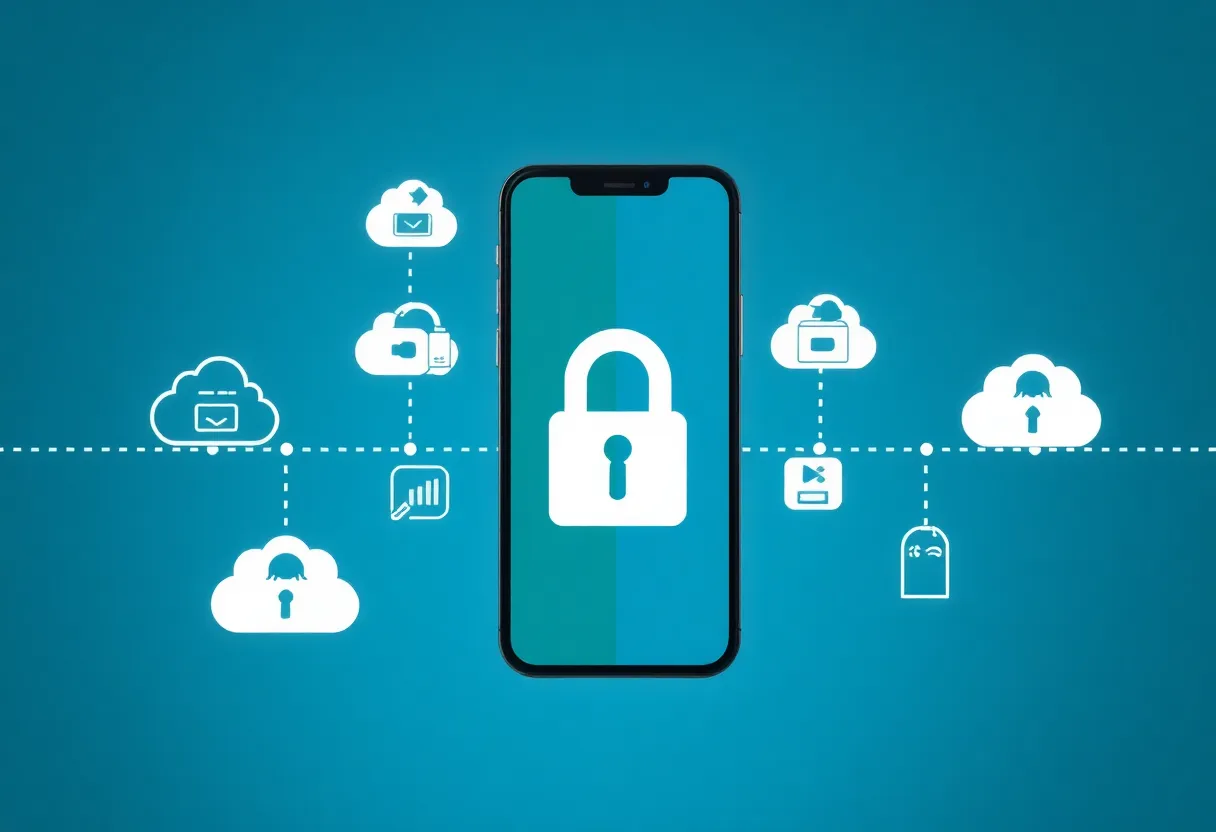
“On-device AI” on a box does not guarantee privacy if the app still uploads embeddings, logs prompts, or syncs derived data you did not disclose. Read privacy policies and permissions the same way you read API docs: what leaves the machine, when, and why.
Regulated contexts
Healthcare and education features face extra scrutiny. On-device processing can reduce HIPAA-adjacent risks, but only with disciplined logging and no accidental cloud backup of sensitive content. If your school district IT lead asks where inference runs, you should have a precise answer backed by architecture diagrams, not ad copy.
What this means for shoppers in 2026
Ask what features matter offline. If you need translation or dictation on a plane, edge-capable models matter more than a cloud-only pipeline. Ask about update policies for models—will your device improve over time, or will it be abandoned after launch? Ask about opt-outs for telemetry that accompanies “smart” features.
Compare apples to apples on battery tests. Reviewers who only run web benchmarks miss sustained AI workloads. Look for real-world scenarios that match your habits: video calls with background blur, long camera sessions, or always-on assistants.
Smart home and wearables: tighter budgets
Voice assistants and sensors often run tiny models on microcontrollers because continuous cloud streaming is expensive and creepy. Wake-word detection stays local; the rest may burst to the cloud when a wake event fires. If you buy a gadget marketed as “smart,” ask which parts are local and what happens when your internet flakes—some devices become expensive paperweights; others keep core functions.
Wearables add battery math on top. Heart-rate estimation and motion classification often stay on-device because streaming raw accelerometer data all day is neither private nor power-friendly. When a ring or watch advertises “AI insights,” the interesting engineering question is what stayed on the wrist versus what synced overnight.
Sustainability and network load
Cloud inference shifts energy use to datacenters with different efficiency profiles than pocket batteries. That does not automatically make cloud greener—it moves the accounting. For high-volume features used billions of times per day, on-device inference can reduce backbone traffic, but manufacturing more complex silicon has its own footprint. Honest vendors discuss trade-offs; marketing slogans rarely do.
Enterprise and BYOD wrinkles
Companies that manage fleets care about data residency and model provenance. Edge models with signed weights and attested runtimes can satisfy policies that generic cloud APIs cannot. Conversely, shadow IT apps that send screenshots to unknown endpoints undermine compliance programs. If you are an IT buyer, ask vendors for architecture diagrams, not only SOC reports.
Connectivity is not equally distributed
Features that assume cheap, stable data work poorly for travelers, rural users, and anyone on metered plans. Edge inference can democratize access to “smart” capabilities by avoiding expensive round trips. If your product serves global audiences, consider edge-first defaults with optional cloud enhancement—rather than cloud-first defaults that punish users who cannot afford constant uploads.
Accessibility and assistive tech
On-device speech and vision models can power assistive features with lower latency, which matters for motor and hearing accommodations. But quality gaps between on-device and cloud paths can create uneven experiences across devices. If you ship accessibility features, test them under throttling and with screen readers—latency and correctness both matter.
Closing take
Edge AI in gadgets is not a religion; it is a placement decision. Put models where the constraints make sense: local for immediacy and sensitivity, cloud for scale and rapid change, hybrid when you need both. The winners in 2026 will be honest about which path they chose and why—not the ones who claim everything runs magically on-device while quietly renting GPUs by the minute.
Ask harder questions than “how many TOPS?” Ask where your data sleeps, what happens offline, and whether the smart feature still deserves the name when networks fail. Good answers beat glossy renders—and they age better when the next model generation ships.