Cloud Gaming’s Unfinished Promise: Latency, Catalogs, and the Wrong Customer

Jordan Reyes
April 8, 2026

Cloud gaming was supposed to end the upgrade treadmill: a cheap client, a fast internet line, and a data center somewhere doing the heavy lifting while you streamed pixels like Netflix streams films. The demos were compelling—AAA titles on a phone, console experiences on a browser—and the business story was elegant: subscription revenue, scale economics, fewer retail boxes. Years in, the reality is more fragmented. Latency still matters for competitive play, catalogs ebb and flow with licensing tides, and the customers who benefit most are not always the ones platforms pitch loudest.
This article looks at where cloud gaming delivers, where it disappoints, and why the “wrong customer” problem keeps the category in awkward adolescence.
The physics case: why latency never disappears
Streaming a game is not streaming a film. Interactive video must round-trip your inputs through encode, network transit, decode, and display. Light in fiber is fast, but not free; every hop adds milliseconds. For a narrative adventure, extra tens of milliseconds can feel invisible. For a fighting game or a competitive shooter, it can be the difference between a crisp dodge and a frustrating death.

Edge nodes help by moving compute closer to cities, but they cannot repeal geography. Rural players with constrained last-mile options still face jitter and bufferbloat that local consoles tolerate more gracefully. Cloud gaming is at its best when ISPs are stable, peering is friendly, and the title’s pacing forgives delay.
Catalog churn and the illusion of ownership
Unlike a disc on a shelf, a streamed library is a contract that can change. Publishers rotate titles; licenses expire; exclusives shift platforms. Players who invested emotionally in a cloud-only backlog have learned the hard way that access is contingent. That uncertainty nudges serious hobbyists back toward downloads or discs for favorites they want to preserve.
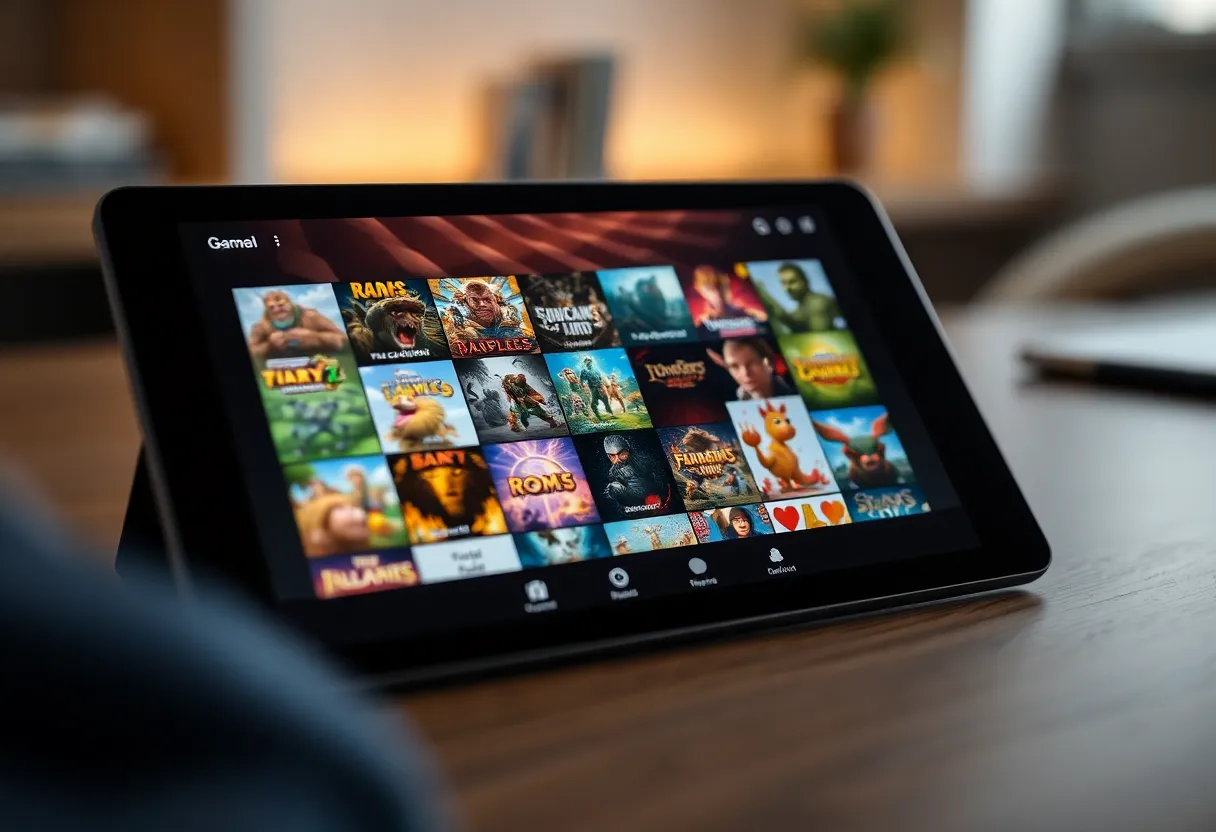
Subscription bundles can be generous during growth phases, then tighten as platforms hunt profitability. The savvy move is to treat cloud libraries as rentals with great UX—not as permanent archives—unless the platform offers clear export or download rights.
Who cloud gaming actually serves well
Casual players who dip into story games on a TV stick or tablet get a lot of value: low upfront hardware cost, instant trials, and no patch anxiety. Travelers with strong hotel Wi-Fi can continue a campaign without lugging a console. Demo experiences and “try before you buy” flows benefit publishers trying to shrink the gap between curiosity and purchase.
Education and kiosk scenarios—shared devices in schools or libraries—also map neatly to centralized hardware. Maintenance shifts from many GPUs in the wild to fewer GPUs in racks.
The “wrong customer” mismatch
Marketing sometimes chases enthusiasts who already own powerful PCs or consoles—the people most sensitive to latency and most invested in modding, high refresh rates, and local capture. Those players were never the easiest converts. Meanwhile, households that would love a friction-free entry point may not hear messaging that speaks to their constraints: unpredictable Wi-Fi, family bandwidth contention, or data caps that make streaming games expensive in regions where mobile networks are the only option.
When platforms lead with flagship blockbusters, they court comparisons to local performance that streaming will not always win. A clearer pitch might emphasize cozy genres, turn-based strategy, puzzle games, and narrative adventures—titles where latency matters less and session length is friendly to intermittent connections.
Compression, bitrate, and the art of “good enough” video
Streaming stacks fight bandwidth with compression. In fast motion or dark scenes, artifacts can appear—banding in shadows, mosquito noise around UI text, or smeared foliage when you pan the camera. Codec improvements help, but they compete with the need to keep latency low; heavier compression buys bitrate at the cost of encode time. Competitive players notice micro-stutter that casual viewers forgive in films.
Higher refresh monitors amplify the gap: a local PC driving 120 Hz or 240 Hz feels snappier than a 60 Hz stream even when bitrate is generous. Cloud platforms that cap output frames or resolution tiers may undersell the experience to enthusiasts who already invested in displays.
Platform snapshots: same idea, different trade-offs
Console ecosystems often bundle cloud play as a perk for subscribers—great for continuity when you travel, awkward when licensing walls arbitrary subsets of your library. PC-oriented services may let you bring games you already own on certain storefronts, shifting the economics toward “rent GPU time for titles you purchased elsewhere.” Phone-first offerings lean on touch overlays and shorter sessions, which suit different genres than living-room blockbusters.
Each model implies a different contract: who pays for GPU hours, who negotiates with publishers, and what happens when a game updates and breaks streaming compatibility overnight.
5G, Wi-Fi 6E, and the last mile fantasy
Wireless marketing loves to promise cloud gaming on the go, but radio conditions fluctuate. Handoffs between towers, crowded stadiums, and apartment interference introduce variance that fiber does not. Wi-Fi 6 and 6E improve airtime sharing in busy homes, yet they cannot fix an upstream ISP that buffers aggressively. Until home router queues are managed well—often via modern AQM—cloud streams compete unfairly with video calls and downloads on the same pipe.
Business models: subscription fatigue meets GPU economics
Cloud gaming burns electricity and silicon hours continuously. Unlike idle servers waiting for web requests, game sessions keep GPUs busy. Providers must balance utilization, queue times, and hardware refresh cycles. If subscriptions are too cheap, margins wobble; if prices rise, churn follows—especially when local consoles receive steep holiday discounts.
Hybrid approaches—local play with optional cloud saves, or streaming as a trial layer atop purchases—can align incentives better than cloud-only absolutism.
Mods, anti-cheat, and the PC hobbyist gap
Local PC gaming’s culture of mods, shader tweaks, and community patches does not map cleanly to locked-down cloud instances. Anti-cheat systems that require kernel-level access clash with multi-tenant servers; curated mod support is rare. Players who treat games as hobby platforms—scripting, benchmarking, swapping GPUs—will feel constrained even if casual play works fine.
Content creators face a related friction: capturing clean footage from a stream-within-a-stream can be awkward compared with local OBS pipelines, though some vendors now integrate broadcast tooling. The takeaway: cloud is a distribution mode, not a full replacement for an open PC tower on your desk.
Regional fairness: data centers follow demand first
Edge presence clusters in dense markets. Players outside those regions may see higher latency or off-peak queueing even with “fast” nominal plans. International licensing also fragments catalogs—what streams in one country may not exist in another. That unevenness undermines the universal promise and pushes core fans toward hardware they control.
Accessibility wins that deserve the spotlight
Where cloud gaming quietly shines is accessibility: players who cannot lift heavy hardware, who share one TV in a busy home, or who need to jump between devices benefit from centralized rendering and consistent control schemes. Features like customizable input mapping and mid-tier graphics presets matter more when the heavy lifting happens remotely and UI teams can iterate quickly.
What would move the needle
Transparent latency indicators before you start a session, clearer labeling of genres that tolerate delay, and honest messaging about data usage would build trust. Partnerships with ISPs to prioritize game streams ethically (not by harming net neutrality, but by fixing bufferbloat on home routers) could improve average experiences.
For players, the practical playbook is genre-aware: lean on cloud for exploration and story; keep local or downloaded copies for latency-critical play. For publishers, diversified access—download rights where feasible—reduces backlash when catalogs shift.
Household reality: contention, parenting, and the shared TV
Cloud gaming’s promise of “no box under the TV” collides with family bandwidth politics. A teenager streaming a AAA session while parents videoconference and siblings watch 4K video can saturate a connection unless someone configures QoS or upgrades upload headroom. Local consoles cache assets and tolerate brief dips; streams stutter visibly when packets arrive late.
That does not make cloud irrelevant—it means the winning pitch is often coordination: parental controls that schedule heavy downloads, routers that expose per-device limits, and realistic guidance about minimum upload speeds for interactive streaming versus passive video.
Environmental framing: nuance over hot takes
Centralized GPUs can be more efficient per hour of play than millions of underutilized gaming PCs idling at partial load—but data centers still consume power and water for cooling. The honest story is workload-dependent: short sessions on efficient edge hardware can beat long-lived desktops left on for convenience; marathon local play on efficient silicon may still win. Cloud providers publishing utilization metrics would help move debates beyond slogan-level climate claims.
Bottom line
Cloud gaming is not a hoax, but it is not a universal replacement for local play either. Latency and licensing keep it unfinished; customer targeting keeps it noisy. Used with clear eyes—right games, right networks, right expectations—it can be magical. Sold as a miracle for everyone, it will keep disappointing the players least suited to forgive its physics.
Treat it as a tool in the kit: brilliant for some evenings, wrong for some genres, and always worth a quick honesty check about your connection before you commit to a boss fight online.