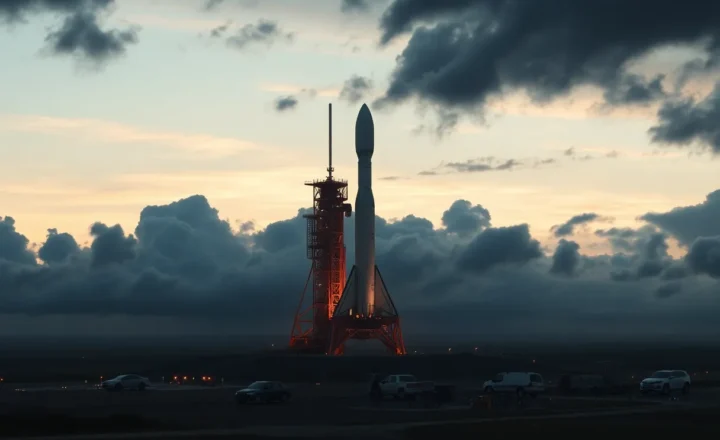
Artemis and the Lunar Gateway: How Delays Cascade Into the 2030s

Robin Hayes
April 7, 2026
The Artemis program is often described as a straight line: a rocket, a capsule, a lander, and then boots on the Moon again. In practice it is closer to a web—contracts, international partners, new commercial vehicles, and a small space station in lunar orbit that was supposed to simplify logistics but instead became a scheduling hinge. When one element slips, the slip does not stay local. It propagates through training timelines, suit qualification, launch windows, and the political calendar that keeps the whole effort funded.
This piece looks at the Lunar Gateway’s role in that web and why delays there are not a footnote. They are a force multiplier that can push ambitious surface timelines deeper into the 2030s—even when other parts of the architecture look ready on paper.
What the Gateway is supposed to solve
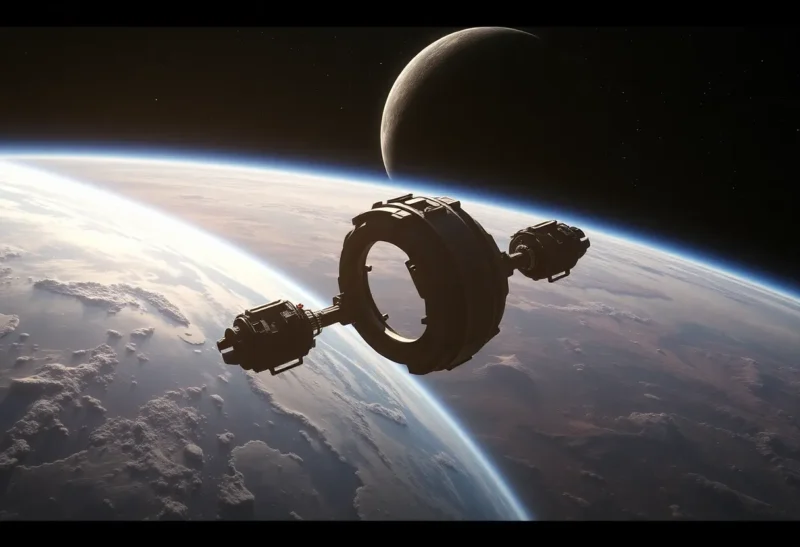
The Gateway, as conceived in the Artemis era, is a staging point in near-rectilinear halo orbit around the Moon. Rather than every lander and logistics vehicle having to perform every maneuver alone, the idea is to aggregate capabilities: docking ports, power, communications relay, and eventually habitation volume. Astronauts could move between Orion and a lunar lander without treating each mission as a bespoke orbital ballet.
That logic is sound for a sustained program. It mirrors how the International Space Station turned low Earth orbit from a series of one-off visits into a place where work accumulates. The difference is that lunar orbit is farther, harsher in radiation terms, and—critically—still empty until the first modules arrive and prove they can operate as a system.
Until those pieces are flying and integrated, downstream plans rest partly on assumptions: that docking standards hold, that propulsion and power margins are what models say, and that crews can train against hardware that actually exists rather than simulators forever standing in for the real vehicle.
Why a station in lunar orbit is on the critical path
Not every Artemis mission strictly requires the Gateway. Architectures evolve, and some profiles emphasize direct-to-surface options for early landings. But as soon as you talk about repeatable cadence—multiple crews, logistics handoffs, international contributions, and a stable perch for refueling or servicing experiments—the Gateway stops being optional window dressing. It becomes infrastructure.
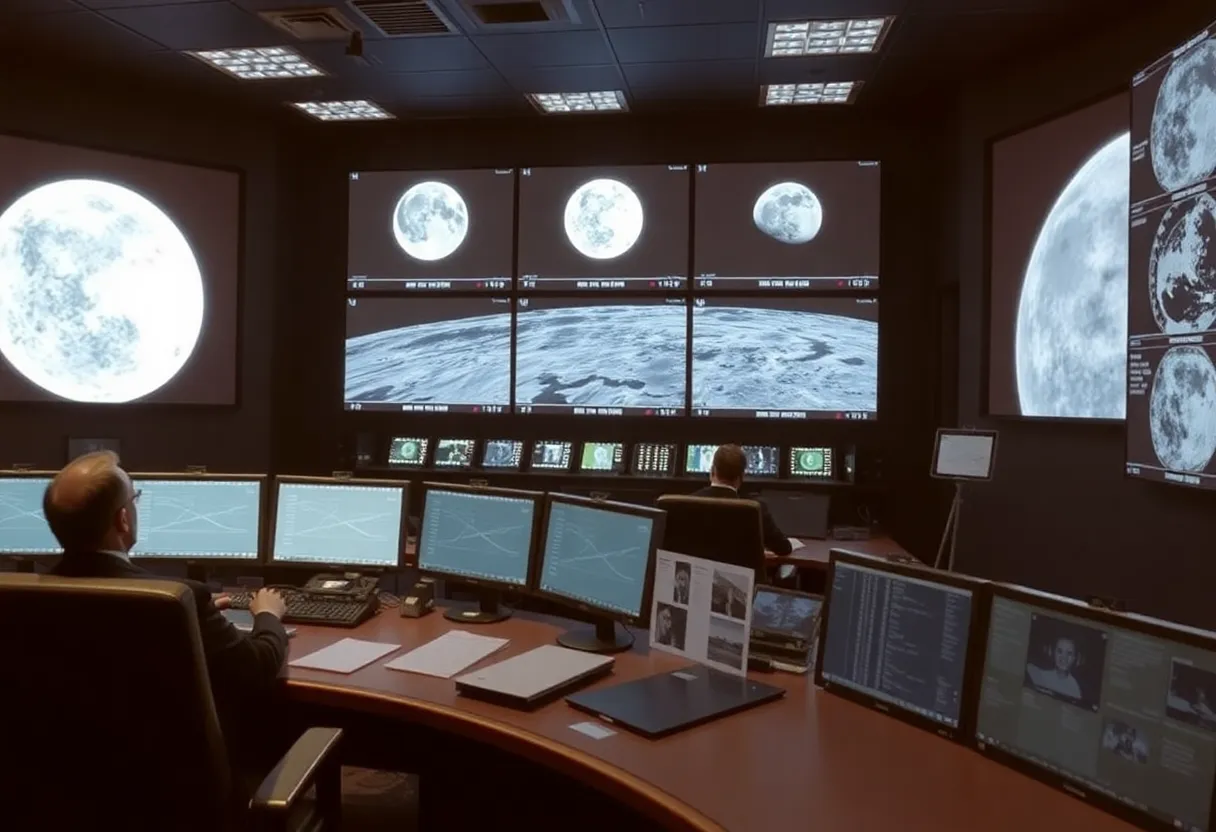
Infrastructure programs share a trait: their schedules are only as strong as the weakest contract milestone. A habitation module slips, and suddenly the integrated power and propulsion element needs a different operational concept for early phases. A docking adapter qualification runs long, and the lander’s demonstration profile must be reshuffled. These are not merely administrative headaches. They change which tests happen in which order, and testing order is how programs discover whether their assumptions were right.
The cascade: from module delivery to crew training
Astronaut time is among the scarcest resources in human spaceflight. Training pipelines are built years in advance, with simulators, procedures, and instructors aligned to a predicted vehicle state. If the Gateway’s assembly sequence shifts by eighteen months, it is not only the launch date that moves. It is the entire training cliff: when crews transition from generic cislunar skills to integrated simulations, when international partners ship their operators for joint rehearsals, and when ground systems lock in staffing models.
Delays also compress margins elsewhere. If the Gateway slips but political pressure keeps a notional landing date fixed on a slide deck, program managers face uncomfortable trades: reduce test scope, parallelize risky activities, or strip objectives from early missions. None of those trades is free. Reduced testing shows up later as anomalies, rework, or—worst case—loss of confidence from oversight bodies that remember Columbia and Challenger lessons about schedule pressure.
Commercial partners feel the cascade too. A logistics provider planning berthing windows may need to redesign propellant load assumptions if the power environment on the Gateway stack changes during redesigns. A lander company negotiating a demonstration mission may find its funding milestones misaligned with when the docking port it needs will actually exist in space.
International partners and the synchronization problem
Artemis is explicitly international. That is a diplomatic strength and a scheduling constraint. Partner modules arrive on partner timelines, subject to domestic politics, industrial capacity, and export control reviews. A delay in one nation’s contribution does not politely wait at the border; it rearranges what everyone else can integrate and when.
The Gateway was partly sold as a place where partners could contribute meaningfully without building an entire lunar stack. That remains true, but it also means more interfaces—electrical, software, safety culture—must converge on a single timeline. Interface disagreements discovered late look small in a spreadsheet and large on the factory floor.

Surface ambitions do not float free of orbit
Moon-to-Mars advocates rightly focus on landers, suits, and surface habitats. Yet sustained presence assumes a logistics rhythm. Even if early sorties are direct, a mature program wants options: pre-positioned cargo, crew rotation that does not require every vehicle to be a lifeboat and a freighter at once, and a communications architecture that does not assume Earth is always a friendly geometry for every landing site.
The Gateway features in many of those longer arcs. Push Gateway work to the right, and you either delay the arc—or you attempt an alternate path that still must be funded, tested, and certified. Alternate paths sound agile in essays; in programs they are competing for the same engineers and the same launch manifests.
Commercial landers and the tension between speed and coupling
Commercial Lunar Payload Services and human landing system contracts introduced new pace and new uncertainty. Rapid iteration can shorten development for a single vehicle class. But coupling remains: a lander must know where it is going, what it is docking to, and which navigation aids it can trust. If the Gateway’s comms payload or docking timeline shifts, lander software and mission rules must shift with it—or explicitly certify against a different profile, which is its own schedule item.
This is where “delay” becomes a fuzzy word. Sometimes the calendar moves. Sometimes the work stays on the same date but the content changes, burning team attention without moving the headline milestone. Both consume years.
Budget politics and the accordion schedule
Public programs do not slip in a vacuum; they slip inside appropriations cycles. A Gateway element that misses its fiscal-year gate might lose line-item priority even if engineering could catch up later. Conversely, a rushed commitment to a conference milestone can pull work forward on paper while the hardware remains unchanged—creating two calendars, one for speeches and one for the shop floor. When those calendars diverge, integration teams spend expensive months reconciling fiction with torque specs.
That accordion effect is why a modest slip in module delivery can translate into multi-year shifts at the program level. It is not only the time to build the part; it is the time to re-win attention from oversight committees, to re-sequence international reimbursements, and to keep a contractor workforce from bleeding to commercial lunar startups that promise faster feedback loops. Talent competition is rarely listed on Gantt charts, yet it shapes velocity as much as welding speed.
What the 2030s horizon really means
Talking about the 2030s is not pessimism; it is realism about integration timelines. A module might spend years in clean rooms waiting for a ride. Launch vehicles have their own teething issues. Space-rated software verification is slower than commercial DevOps culture prefers. Each item is individually understandable. Added together, they routinely eat half a decade.
If Gateway assembly and checkout slip deep into the late 2020s, the programs that assumed an operational staging point in lunar orbit will face a choice: accept later surface cadence, or pursue parallel architectures that duplicate functions and compete for budgets. Either outcome stretches the era of “occasional visits” versus “continuous presence.”
How to read headlines without losing the plot
News cycles reward discrete events: a successful launch, a contract award, a budget line rescued. Program health lives in the boring middle: interface control documents, qualification tests, spare parts strategies, and the unglamorous work of making sure a docking system tested on Earth behaves the same when thermal gradients differ in space.
When you see a Gateway element slip, ask what else moved with it—not only the next launch, but the training manifest, the international deliveries, and the lander demos that assumed a destination would be there to receive them. That wider motion is the cascade.
Conclusion
The Lunar Gateway is easy to caricature as either essential or expendable. The more accurate view is structural: for the international, multi-vendor Artemis architecture many nations signed up for, an orbital outpost is part of how complexity is managed. If its timeline fractures, the fracture spreads—into simulators, contracts, and the unspoken margin that keeps human rating credible.
That does not mean the Moon is out of reach. It means the path to a steady cadence is likelier to run through the 2030s than a slide deck’s favorite mid-decade peak, unless integration surprises go our way for a change. In spaceflight, counting on that kind of luck is how schedules are born—and how they quietly grow another half decade.