Solo Founder Burnout: What the Automation Gurus Don’t Tell You

Devon Walsh
February 24, 2026

The automation gurus have a simple pitch: build systems, outsource the rest, and you’ll scale yourself without scaling your hours. One person can run a six-figure business. You can “work four hours a week” or “build in public” while your automations do the heavy lifting. It’s seductive—and for some people it works. But there’s a gap between the highlight reel and the reality for a lot of solo founders. The gap is burnout. Not the kind that a better Notion template fixes, but the kind that comes from being the only backstop when everything is “automated” until it isn’t. Here’s what the gurus don’t tell you.
Automation Shifts the Load—It Doesn’t Remove It
Every automation has a failure mode. The Zapier workflow breaks when an API changes. The email sequence goes out with a typo. The payment integration drops a webhook and you don’t notice until a customer complains. When you’re a team, someone can own “ops” and fix it. When you’re solo, it’s you. The automation didn’t delete the work—it turned it into invisible work. You’re not doing the task every day; you’re maintaining the system, debugging the edge cases, and being on call when the system fails. That’s still cognitive load. It’s just deferred and bursty instead of steady.
The gurus say “set it and forget it.” In practice it’s “set it and hope you don’t have to remember it at 11 p.m. when something breaks.” For a solo founder, there’s no one else to remember. So you either accept that you’re the 24/7 fallback, or you build so much redundancy that the “automation” is actually a part-time job keeping the scripts alive. Neither is the promised freedom.
The Content Machine Is a Job
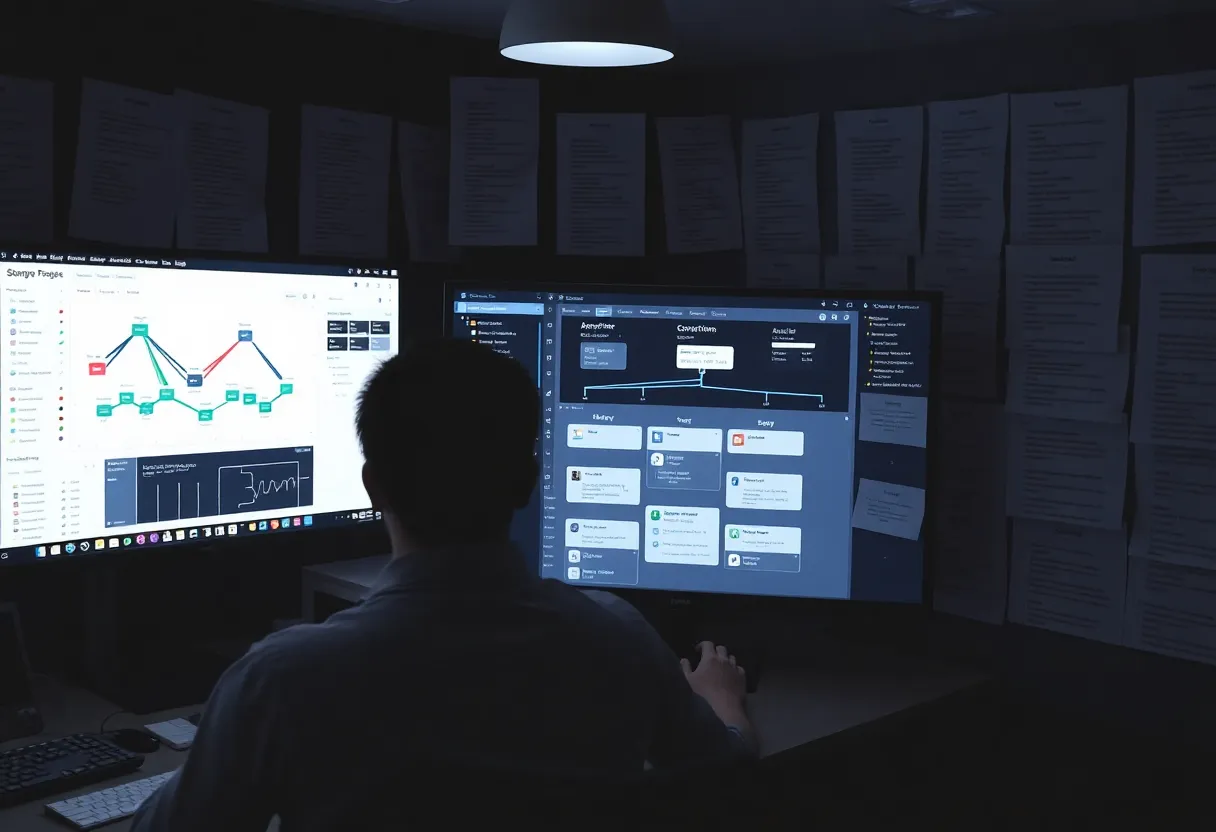
“Build in public.” “Ship daily.” “Content is leverage.” For a solo founder, that often means you’re the product, the marketing, the support, and the ops. Every tweet, every post, every email is you. Automation can schedule the posts—it can’t have the ideas, write the words, or show up in the comments. The gurus make it look like a flywheel: post once, repurpose everywhere. In reality, repurposing takes time. Consistency takes time. And when you’re the only voice, the only face, and the only person answering DMs, “content as leverage” can feel like a second full-time job with no vacation.
That doesn’t mean content doesn’t work. It means the cost is rarely discussed in the same breath as the upside. Solo founders who don’t budget energy for the content grind—or who don’t set hard limits—burn out on visibility as much as on product.
No One Is Holding the Buck
In a company, responsibility is distributed. In a solo venture, it’s not. Every decision, every customer, every bug, every tax form—it all lands on one person. Automation can reduce how often you do a task, but it can’t reduce the fact that you’re the only one accountable. That accountability is a constant low-level stress. You can’t “hand it off” to a teammate. You can’t take a real day off without something piling up or a customer wondering where you are. The gurus talk about “freedom” and “location independence.” They talk less about the psychological weight of being the only one who can fix it.
That weight compounds. It’s not one bad day—it’s the accumulation of “it’s always on me.” Without boundaries, without someone else to share the load (even a part-time VA or a co-founder), the solo founder becomes the single point of failure for their own well-being.

What Would Actually Help
First: name the hidden work. If you’re “automating,” count the hours you spend maintaining, debugging, and firefighting. That’s real work. Second: cap the content. Decide how much visibility you need to hit your goals, then stick to it. “More” is not a strategy if it burns you out. Third: create real off-ramps. Auto-responders, clear “I’m away” boundaries, and a plan for who handles what when you’re sick or on leave. Even if that plan is “things wait,” having it explicit reduces guilt. Fourth: consider whether “solo forever” is the goal. Some of the most sustainable indie businesses add one other person—VA, contractor, or co-founder—not to scale up, but to share the weight. Automation can’t do that.
The Bottom Line
Automation can make a solo founder more effective. It can’t make them invincible. The gurus sell the dream of one person, systems, and infinite leverage. The reality is that systems need maintenance, content needs a human, and accountability has a cost. Solo founder burnout isn’t a personal failure—it’s what happens when the gap between the story and the structure gets too wide. Closing that gap means being honest about the load, setting limits, and sometimes letting go of “solo” enough to survive the long game.