Why Screen-Time Limits Feel Wrong When Work Is on the Screen

Taylor Kim
February 24, 2026

Screen-time limits and “digital wellness” tools are everywhere. Set a cap, get a nudge, feel guilty when you blow past it. The idea is simple: less screen time is better. But for a huge number of people, the screen isn’t just where they scroll—it’s where they work. When your job lives on the same device as your social feed, your messages, and your news, the whole framework of “limit your screen time” starts to feel wrong. Not because the goal is bad, but because the metric doesn’t mean what we think it means anymore.
The Work–Life Merge
Decades ago, “screen time” could stand in for “time spent on leisure or passive consumption.” TV, then desktop browsing, then phones. The assumption was that screens were for entertainment or distraction. Work had its own place: the office, the desk, the landline. That separation is gone for millions. Knowledge workers open the same laptop at 9 a.m. and at 9 p.m. The same phone holds Slack, email, and Instagram. A “screen time” number doesn’t tell you whether you were writing a report or watching TikToks. It just tells you the device was on.
When work is on the screen, a raw hour count is worse than useless—it can make you feel bad for doing your job. Parents who work from home already feel the tension: “I’m on my laptop all day.” Yes—and a lot of that is earning a living. Telling them to “reduce screen time” without distinguishing work from leisure is like telling someone to “spend less time in the kitchen” when they’re the one cooking dinner. The advice misses the point.
What Screen-Time Tools Get Wrong
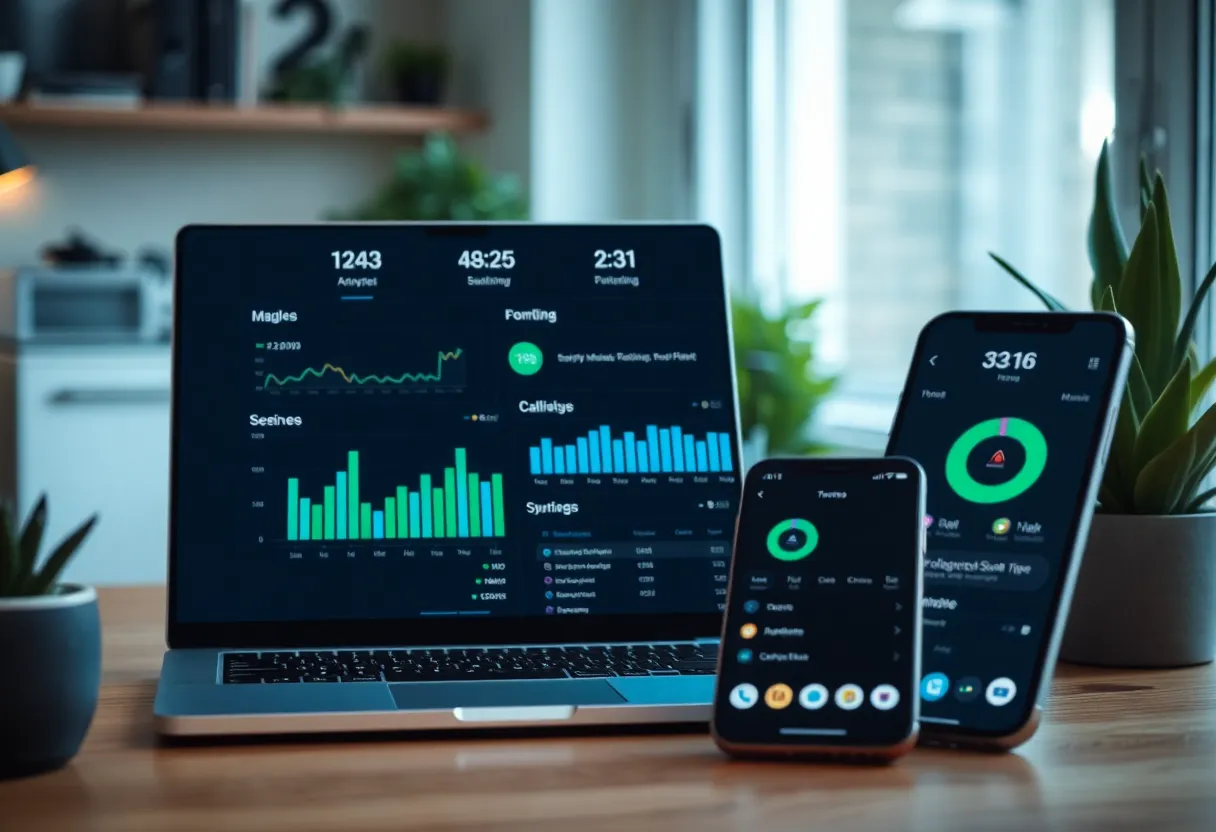
Most screen-time and digital-wellness features treat all usage the same. They might break it down by app—so you see “Chrome: 4 hours” or “Slack: 2 hours”—but they don’t know that your Chrome time was half work research and half Reddit, or that your Slack time was necessary for your team. They can’t. The device doesn’t have a “work mode” that everyone agrees on. So you get a number, a comparison to “average,” and maybe a guilt trip. You don’t get insight into whether your screen time is serving you or draining you.
Some people try to separate by device: work laptop vs. personal phone. That helps when the boundary is clear. But a lot of work spills onto the phone—email, messages, quick edits—and a lot of personal use happens on the work machine at the end of the day. The boundary is porous. Rigid limits that don’t account for that end up feeling arbitrary. “You’ve hit your one-hour limit” might mean you’ve hit it during work, and now you’re supposed to feel bad or shut the device—neither of which is helpful.
What Would Help Instead
Better than a single “screen time” number would be a way to distinguish intent. Not “how long,” but “what for.” Did you choose to be on the device, or did you get pulled in? Were you in flow, or were you context-switching every five minutes? Those distinctions are harder to measure automatically—they’d require more user input or smarter heuristics—but they’re the ones that actually map to well-being. Someone who spends eight hours in focused work might feel fine; someone who spends three hours in fractured attention might feel exhausted. Same device, different experience.
In the meantime, the least bad approach is to ignore the generic “reduce screen time” message when your work is on the screen. Pay attention instead to when you feel drained, when you’re scrolling without intention, and when you’re working past the point of effectiveness. Set boundaries around those—blocks of focus, notification quiet hours, or rules like “no work apps after 8 p.m.”—rather than chasing a total hour count. The goal isn’t fewer screen hours; it’s more agency over how those hours are spent.

The Bottom Line
Screen-time limits made sense when screens were mostly for leisure. When work moved onto the same devices, the metric stopped meaning what it used to. For anyone who works on a computer or phone, “limit screen time” is the wrong frame. The right frame is: how much of your time on the device is chosen, focused, and aligned with what you care about—and how much is reactive, scattered, or draining? That’s harder to measure, but it’s the question that actually matters.