While everyone talks about AI and chips, synthetic biology is quietly reshaping materials, medicine, and manufacturing. It doesn’t trend on Twitter or drive the same stock moves—but it’s already in your food, your clothes, and your medicine cabinet. Here’s why it’s the tech nobody’s talking about, and why that might be about to change.
What Is Synthetic Biology?
Synthetic biology is the design and construction of biological systems that don’t exist in nature, or the redesign of existing ones. It sits at the intersection of biology, engineering, and computation: you treat genetic code and cellular machinery as programmable parts. That might mean engineering yeast to produce a drug, bacteria to make biodegradable plastics, or cells to sense and report disease. The tools—gene editing (e.g. CRISPR), DNA synthesis, and computational design—have gotten cheaper and more precise. The result is a pipeline: design in silico, build in the lab, test at scale. It’s “tech” in the sense that it’s iterative, tool-driven, and increasingly automated—but the substrate is living systems, not silicon. That difference is why progress feels slower than in software: you can’t just deploy a patch; you have to grow organisms, validate safety and efficacy, and navigate regulation. But the payoff is products that are literally alive—or made by living systems—and that can replace entire industrial processes.

Where It’s Already Here
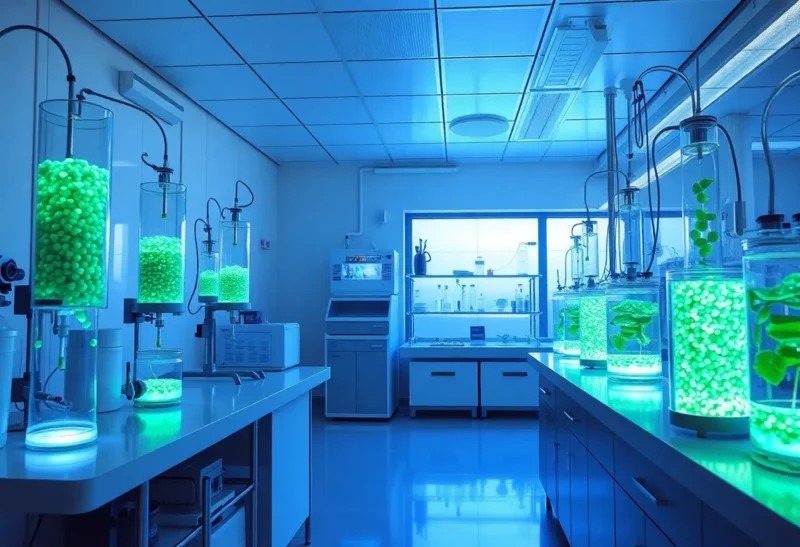
You don’t have to wait for the future to see synthetic biology in action. Alternative proteins—from Impossible Foods to cultured meat—rely on engineered organisms or cell cultures. Enzymes in detergents and textiles are often designed in a lab. Insulin and many other biologics are produced by modified microbes. Industrial fermentation is being rewired to make chemicals, fuels, and materials that used to come from petroleum. The “bioeconomy” isn’t a slogan; it’s a growing segment of manufacturing, and most of it flies under the radar of mainstream tech coverage. No flashy launches, no app-store drama—just supply chains shifting from oil refineries to bioreactors. Companies like Ginkgo Bioworks and Twist Bioscience provide the infrastructure: design platforms, DNA synthesis, and foundry-style production. Startups use that infrastructure to build specific products—a new flavor, a new material, a new therapy—without owning the whole stack. So the “nobody’s talking about it” story isn’t that nothing is happening; it’s that the action is in B2B and industrial partnerships, not consumer app stores.
Why Nobody’s Talking About It
Part of it is pace. Synthetic biology moves in years, not weeks. A new strain or process takes R&D, regulation, and scale-up. There’s no “ship it and iterate” in the same way as software. Part of it is perception: “GMO” and “lab-grown” still make some consumers nervous, so companies often don’t lead with “we engineered this.” And part of it is that the sector is fragmented—lots of small companies and research groups, few household names. The story isn’t one platform or one product; it’s a slow wave of substitution. So it doesn’t get the same headlines as the latest AI model or smartphone. But the economic and environmental stakes are huge: sustainable materials, cleaner chemical production, and new therapies that don’t depend on traditional pharma pipelines. Governments are starting to frame “bioeconomy” and “biomanufacturing” as strategic; that will bring more funding and more visibility. When that happens, the “nobody’s talking about it” phase will end—and the debate over safety, ethics, and regulation will get louder.
Where It’s Going
Near term: more engineered materials (leather, silk, plastics) and ingredients (flavors, fragrances, nutrients). More diagnostics and therapies that use engineered cells or gene editing. Better tools for design and testing—automation, AI for sequence and pathway design—so the cycle from idea to product shortens. Longer term: programmable organisms for environmental remediation, bespoke organisms for niche manufacturing, and a deeper integration of biology into supply chains. The “tech” part will keep growing: more computation, more robotics, more data. The “nobody’s talking about it” part may not last. As products hit shelves and climate and sustainability drive policy, synthetic biology will get more attention—and more scrutiny. Investors are already betting on the space; the question is when it crosses into mainstream awareness. When it does, the narrative will matter: will it be “green manufacturing” and “precision health,” or “frankenfood” and “designer organisms”? The sector has a stake in shaping that story now.
Why It Matters for Tech People
If you’re in software or hardware, synthetic biology is relevant in a few ways. First, it’s a major application area for ML and automation: designing sequences, predicting protein structure, optimizing fermentation. Second, it’s a different kind of “deep tech”—long timelines, high capital, regulatory complexity—so the startup playbook is different from SaaS. Third, it’s where a lot of “climate tech” and “sustainability” actually land: not just offsets and dashboards, but real substitution of fossil-based processes. Understanding the basics—what’s possible, what’s regulated, what’s scaling—helps you see where the next decade of industrial and medical innovation is coming from. It might not be on your Twitter feed yet, but it’s already in the pipeline. Careers at the interface—computational biology, automation in the lab, data and platform roles at synbio companies—are growing. So even if you never touch a pipette, the field is worth watching.
Bottom Line
Synthetic biology is the tech nobody’s talking about because it’s slow, fragmented, and often understated. But it’s already in production—in food, materials, and medicine—and it’s growing. As tools improve and sustainability and health drive demand, it will move from the background to the foreground. For anyone interested in where technology is going beyond screens and servers, it’s worth a look. You don’t have to become a biologist—but understanding that the next wave of “tech” might be grown in a bioreactor, not assembled in a fab, is a useful lens for the next decade.