Why Satellite Internet Still Can’t Replace Your Broadband

Halima Okafor
February 24, 2026
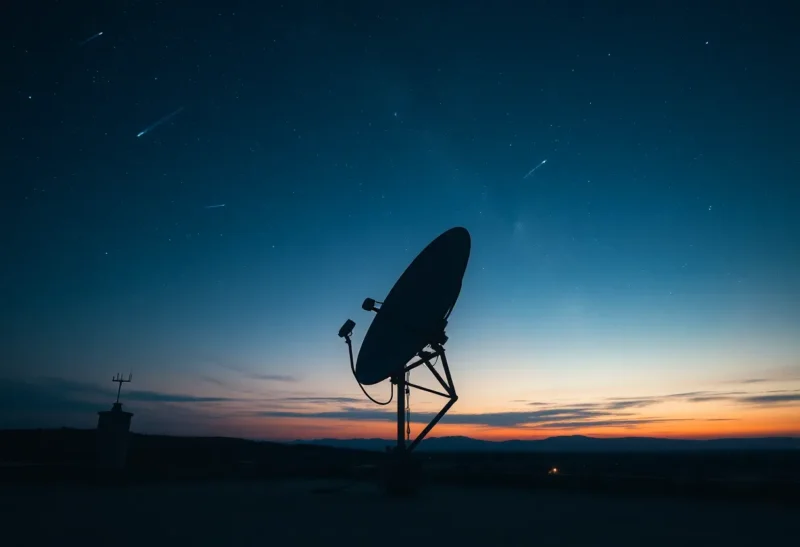
Satellite internet has had a dramatic glow-up. Starlink, OneWeb, Amazon’s Project Kuiper, and a handful of others promise high-speed internet from the sky—no cable truck, no fiber run, no waiting for the ISP to “expand to your area.” For millions of people in rural and remote places, that promise is real: they finally have usable broadband where they had nothing before. But if you’re in a city or a suburb with access to cable or fiber, you’ve probably seen ads suggesting that satellite could replace your current connection. Here’s the blunt answer: it still can’t. Not for most people. The reasons are mostly physics, a bit of economics, and a lot of shared capacity.
The Latency Problem You Can’t Fix With Software
Every packet that goes from your computer to a website and back has to travel. With fiber or cable, that path is mostly horizontal—through ducts, under streets, along the ocean floor. With satellite, your data goes up to space and back. Low Earth orbit (LEO) satellites are much closer than the old geostationary birds—roughly 550 km up instead of 36,000 km—so latency has dropped from a brutal 600 ms or more to something in the 20–50 ms range. That’s a huge improvement. But it’s still at least twice what you get on a good fiber connection, and often more.
That extra delay matters for anything interactive: video calls, gaming, real-time collaboration, VPNs, and a lot of modern web apps that assume a snappy round trip. Starlink and others have done clever things with routing and protocol tweaks, but they can’t change the fact that your signal is making a 1,100 km round trip to space before it even reaches the wider internet. For streaming and downloads, latency is less of an issue. For “it feels like I’m there” experiences, satellite will keep feeling a step behind.

Capacity and Congestion: The Shared Sky
Your local cable or fiber line is shared with your neighbors, but the segment from the node to the backbone is usually heavily overprovisioned. With satellite, you’re sharing a slice of radio spectrum with everyone else in your cell—and the backhaul from the satellite to the ground station is a fixed pipe. When a lot of people in your area are online at once, that pipe fills up. Speeds drop. Latency can spike. It’s not that the technology is bad; it’s that the capacity model is fundamentally shared in a way that terrestrial networks have spent decades learning to manage with more fiber, more nodes, and more spectrum.
Starlink has been adding satellites and ground stations at a furious pace, and the experience has improved in many regions. But peak hours—evenings, weekends—still see noticeable slowdowns in busy cells. If you’re used to a stable 300 Mbps cable or symmetric gigabit fiber, the variability of satellite can feel like a step backward.
Weather, Obstructions, and Reliability
Radio waves don’t like rain, snow, or thick foliage. Satellite links use higher frequencies to pack in more data, and those frequencies are more sensitive to precipitation and blockage. A heavy storm can knock your connection down to a crawl or out entirely. Trees that grow into the line of sight can cause dropouts. Geostationary satellite internet had the same issue; LEO is better because the dish can often switch to another satellite, but physics doesn’t go away. Terrestrial fiber doesn’t care if it’s raining. Cable is mostly buried. That reliability gap is a big deal if you work from home or depend on connectivity for anything critical.
Cost and the Installation Friction
Satellite internet isn’t cheap. There’s the hardware (dish, mount, router), the installation (whether DIY or pro), and the monthly fee—often in the same ballpark as or higher than mid-tier cable or fiber. For someone with no other option, that’s a fair trade. For someone who already has Comcast or AT&T fiber, paying more for a worse experience doesn’t make sense. Add in the fact that you need a clear view of the sky, and that rooftop or yard install can be a project. Again: worth it when the alternative is dial-up or nothing. Not worth it as a replacement for solid terrestrial service.

Where Satellite Actually Wins
None of this is to say satellite internet is a bad idea. It’s transformative for the right users. If you live in a rural area where the cable company will never run a line, or where “broadband” has meant sluggish fixed wireless or DSL, Starlink and its peers are a genuine upgrade. Same for RVs, boats, and remote work setups where you need connectivity on the move. As a backup link when the primary connection fails, a small satellite terminal can be insurance. And in disaster recovery or in regions with no infrastructure, satellite is often the only way to get online at all.
The industry is also improving. More satellites, better modulation, smarter beam steering, and lower costs will keep narrowing the gap. One day, satellite might be good enough that urban users could consider it a real alternative. We’re not there yet.
The Bottom Line
Satellite internet has gone from a last-resort joke to a real product that serves millions. If you’re unserved or underserved, it’s worth a close look. If you already have decent cable or fiber, treat the hype with skepticism. The sky is not going to replace the wire under your street for most people—not in 2026, and probably not for a long time. And that’s okay. The goal was never to make everyone dump their broadband; it was to bring broadband to people who never had it. On that count, satellite is already winning.