Why Foldable Phone Battery Life Still Trails Slab Phones by a Full Generation

Reed Kim
July 9, 2026
Five generations into the modern foldable phone era, Samsung’s Galaxy Z Fold and its competitors have genuinely solved most of the problems that made early foldables feel like beta hardware — crease visibility has improved substantially, hinge durability testing now regularly exceeds 200,000 fold cycles, and software multitasking on the unfolded display has matured into something that actually feels purpose-built rather than stretched. Battery life is the one core spec that hasn’t caught up, and it’s not a minor gap: flagship foldables still routinely deliver noticeably less real-world battery life than flagship slab phones released the same year, running the same processor, at a similar price point. Understanding why requires looking at the actual physical constraints foldable design imposes, not just assuming manufacturers haven’t tried hard enough.
The Volume Problem That Doesn’t Go Away
Battery capacity is fundamentally a function of physical volume — lithium-ion battery technology has a roughly fixed energy density (energy stored per unit of volume) that improves gradually year over year through incremental chemistry improvements, but hasn’t seen the kind of dramatic breakthrough that would let manufacturers pack meaningfully more capacity into the same physical space. This means battery capacity in any phone is largely a direct function of how much internal volume the design can allocate to battery cells, and foldable phones lose a significant share of that available volume to components that slab phones simply don’t need at all: the hinge mechanism itself, which requires precision metal components, multiple pivot points, and often a de-bonding or sliding mechanism to protect the flexible display during folding.
A typical foldable phone’s hinge assembly, spanning the full height of the device, occupies internal volume that in a slab phone would otherwise be available for battery cells, and manufacturers have consistently made the design choice to prioritize hinge durability and crease minimization over maximizing battery volume, a genuinely defensible trade-off given how central hinge reliability is to a foldable actually surviving years of daily folding, but one that directly and predictably costs battery capacity as a consequence.
Why Split Batteries Make This Even Harder
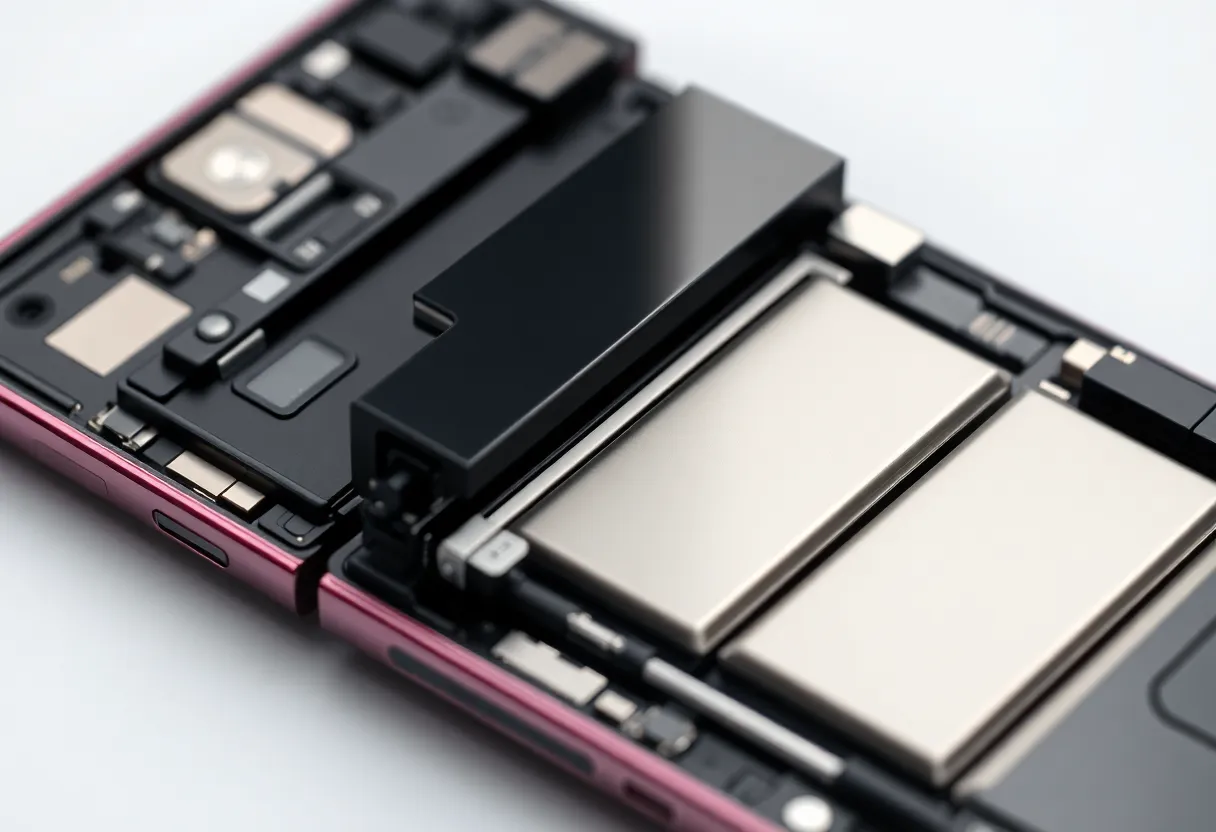
Most book-style foldables (the Galaxy Z Fold, Google Pixel Fold, and similar designs) don’t use a single battery cell — they use two separate battery cells, one in each half of the folding chassis, wired together to function as a single power source. This split-cell design is a structural necessity given the hinge running through the middle of the device, but it introduces real inefficiency: two smaller battery cells have more combined casing, connector, and protective circuitry overhead relative to their total capacity than a single larger cell of equivalent total capacity would have, meaning some of the total battery volume in a split-cell foldable design goes toward the “packaging tax” of running two independent cells rather than pure energy storage capacity.
Engineers have made real progress narrowing this gap through cell chemistry improvements — several 2025 and 2026 generation foldables have adopted silicon-carbon anode battery chemistry, which packs meaningfully higher energy density than traditional graphite anode lithium-ion cells, specifically to help close the capacity gap that hinge and split-cell design costs create — but this chemistry improvement has benefited slab phones too, meaning the relative gap between foldable and slab battery life has narrowed only modestly even as absolute battery life has improved across the board for both form factors.
The Display Power Draw Nobody Talks About Enough
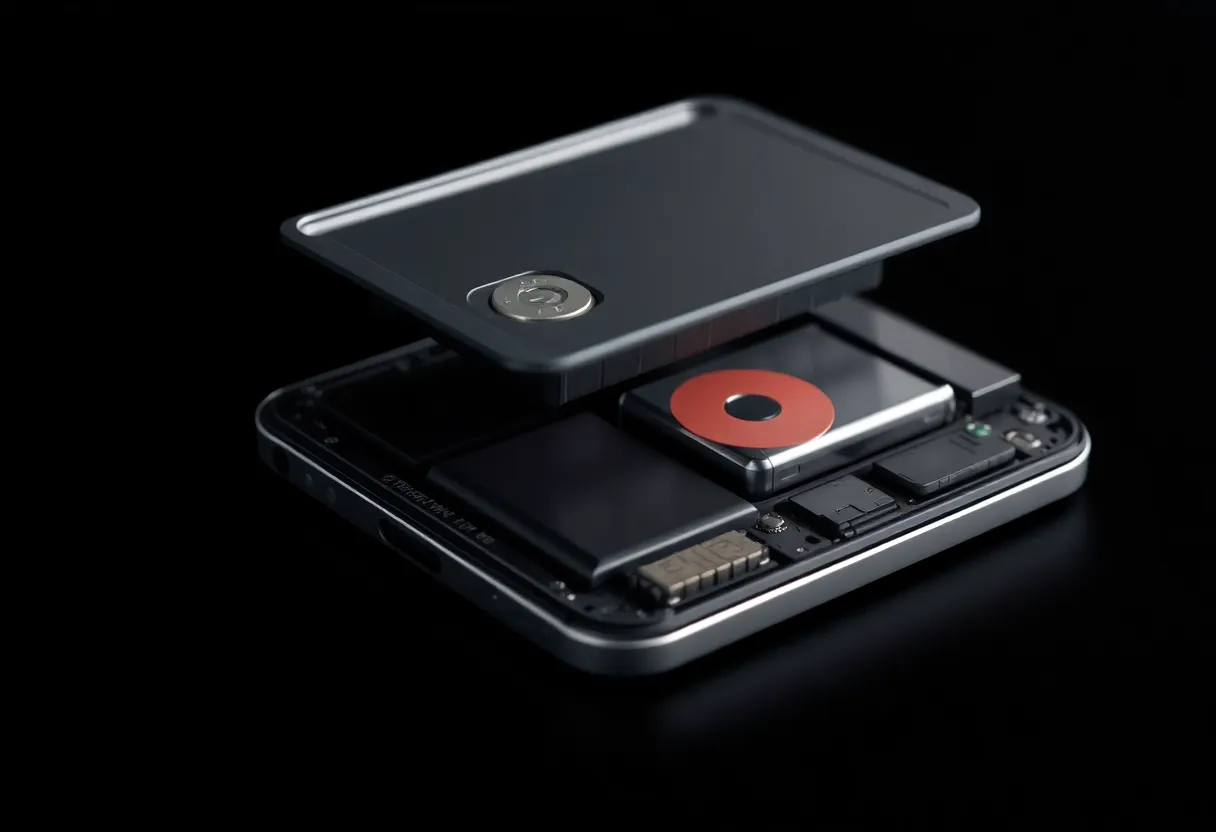
Battery capacity is only half the equation — the other half is how much power the device actually consumes, and foldables carry a genuine power consumption disadvantage here too that gets less attention than the capacity constraint. Book-style foldables include two separate displays: the large internal folding display and a smaller external cover display used when the phone is closed, and while only one display is typically active at a time, the OLED technology used in both displays still draws meaningful power whenever either is on, and users of book-style foldables often end up with higher total screen-on time than slab phone users specifically because having two displays available encourages checking the smaller cover screen more frequently for quick tasks, adding incremental power draw that a single-display slab phone simply doesn’t accumulate in the same way.
The larger unfolded display itself, typically in the 7 to 8-inch range for book-style foldables, also has meaningfully more total screen area to illuminate than a typical 6.1 to 6.8-inch slab phone display, meaning that even at equivalent brightness and equivalent per-pixel power efficiency, the unfolded foldable display simply draws more total power to run because there’s more physical screen area actively emitting light — a straightforward consequence of screen size that compounds against the already-tighter battery capacity foldables have to work with.
What Manufacturers Have Actually Done to Compensate
Rather than solving the underlying physical constraint, manufacturers have largely worked around it through software and charging speed improvements. Adaptive refresh rate management, more aggressive background app throttling, and display power optimization specifically tuned for the larger unfolded panel have all become standard features in recent foldable software, meaningfully improving real-world battery life beyond what raw capacity numbers alone would suggest, even though they don’t close the underlying capacity gap versus slab phones.
Faster wired and wireless charging speeds have become the more visible compensating strategy — several recent foldables support 45-watt or faster wired charging specifically to offset lower total capacity with faster top-up speed, functionally treating fast charging as a substitute for raw capacity by making it faster to recover from the lower battery life foldables otherwise deliver. This is a reasonably effective practical workaround for users willing to charge more frequently throughout the day, but it doesn’t change the fact that unplugged, all-day battery life on a single charge remains a genuine, measurable weakness relative to top slab phones in the same price tier and generation.
Whether This Gap Will Actually Close
The realistic trajectory is gradual narrowing rather than a sudden resolution, because the core constraints — hinge volume allocation and split-cell packaging overhead — are structural to the book-style foldable form factor rather than solvable through a single engineering breakthrough. Battery chemistry improvements like silicon-carbon anodes will keep helping both foldables and slab phones roughly proportionally, meaning the relative gap is unlikely to close dramatically unless a foldable-specific innovation emerges: a genuinely more space-efficient hinge design, a single continuous battery cell that flexes with the device rather than requiring two separate cells (an approach some manufacturers have reportedly explored in R&D but not yet shipped at scale), or a fundamentally more efficient flexible display panel technology.
For now, the honest framing for anyone considering a foldable is that battery life is a real, ongoing trade-off you’re accepting in exchange for the form factor’s genuine advantages in multitasking, media consumption, and productivity on a larger unfolded screen — not a solved problem the marketing materials have quietly moved past, and not something likely to fully close within the next generation or two of hardware.