Why Some Cities Are Ripping Out the Smart Streetlights They Installed a Decade Ago

Futurion Editorial
July 9, 2026

A decade ago, connected streetlights were one of the flagship pitches of the smart city movement: LED fixtures wired with sensors and networking hardware that could dim automatically based on pedestrian traffic, report their own outages before a resident ever called to complain, and serve as a distributed sensor network for air quality, gunshot detection, or crowd monitoring, all while cutting energy costs through LED efficiency and adaptive dimming. Several major cities bought in enthusiastically and installed tens of thousands of units. Now, a smaller but growing number of those same cities are quietly removing or disabling the “smart” components of those installations, keeping the energy-efficient LED fixtures but stripping out the networked sensor and control layer that made them notable in the first place.
What the Original Pitch Actually Promised
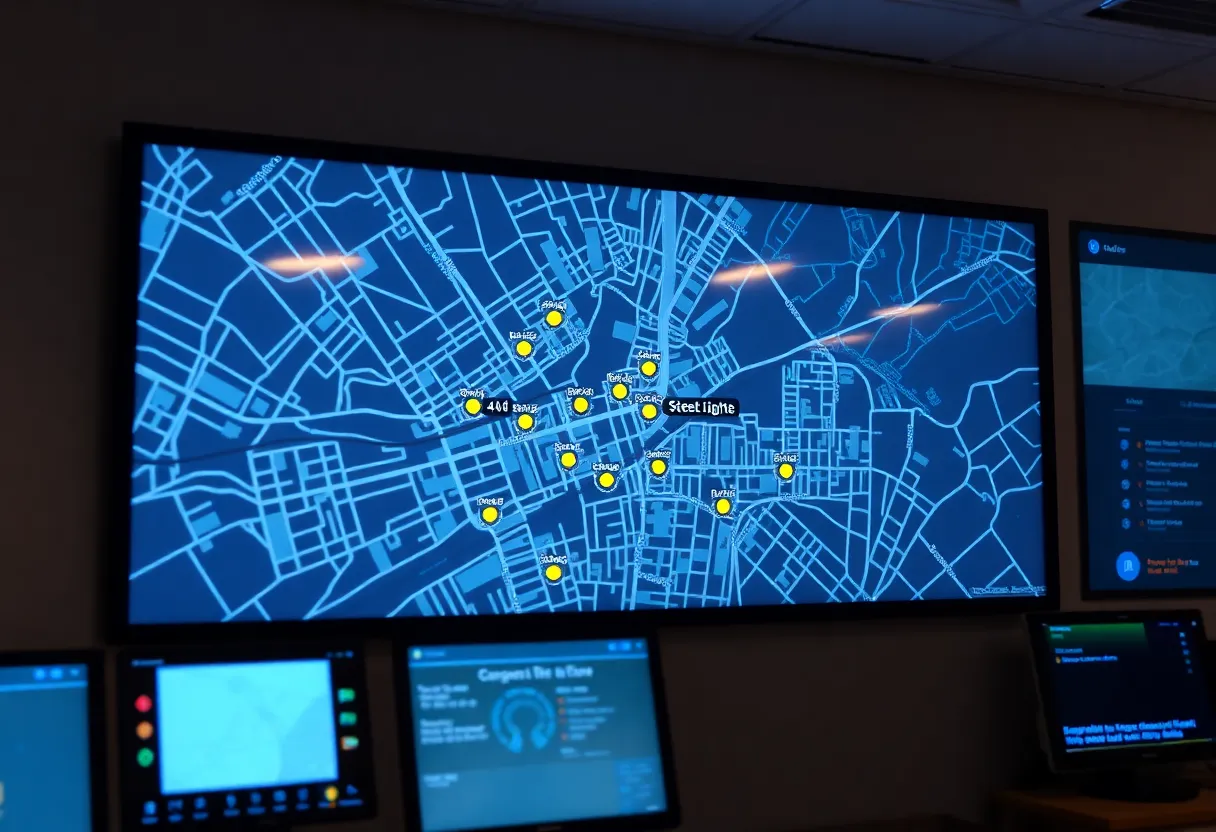
The smart streetlight business case rested on a genuinely reasonable combination of savings and capability. LED conversion alone, independent of any “smart” functionality, delivers real energy savings over older sodium-vapor or mercury-vapor streetlights, and most cities pursuing smart streetlight programs bundled that straightforward LED upgrade together with networked control and sensor capability, reasoning that since the poles and fixtures were being replaced anyway, adding connectivity was a relatively small incremental cost for potentially significant additional capability — centralized dimming control, automated outage detection and reporting, and a ready-made sensor network infrastructure that other city departments could theoretically build additional smart city applications on top of.
Vendors pitched adaptive dimming specifically as a major additional savings driver beyond the baseline LED efficiency gain — lights that brighten when they detect pedestrian or vehicle presence and dim during quiet periods, squeezing out further energy savings beyond what a simple LED swap alone would achieve, while also serving as an extensible platform for whatever additional smart city sensor applications a city might want to layer on later, from environmental monitoring to public safety applications.
Why the Ongoing Costs Turned Out Larger Than Expected
The core problem that has driven several cities toward removal or simplification is that the networked control layer’s ongoing maintenance and lifecycle costs turned out to be significantly higher, relative to the actual delivered value, than initial business cases projected. Networking hardware and sensors have a meaningfully shorter useful life than the LED fixtures and poles themselves, and several cities have found themselves facing a second major capital replacement cycle for the networking and control electronics well before the underlying LED fixtures needed any attention at all, creating an ongoing cost burden that wasn’t clearly accounted for in the original project economics, which tended to emphasize the large one-time energy savings rather than the recurring lifecycle cost of the smart control layer.
Software and platform costs compounded this problem in several documented cases. Smart streetlight systems typically depend on a vendor-provided cloud management platform, and cities have reported situations where that platform required ongoing licensing fees, where the vendor was acquired or discontinued the specific product line the city had deployed, or where the city’s own IT and operations staff didn’t have the specialized skills needed to maintain the system without expensive ongoing vendor support contracts — a pattern that has become familiar enough across different smart-city technology categories that municipal technology researchers have given it a name: “smart city vendor lock-in,” where a city becomes dependent on a single vendor’s proprietary platform for critical infrastructure in a way that makes switching vendors or bringing maintenance in-house prohibitively expensive.
The Actual Utilization Gap
Perhaps the most consistently cited reason for scaling back smart streetlight programs, in post-project reviews and municipal auditor reports that several cities have published, is a significant gap between the sensor and data capabilities the systems were purchased for and what actually got used operationally after installation. Adaptive dimming, the single feature most directly tied to additional energy savings beyond baseline LED efficiency, has in several documented cases been disabled entirely or used far more conservatively than originally planned, often due to public safety concerns and resident complaints about inconsistent lighting levels feeling unsafe, particularly in areas with elevated crime concerns where residents specifically wanted consistently bright lighting rather than traffic-responsive dimming.
The broader sensor network capability — the promise that streetlight infrastructure could double as a platform for air quality monitoring, acoustic sensing, or other smart city applications — has similarly gone underused in a number of cities relative to original planning documents, often because the additional applications that would have justified the sensor investment required separate funding, separate departmental ownership, and separate integration work that never fully materialized after the initial lighting-focused project was completed, leaving expensive sensor hardware installed and largely unused for anything beyond its most basic lighting-control function.
Privacy Concerns Added Political Pressure in Several Cities
Beyond the pure cost-benefit calculation, several cities faced genuine public and city-council pushback specifically over privacy concerns tied to the sensor capabilities bundled into smart streetlight systems, particularly for units equipped with cameras or acoustic sensors that could, at least in principle, be used for surveillance purposes well beyond simple traffic or pedestrian counting. San Diego’s smart streetlight program became a widely reported example of this dynamic, after revelations that the city’s police department had accessed streetlight camera footage for criminal investigations beyond the traffic-safety and environmental-monitoring purposes the program had originally been publicly justified around, which triggered a genuine political backlash, a formal city council review, and ultimately a program suspension and significant restructuring of the oversight and access rules governing the system before any resumption of camera-enabled functionality.
This pattern — a technology deployed for one publicly stated purpose quietly enabling a different, more surveillance-adjacent use case that wasn’t clearly disclosed or debated at the time of initial approval — has become a recurring flashpoint in municipal technology policy discussions generally, and smart streetlights, precisely because they’re physically ubiquitous and can be equipped with genuinely capable sensors at relatively low incremental cost, have become one of the more visible and politically contentious examples of this broader smart-city privacy tension.

What Cities Are Actually Doing Instead
The trend isn’t a uniform retreat from streetlight modernization broadly — LED conversion itself remains popular and continues expanding in cities that haven’t yet completed it, because the baseline energy savings case for LED alone remains genuinely strong and doesn’t carry the same ongoing complexity burden as the networked control layer. What’s changing is a more selective, scaled-back approach to the “smart” component specifically: several cities have moved toward simpler, more limited networked control systems focused narrowly on outage detection and basic remote monitoring — capabilities with clear, well-understood value and comparatively modest ongoing complexity — while being considerably more cautious about bundling in adaptive dimming, camera sensors, or broader multi-purpose sensor network ambitions that proved harder to operationalize and more politically contentious than originally anticipated.
Municipal technology procurement practices have also shifted in response, with several cities now writing more explicit total-lifecycle-cost requirements and clearer data governance and privacy rules directly into smart infrastructure procurement contracts, specifically informed by the lessons other cities learned the hard way during the first wave of smart streetlight deployment. It’s a fairly typical pattern for municipal technology adoption generally: an ambitious first wave oversold on capability and undersold on ongoing cost and governance complexity, followed by a more modest, better-scoped second wave that keeps the parts that demonstrably worked and quietly drops the parts that, in practice, never delivered enough value to justify their complexity.