How Modern Noise Cancellation Works—And Why Some ANC Is Better Than Others

Soren Bell
July 7, 2026
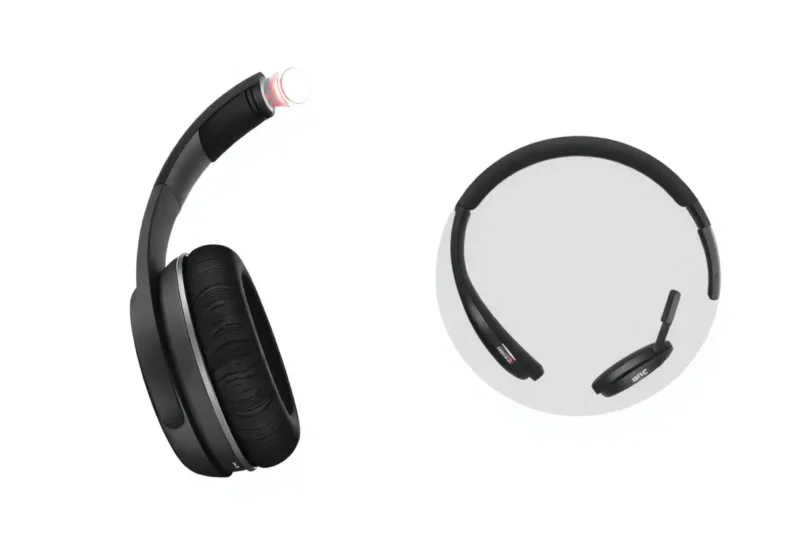
Active noise cancellation is one of those technologies that’s become standard in premium headphones and earbuds while remaining somewhat mysterious in how it actually works and why the quality varies so dramatically between products. A $50 pair of earbuds with ANC and a $350 pair with ANC don’t produce the same experience—understanding why requires looking at what ANC actually does and where the technical complexity lies.
The Physics of Sound Cancellation
Sound is a pressure wave—alternating compressions and rarefactions in air. Active noise cancellation works by generating a sound wave that is precisely 180 degrees out of phase with the incoming noise: when the noise wave creates a compression (higher pressure), the ANC system generates a rarefaction (lower pressure) of equal magnitude. The two waves interfere destructively and cancel each other out—or, in the real world, partially cancel each other out.
This is the core principle, and it’s been known since the 1930s. The challenge is implementation: the ANC system must measure the incoming noise, calculate the appropriate anti-noise signal, and deliver it to the ear faster than the noise arrives. The entire process—sensing, computation, generating anti-noise audio, delivering it to the driver—must complete in well under a millisecond, because sound travels fast enough that any delay results in imperfect phase matching and degraded cancellation.
Feedforward, Feedback, and Hybrid ANC
There are three architectures for implementing ANC, each with different performance characteristics.
Feedforward ANC places microphones on the outside of the ear cup or earbud housing, facing outward toward the noise source. These microphones capture the ambient sound before it reaches the ear, allowing the processor time to calculate and generate the anti-noise signal. Feedforward ANC works well for low-frequency, predictable noise (aircraft engine rumble, HVAC systems) because the processor gets advance warning of the incoming sound. Its limitation: the anti-noise signal is calculated based on the captured sound, but the acoustics between the microphone position and the ear aren’t perfectly predictable—there’s inherent imprecision.
Feedback ANC places microphones inside the ear cup, closer to the ear canal, where they capture what the listener is actually hearing. The feedback microphone monitors the residual noise after the ANC system has done its work, allowing the processor to correct errors and improve cancellation iteratively. Feedback ANC can be more precise than feedforward because it’s measuring the actual acoustic environment at the ear, but it has less time to process incoming noise before it arrives—making it better for lower-frequency sounds with longer wavelengths and slower variation.
Hybrid ANC, which is the standard in premium headphones (Sony WH-1000XM5, Bose QuietComfort 45, Apple AirPods Max), uses both feedforward and feedback microphones together. The feedforward system provides advance sensing of incoming noise; the feedback system corrects the residual. The combined approach produces better broadband cancellation across a wider frequency range than either system alone.
Why Low Frequencies Are Easier Than High Frequencies
ANC is dramatically more effective at low frequencies than high frequencies, and this characteristic explains why ANC is excellent at cancelling aircraft noise, traffic rumble, and HVAC but much less effective at voices, typing, or sharp sounds.
Low-frequency sounds have long wavelengths—at 100 Hz, the wavelength is about 3.4 metres. The ANC system has a relatively long time window (the period of the wave) to generate and deliver the anti-noise before the next wave cycle arrives. The spatial coherence of low-frequency sound is also high—the sound field varies slowly over the distance from the feedforward microphone to the ear.
High-frequency sounds have short wavelengths—at 3,000 Hz, the wavelength is about 11 centimetres. The processor must generate and deliver the anti-noise within a fraction of a millisecond; any slight error in timing, amplitude, or phase produces degraded cancellation or, in the worst case, actual amplification of certain frequencies. The spatial variation of high-frequency sound is also higher, making precise anti-noise signal generation harder. ANC effectiveness falls off substantially above 1–2 kHz in most consumer implementations.
The Role of DSP Processing and Machine Learning
The processor running the ANC algorithm is doing real-time digital signal processing at extremely low latency. The quality of the DSP chip, the efficiency of the algorithm, and the sophistication of the adaptive filtering determine much of the performance difference between headphones with the same physical microphone setup.
Modern premium headphones use adaptive ANC algorithms that continuously adjust the anti-noise signal based on measured acoustics. Sony’s processor in the XM5, for example, monitors the acoustic seal between the ear cup and the ear—if the seal degrades (glasses, ear positioning), the algorithm adapts to compensate. Algorithms that adapt to the user’s environment (switching between optimised profiles for aircraft, public transport, office) produce more consistent performance across different noise environments than static algorithms.

The addition of machine learning to ANC processing—particularly in Apple’s H-series chips and Qualcomm’s audio processors—allows the system to learn from real-world acoustic environments and adapt cancellation profiles more precisely than fixed DSP algorithms. Apple’s Transparency Mode (which selectively passes through environmental audio while maintaining the audio stream) is another application of the same processing stack, using the microphones not to cancel noise but to blend it with the music at natural levels.
Physical Isolation and Passive Noise Reduction
ANC doesn’t work in isolation from passive noise reduction—the physical attenuation provided by the headphone cushions or earbud tips. The passive noise reduction of a well-fitting over-ear headphone provides 20–30 dB of attenuation at mid and high frequencies where ANC is less effective. The ANC layer adds additional attenuation at low frequencies where passive isolation is weaker. A good ANC headphone is designed so that the passive and active noise reduction complement each other across the frequency range.
This is why fit matters enormously for ANC performance. An in-ear monitor with poor ear tip seal has both degraded passive isolation and degraded ANC performance—the feedback microphone can’t accurately measure what’s reaching the ear, and the acoustic leakage undermines the precision of the anti-noise signal. Getting the right ear tip size is not an aesthetic concern: it’s an acoustic performance requirement.
The ANC Pressure Sensation
Some users report a sensation of “pressure” or discomfort from ANC that they don’t experience with noise isolation alone. This happens because the ANC system is actively generating sound waves that aren’t representing musical content—and the way the anti-noise interacts with the air in the ear canal can create a physical pressure-like sensation. Different users experience this differently; some don’t notice it at all. Improved ANC algorithms in newer generations have reduced this phenomenon, particularly for the Sony XM5 and Bose QC45, but it hasn’t been entirely eliminated for all users in all ANC implementations.
Understanding these mechanics explains why ANC headphone reviews don’t just compare specification numbers—the listening experience depends on algorithm quality, physical fit, adaptive capabilities, and the specific noise environment in a way that synthetic ANC benchmarks only partially capture.