Tailscale vs Traditional VPN: What’s Actually Different and Why It Matters

Jesse Cole
July 7, 2026

Tailscale has become a staple tool in the homelab and remote-access toolkit in a way that requires some explanation for people still thinking about VPNs in the traditional sense. The confusion is understandable: Tailscale is marketed as a VPN, it uses VPN technology (WireGuard) at its core, and it solves overlapping problems. But the architecture is fundamentally different from traditional VPN products like OpenVPN or Cisco AnyConnect, and that architectural difference is what makes Tailscale significantly easier to operate and often more useful for specific use cases.
How Traditional VPNs Work
Traditional VPNs—corporate VPNs, OpenVPN, WireGuard in its manual configuration, ExpressVPN/NordVPN and similar—operate on a hub-and-spoke model. All traffic from a connected device is routed through a central VPN server (the hub). This server is the gateway: it authenticates connections, manages IP addressing, routes traffic, and often applies access policies. Every device connecting to the network goes through this central point.
The hub-and-spoke model has specific consequences. The central server must be provisioned, maintained, patched, and kept available—it’s a single point of failure. Performance is bounded by the server’s bandwidth and CPU capacity. Latency between two devices in the same room—if both are connecting via a VPN hub—includes two round-trips to the server rather than direct communication. And configuring traditional VPNs requires generating certificates, managing keys, configuring firewall rules, and often dealing with NAT traversal challenges when devices are behind consumer routers.
For the classic use case—employees in different locations connecting to a corporate network—this architecture works well. The company controls the hub server, centralises access control, and routes internal traffic through a known infrastructure point. The operational complexity is manageable with dedicated IT staff.
How Tailscale Works: Peer-to-Peer Mesh Networking
Tailscale is a peer-to-peer mesh VPN built on WireGuard. Instead of routing all traffic through a central hub, Tailscale nodes (devices in your “tailnet”) establish direct encrypted connections with each other, peer-to-peer, whenever possible. A laptop at home connecting to a home server via Tailscale communicates directly with the home server over an encrypted WireGuard tunnel—not via a Tailscale server in a data centre.
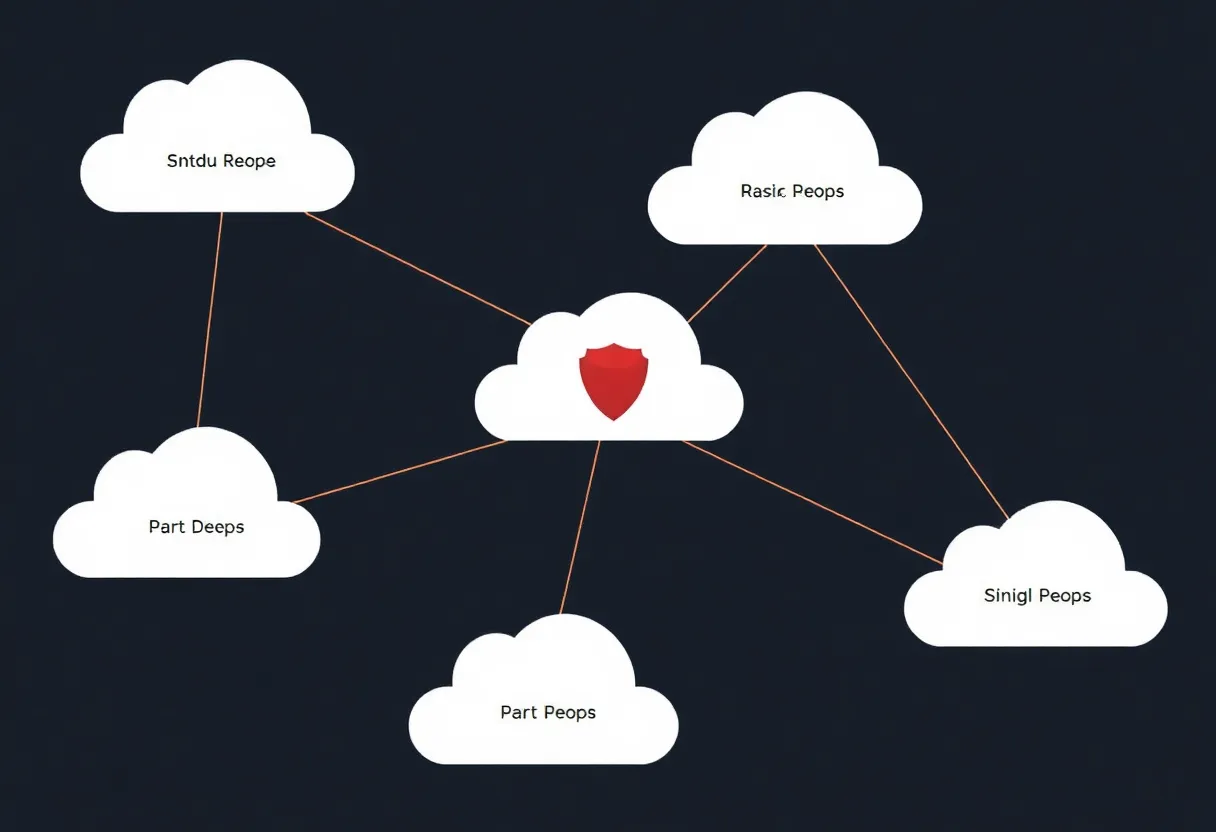
Tailscale’s coordination server (operated by Tailscale) handles authentication, key exchange, and node discovery—telling nodes how to find each other and what keys to use to establish encrypted connections. Once the connection is established, the Tailscale coordination server is out of the path. Your traffic doesn’t flow through Tailscale’s infrastructure; it flows directly between your devices.
When direct peer-to-peer connection isn’t possible (both devices behind symmetric NAT with no open ports), Tailscale falls back to relaying traffic through its DERP (Designated Encrypted Relay for Packets) servers—similar to STUN/TURN in WebRTC. This fallback ensures connectivity in difficult network environments, but for most common configurations (at least one device with accessible ports, or devices using STUN hole-punching through typical NAT), direct connections are established.
NAT Traversal: The Technical Advantage That Matters Most
The single biggest operational advantage Tailscale has over self-managed traditional VPNs for homelab and personal use is NAT traversal. Setting up a traditional VPN to access a home network remotely requires: a static IP or dynamic DNS, an open inbound port on the router, port forwarding rules, and VPN software configured to listen on that port. If the ISP uses CGNAT (carrier-grade NAT)—which many do, particularly for mobile connections and in dense urban areas—inbound connections are impossible without a workaround.
Tailscale handles NAT traversal automatically using UDP hole-punching techniques that work through most consumer NAT configurations, including double NAT. No port forwarding is required. No static IP is required. No firewall rule changes are required. Installing Tailscale on a device and authenticating with your account is sufficient—the device appears in your tailnet and is reachable from other Tailscale devices without any additional configuration.
This is genuinely transformative for homelab use. Accessing a home server from a laptop at a coffee shop, or connecting to a self-hosted service on a home network from a smartphone, requires zero router configuration beyond the initial Tailscale install. For users who’ve spent hours fighting port forwarding, dynamic DNS, and CGNAT issues with traditional VPN setups, Tailscale’s “it just works” NAT traversal is a significant quality-of-life improvement.
Performance: The Peer-to-Peer Difference
Traditional hub-and-spoke VPNs route traffic through a central server, which introduces latency proportional to the geographic distance to that server plus the routing path. Two devices in the same city connecting via a VPN server in a different country experience unnecessarily high latency and bandwidth bottlenecks at the server.
Tailscale’s direct peer-to-peer connections mean the network path is as short as the physical path between devices allows. A laptop connected to a home server via Tailscale experiences latency close to direct LAN latency when both devices are in the same physical network vicinity and the direct connection succeeds. For transferring large files between devices, backing up to a network-attached storage device remotely, or accessing a self-hosted application, the performance difference between direct P2P and hub-routed connections is meaningful.
When Traditional VPNs Still Make Sense
Traditional hub-and-spoke VPNs have genuine advantages in specific contexts.
Exit node functionality—using a VPN to route all internet traffic through a server in a specific location to mask your IP address or access geo-restricted content—is the use case for commercial VPN services (ExpressVPN, NordVPN) and is not what Tailscale is designed for. Tailscale does support “exit nodes” (designating a Tailscale node as a gateway through which other nodes route their internet traffic), but this requires running your own exit node rather than using a network of commercial servers in many countries.
Corporate environments with centralised access control, traffic inspection, and compliance logging often prefer hub-and-spoke because all traffic flows through infrastructure the organisation controls and can monitor. Zero-trust network access (ZTNA) products—which are increasingly replacing traditional corporate VPNs—address these requirements in ways that Tailscale’s personal/small-team offering doesn’t fully cover, though Tailscale for Business adds more enterprise-grade access control capabilities.
Self-hosted WireGuard, configured manually, gives you full control over the VPN infrastructure with no dependence on Tailscale’s coordination service. For users who don’t want any external service involved in their VPN—not even for key distribution and NAT traversal—self-hosted WireGuard is the answer. The trade-off is the configuration complexity that Tailscale eliminates.
The Practical Recommendation
For homelab users, developers accessing remote machines, self-hosters connecting to services on their home network, and small teams collaborating across distributed locations: Tailscale is the right tool. The setup is minutes rather than hours, NAT traversal works automatically, the performance is excellent for direct P2P connections, and the free tier (up to 100 devices for personal use) covers most individual use cases.
For commercial VPN for privacy and geo-unblocking: traditional commercial VPN services are the right tool—Tailscale doesn’t compete in this space in the same way.
For enterprise zero-trust access control with auditing, traffic inspection, and centralised policy management: enterprise ZTNA products (Zscaler, Cloudflare Access, or Tailscale for Business) are appropriate.
The architectural difference between Tailscale and traditional VPNs isn’t about which is better in an absolute sense—it’s about which architecture serves your specific use case. For the homelab and remote access use case that Tailscale targets, the peer-to-peer mesh architecture wins on almost every dimension.