The Real Infrastructure Behind Modern Supply Chain Tracking

Anita Osei
July 7, 2026
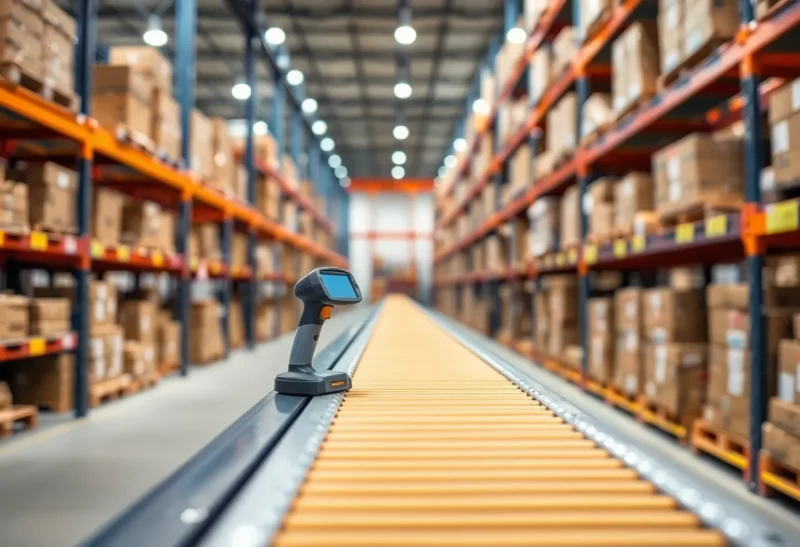
When a consumer checks the tracking status of a package and sees it transition through “In transit,” “At facility,” and “Out for delivery,” they’re seeing a cleaned-up summary of a data infrastructure that spans multiple companies, dozens of physical systems, and several layers of integration that took decades to build and still has gaps significant enough to cause disruptions when stressed.
The COVID-era supply chain disruptions made supply chain visibility a mainstream topic for the first time. “Where is my container?” became a question that company executives, politicians, and consumers were all asking simultaneously, and the answer—often “we don’t know precisely”—revealed how much of the system relies on periodic updates, paper records, and human checkpoints rather than continuous real-time monitoring.
The Layers of Tracking Technology
Modern supply chain tracking uses several different technologies that operate at different scales and with different trade-offs between cost, accuracy, and coverage.
Barcodes and 2D codes remain the foundation. The 1D barcode that identifies a product and the 2D QR or Data Matrix code that identifies a specific item within a shipment are inexpensive to print, require no power, and can be read by simple scanners. Their limitation is that they require active scanning—someone or something must point a reader at the code to capture data. They provide event data (this item was scanned at this location at this time) rather than continuous tracking.
RFID (Radio Frequency Identification) enables passive reading without line-of-sight. An RFID reader broadcasts a radio frequency signal; passive RFID tags in the field absorb enough energy to respond with their stored identifier. A conveyor belt fitted with an RFID reader can capture tag data from every item passing through without a human explicitly scanning each one. This enables higher throughput and catches items that would be missed in manual scanning workflows.
RFID adoption in supply chains has been slower than early proponents predicted, largely because of cost and standards fragmentation. Passive UHF RFID tags have fallen below $0.10 each at volume, which makes per-item tagging feasible for higher-value goods but still expensive for commodity products. The reader infrastructure adds cost and complexity. Walmart’s early mandate that major suppliers adopt RFID accelerated adoption in retail but didn’t achieve the complete supply chain coverage that would enable seamless tracking.
GPS tracking operates at the container or vehicle level rather than the item level. A GPS tracker on a shipping container reports its location continuously (typically every few minutes to every hour, depending on battery or power constraints and data transmission costs). This provides continuous visibility of where the container is—but not what’s inside it, and not the fine-grained per-item tracking that warehouse operations require.
IoT sensors beyond basic location tracking add environmental data: temperature, humidity, shock, light (for tamper detection). Cold chain shipments—pharmaceuticals, food, biologicals—require continuous temperature monitoring, and IoT temperature loggers that record and transmit data throughout a shipment’s journey have become standard for high-value cold chain. The data they produce creates both compliance records and early-warning detection of temperature excursions that would compromise cargo.
The Data Integration Problem
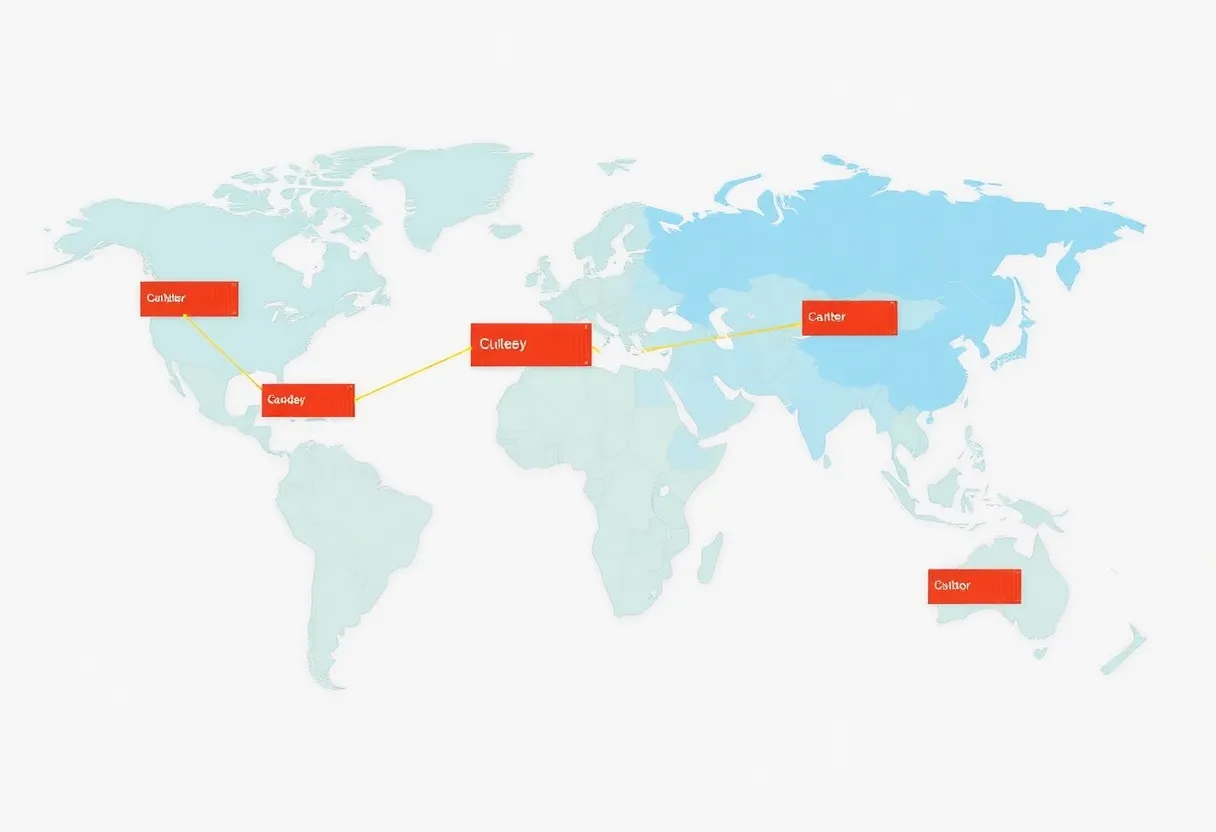
The physical tracking technologies are only part of the challenge. A shipment moving from a factory in Vietnam to a distribution centre in Germany passes through perhaps a dozen distinct custody handoffs: factory to freight forwarder, freight forwarder to trucking company, trucking company to port operator, port operator to ocean carrier, ocean carrier to destination port operator, port operator to customs, customs to trucking company, trucking company to distribution centre. Each of these parties has their own systems, data formats, and business processes.
End-to-end shipment tracking requires integrating data from all of these disparate systems, and the reality is that most of this integration still happens through Electronic Data Interchange (EDI)—a set of data standards developed in the 1970s that remain the operational backbone of logistics data exchange. EDI messages like the 856 Advanced Ship Notice, the 850 Purchase Order, and the 214 Transportation Carrier Shipment Status Message structure how supply chain events are communicated between parties.
EDI is functional but limited. EDI transactions are batch-processed rather than real-time, meaning data often arrives hours or days after the physical event. EDI implementations vary between trading partners—the same message type can be implemented with different field interpretations, optional segments, and character encodings that require custom mappings. Many smaller logistics providers don’t support EDI at all and rely on email, phone calls, and manual data entry.
Newer application layers use APIs to exchange data more frequently and in richer formats, but they require active integration work and aren’t universal. The logistics technology ecosystem includes companies whose entire value proposition is building these integrations—middleware platforms, control tower solutions, visibility platforms—that aggregate data from multiple carriers, freight forwarders, and logistics systems into a single tracking view.
Ocean Freight: Where Visibility Has Been Weakest
The ocean freight leg—which carries approximately 90% of global trade by volume—has historically been the weakest link in end-to-end shipment visibility. Container ships carry thousands of boxes on each voyage; individual container locations on the vessel are logged at loading and unloading but not continuously tracked during the transit itself.
The container tracking numbers that shippers use to follow their cargo don’t provide GPS-level precision—they provide event-level data from port systems when the container is physically handled. During the ocean transit itself, the container’s location is inferred from the vessel’s voyage status, which is tracked through AIS (Automatic Identification System) transponders that all commercial vessels are required to broadcast.
Maersk, MSC, Evergreen, and other major ocean carriers have invested in container-level IoT tracking for their own fleets in recent years, providing continuous position and condition data for tracked containers. This is not yet universal across the industry; it tends to be available for premium services and high-value cargo rather than standard commodity shipping.
The Role of Freight Visibility Platforms
A category of technology companies—freight visibility platforms—exists specifically to aggregate tracking data from multiple carriers into a unified view. Project44, FourKites, Shippeo, and similar companies build integrations with hundreds of carriers and logistics systems, processing tracking events from GPS devices, carrier APIs, EDI feeds, port systems, and other sources to provide their customers with a consolidated view of in-transit shipments.
These platforms sit on top of the underlying carrier infrastructure rather than replacing it. Their value proposition is aggregation—the ability to see a full end-to-end journey across multiple carrier legs through a single interface—and analytics, using the aggregated data to benchmark carrier performance, predict delivery windows, and identify patterns in delays.
The accuracy of visibility platform predictions has improved substantially with machine learning applied to large datasets of historical shipment events. Predicting the likely delivery date for a container that’s currently at a specific port, accounting for historical port dwell times, vessel schedules, and seasonal patterns, is now possible at accuracy levels that are practically useful for supply chain planning.
Where the Gaps Still Are
Despite the technology investment, supply chain tracking still has significant gaps. The “last mile” from distribution centre to final delivery location is well-tracked for consumer parcels through carriers like FedEx and UPS, but in B2B freight, the final delivery leg is often less visible.
Smaller carriers and regional logistics providers often lack the technology infrastructure for real-time tracking, creating gaps when shipments pass through their networks. Cross-border customs processes—particularly at air freight facilities and smaller land border crossings—can create multi-day visibility gaps where a shipment’s status is unknown.
The information asymmetry between different parties in the supply chain remains significant. A shipper may not see the same granularity of tracking data that the carrier’s internal systems contain; carriers don’t always share real-time data with freight forwarders; freight forwarders don’t always pass tracking updates to their customers in near-real-time. Each handoff in the chain can introduce lag between the physical event and when that event appears in the shipper’s visibility system.
Blockchain-based supply chain tracking was heavily promoted from approximately 2017 to 2021 as a solution to these integration and trust problems, but adoption has been much more limited than forecast. The fundamental challenge—that all parties in a supply chain need to participate and use compatible systems—isn’t solved by the blockchain data model; it requires the business relationships and integration work that blockchain doesn’t automate. Most blockchain supply chain pilots either remained pilots or migrated to conventional database architectures once the technology novelty wore off.
Where the Investment Is Going
Current investment in supply chain tracking infrastructure is concentrated in a few areas. Control tower platforms that integrate planning, execution, and exception management are expanding, incorporating AI-based prediction and automated exception handling for deviation from expected transit plans.
Drone and automated vehicle technology is adding tracking density in warehouses and distribution centres—autonomous mobile robots that move inventory between locations generate continuous position data that traditional warehouse management systems didn’t have. Computer vision systems that can read shipping labels and identify items without traditional scanning are reducing the labour requirements for tracking events and increasing data capture rates.
The disruptions of 2020-2022 created lasting interest in supply chain resilience and visibility at the executive level of companies that previously treated logistics as a back-office function. That attention has translated into technology investment that is gradually building out the visibility infrastructure that logistics professionals have been building toward for decades—not through any single revolutionary technology, but through the steady accumulation of better sensors, better integration, and better analytics applied to a problem that was always more complex than it looked from the outside.