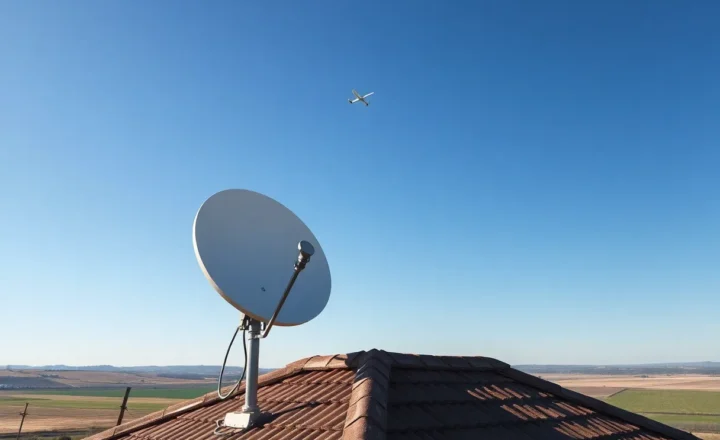
How Amateur Radio Operators Are Contributing to Disaster Response Infrastructure

Ray Kowalski
July 7, 2026
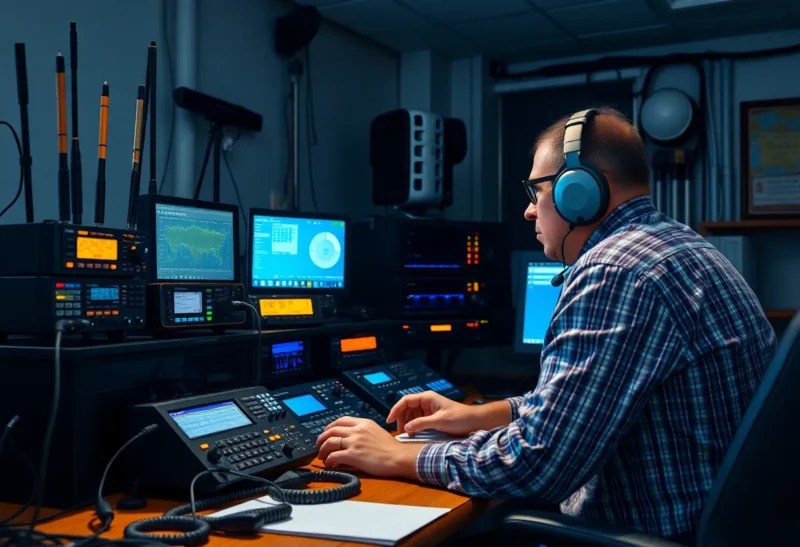
When major disasters knock out cellular infrastructure—hurricanes, earthquakes, wildfires, severe flooding—the communications layer that emergency managers and relief organisations depend on can fail exactly when they need it most. Cell towers lose power. Fibre lines get cut. Satellite links are congested. In those gaps, an aging, volunteer-run technology infrastructure has been quietly proving its value: amateur radio.
Amateur (ham) radio operators and the organisations they form—the ARRL’s Amateur Radio Emergency Service (ARES), the National Traffic System, RACES (Radio Amateur Civil Emergency Service), and numerous regional groups—have contributed to emergency communications in disasters ranging from Hurricane Katrina to recent wildfire evacuations. Understanding what they actually do, why their technology still matters in 2026, and how their volunteer infrastructure fits into modern emergency management is more interesting and less nostalgic than it might initially seem.
Why Radio Infrastructure Survives When Everything Else Fails
The resilience of amateur radio in disaster scenarios comes from its physical and operational characteristics—properties that modern digital infrastructure doesn’t share.
No reliance on commercial infrastructure. A cell call travels from your phone to a cell tower, through a carrier’s network, to a data centre, and back. Any single point in that chain failing breaks the connection. A ham radio transmission travels directly from one radio to another through the air—or, for longer distances, through a network of independently powered repeaters. When cell towers lose power or are physically destroyed, this matters enormously.
Battery and solar operability. High-frequency (HF) ham radio equipment—capable of communication over hundreds or thousands of miles—can run on small battery packs with solar supplementation. A trained operator with a portable HF transceiver, a wire antenna, and a 20Ah battery can establish communication across a continent. This is extremely difficult to replicate with any commercial digital communications technology that requires infrastructure.
Direct operator skill. Ham radio operators are licensed and trained in radio propagation, operating procedures, and emergency communication protocols. They understand how to make reliable contacts under difficult conditions, when frequency bands are usable, and how to pass structured information messages (formal traffic) accurately under degraded conditions. This trained human layer adds resilience that automated systems lack.
Spectrum diversity. Amateur radio operators are licensed across a wide range of frequency bands with different propagation characteristics. VHF and UHF bands (2m and 70cm) work well for local and regional communications and support widely deployed repeater networks. HF bands (10–40m) support long-distance communication that bounces off the ionosphere. Having multiple frequency options means adapting to conditions rather than depending on a single propagation path.
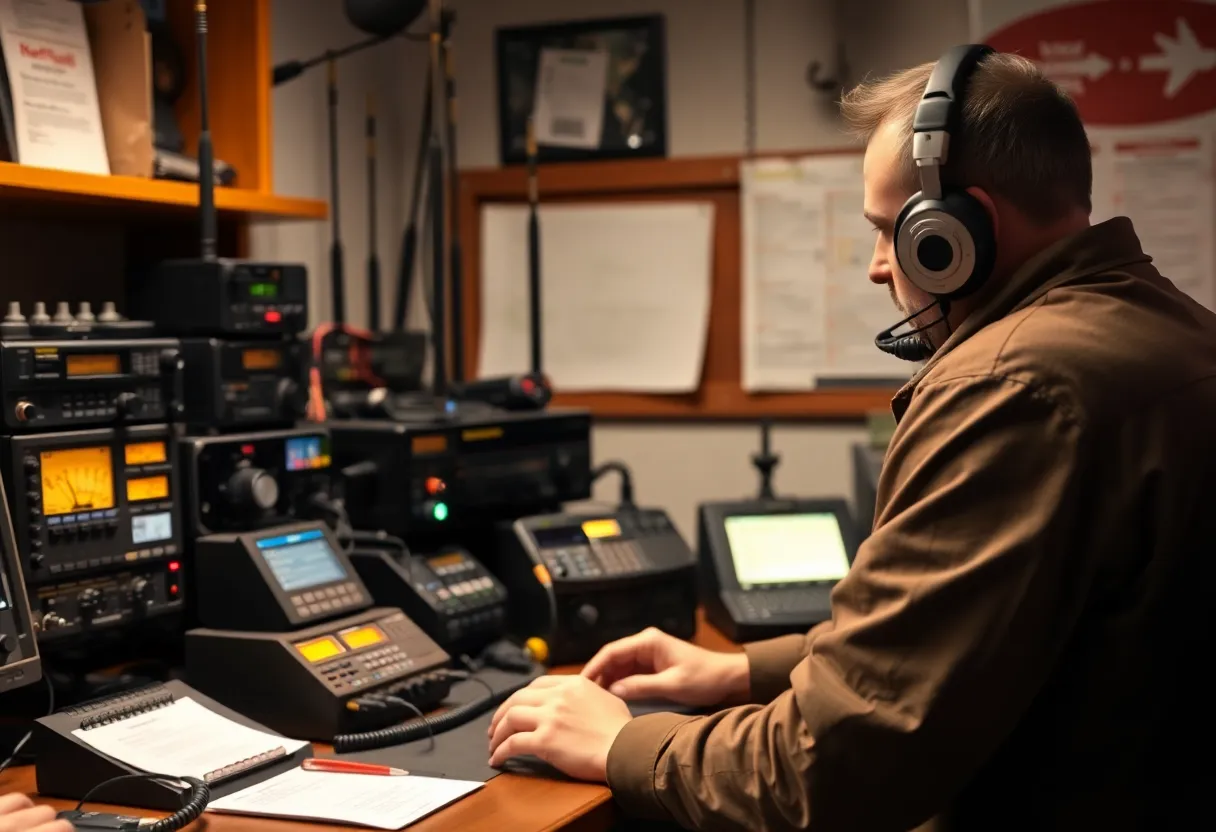
What ARES and RACES Actually Do During Disasters
The practical roles that amateur radio emergency groups fill during disasters have evolved over decades and continue to evolve as digital capabilities have been added to the amateur radio toolkit.
Message passing and welfare traffic. Historically, one of ham radio’s most important disaster functions was passing welfare messages—allowing people in a disaster area to communicate with family outside. “The Smith family in Biloxi is safe and sheltering at the school on Oak Street.” This was critical before cell phones and remains relevant in complete infrastructure outages.
Served agency support. ARES groups partner with “served agencies”—the American Red Cross, emergency management offices, hospitals, and community organisations—to provide backup communications. In a full infrastructure outage, a ham radio operator at a Red Cross shelter can communicate shelter status (occupancy, medical needs, supply requests) to the county emergency operations centre directly, bypassing failed infrastructure.
Coordination and situational awareness. Amateur radio nets (coordinated radio networks with a designated control station) can aggregate situation reports from multiple locations and pass them to incident commanders. Before cellular restoration, this may be the only way to build a real-time picture of conditions across a wide disaster area.
Search and rescue support. Ham radio operators with fox-hunting (radio direction finding) skills and equipment have contributed to search and rescue operations, helping locate individuals with emergency beacons or distress transmitters.
Digital Modes: How Amateur Radio Has Modernised
The amateur radio emergency communications toolkit in 2026 is substantially different from the voice-only operation of earlier decades. Digital modes have added data capabilities that significantly expand what’s possible.
Winlink. Winlink is a global amateur radio email system that allows operators to send and receive email over radio, including attachments, completely independently of internet infrastructure. During disasters, Winlink enables transmission of standardised forms (ICS forms, damage assessment forms, shelter status reports) by email over radio—bridging the gap between emergency management’s form-based workflows and radio communications. Winlink’s network of stations (many of them persistent, staffed by volunteers and organisations worldwide) makes it highly resilient.
JS8Call and WSPR for weak-signal digital. Digital HF modes like JS8Call allow reliable communication even under poor propagation conditions where voice contacts would be impossible—using the same error-correction principles that make digital communications more robust than voice.
APRS (Automatic Packet Reporting System). APRS is a packet radio system that transmits location and status data. Mobile APRS stations—vehicles and personnel equipped with GPS and radio equipment—can transmit their position to an APRS network, providing real-time tracking of field resources without cellular connectivity. Emergency managers can monitor APRS maps showing the positions of deployed radio operators.
Mesh networking. Some amateur radio emergency groups have deployed digital mesh radio networks—effectively Wi-Fi-compatible networks running on amateur radio frequencies with much longer range than consumer Wi-Fi. These mesh networks can provide IP connectivity in a disaster area that has lost internet and cellular, allowing normal applications to function over radio infrastructure. Projects like AREDN (Amateur Radio Emergency Data Network) have built significant infrastructure in some regions.
The Limitations and Challenges
Honest assessment requires acknowledging the limitations of amateur radio emergency communications alongside its strengths.
Volunteer availability. Amateur radio emergency groups are entirely volunteer. In a major disaster, volunteers are community members who may themselves be affected, whose families need attention, and who have jobs and obligations. The reliable availability of skilled operators when they’re most needed is never guaranteed.
Interoperability gaps. Integration with professional emergency management systems varies significantly by region. Where relationships between ham radio groups and emergency managers have been cultivated for years, integration is good. Where those relationships haven’t been built, ham radio operators may show up at an EOC with skills and equipment and not know where to plug in—and emergency managers may not know how to use them.
Bandwidth limitations. Even with digital modes, amateur radio data rates are modest by modern standards. High-bandwidth applications—video, large data transfers, voice over IP at scale—are not feasible. Ham radio in disasters handles text, forms, status updates, and position data well; it doesn’t handle the full breadth of modern communications needs.
Declining operator pool in some regions. Ham radio licensing has faced demographic challenges; the average age of licensed operators is older than most other technical communities, and recruitment of younger operators is a persistent concern. Some regions have robust, active emergency communications groups; others have aging groups with declining capacity.
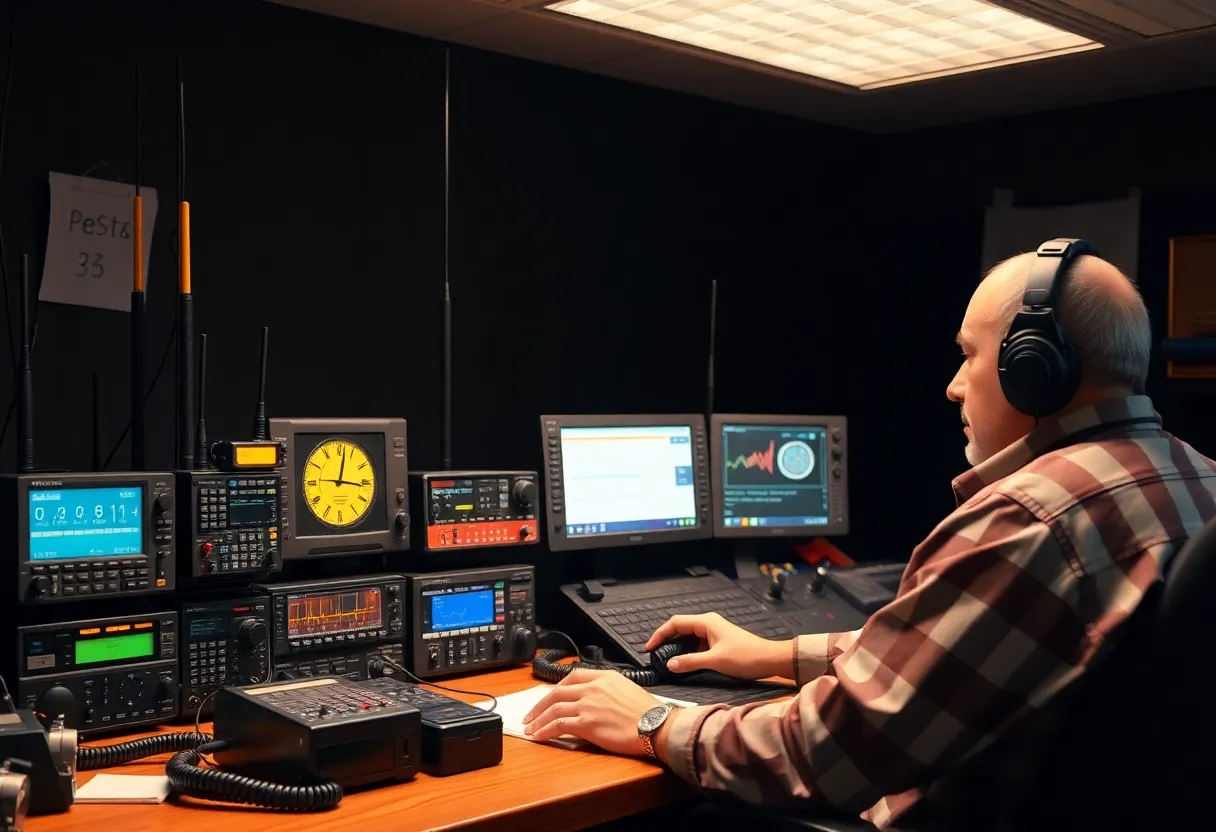
Where It Fits in 2026
The question isn’t whether amateur radio emergency communications is relevant in a world of smartphones, satellite internet, and FirstNet—it clearly is, for specific use cases in specific conditions. The better question is how it fits in a modern emergency communications ecosystem that also includes Starlink and other low-earth orbit satellite internet, cellular on wheels (COW) deployments, and P25 professional radio networks.
Amateur radio’s niche is specifically the period between initial disaster impact and commercial infrastructure restoration, in areas where deployed COW units and satellite uplinks haven’t yet reached, and for tasks that can be accomplished with modest bandwidth. It’s a gap-filler, not a replacement for professional infrastructure.
The more interesting trend is the integration of digital amateur radio capabilities—Winlink, APRS, mesh networking—with formal emergency management workflows. Groups that have built real working relationships with their county emergency managers, trained on standardised protocols, and deployed infrastructure that integrates with ICS command structures are valuable in a way that ad-hoc “hams show up and try to help” is not.
The technology itself continues to modernise. The combination of HF digital modes for long-distance communication, mesh networking for local IP connectivity, and APRS for position tracking represents a genuinely capable disaster communications toolkit—built by volunteers, running on commercially available equipment, independent of commercial infrastructure. The operators behind it are an underappreciated piece of the resilience layer that emergency management relies on when everything else fails.