Why EV Charging Apps Still Feel Like a Puzzle in 2026

Sofia Reyes
July 7, 2026
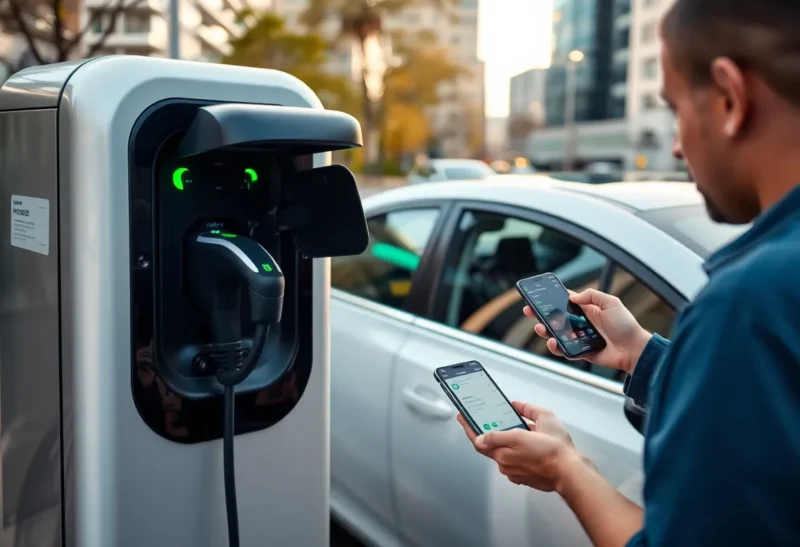
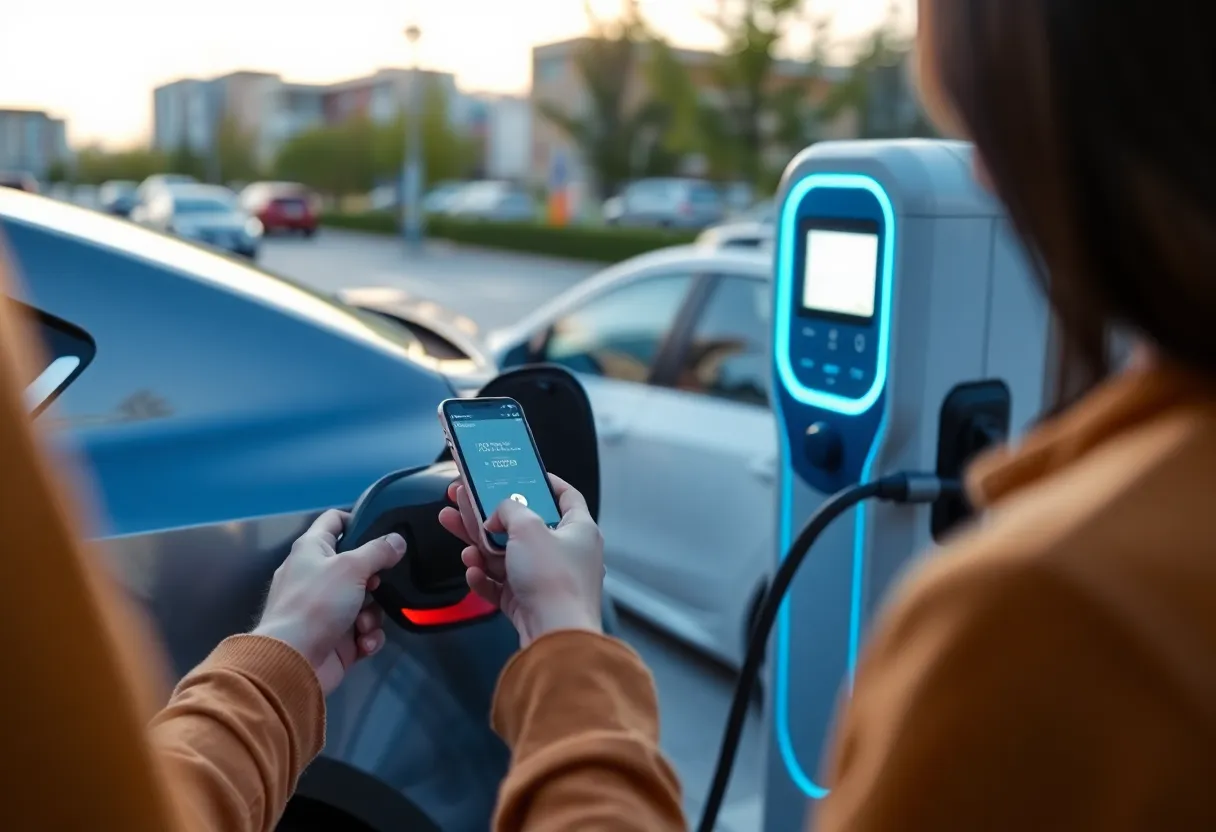
If you’ve ever driven an EV more than 150 miles from home, you’ve probably experienced what I think of as the charging app moment: standing at a Level 2 or DC fast charger, phone in hand, realizing you need yet another account with yet another network to start a session. ChargePoint needs one login. Electrify America needs another. EVgo has its own. BLINK has its own. And that’s before you get to smaller regional networks with apps that look like they were designed in 2014 and haven’t been updated since.
In 2026, EV ownership has genuinely improved on almost every dimension — better range, faster charging hardware, more stations in more places. The app experience, however, has not kept pace. It’s a persistent rough edge on an otherwise improving product category, and the reasons it persists are more structural than technical.
The Fragmentation Problem Is Still Real
The US public charging market remains fractured between major national networks (Electrify America, ChargePoint, EVgo, Tesla Supercharger now open to non-Tesla EVs), regional networks, and third-party aggregators that sit on top of multiple networks. Each major network has its own app, its own account system, and often its own pricing logic that differs between app pricing, RFID card pricing, and credit card tap pricing at the same station.
Tesla’s Supercharger network opening to non-Tesla vehicles created a brief moment of optimism — one well-run network with a reliable app could become the default. But Supercharger pricing for non-Tesla vehicles requires the Tesla app, which means creating a Tesla account even if you drive a Ford Mustang Mach-E or a Hyundai Ioniq 6. That’s an improvement over not having access at all, but it doesn’t simplify the app landscape, it adds another player.
NACS (the North American Charging Standard, now also called the SAE J3400 connector) has been adopted across virtually all major automakers for new vehicles, which solves the physical adapter problem. But connector standardization doesn’t standardize software. You can plug into a ChargePoint, an Electrify America, and an EVgo station with the same cable — and still need three different apps to start sessions at each one.
Why Plug-and-Charge Adoption Is Slower Than Expected
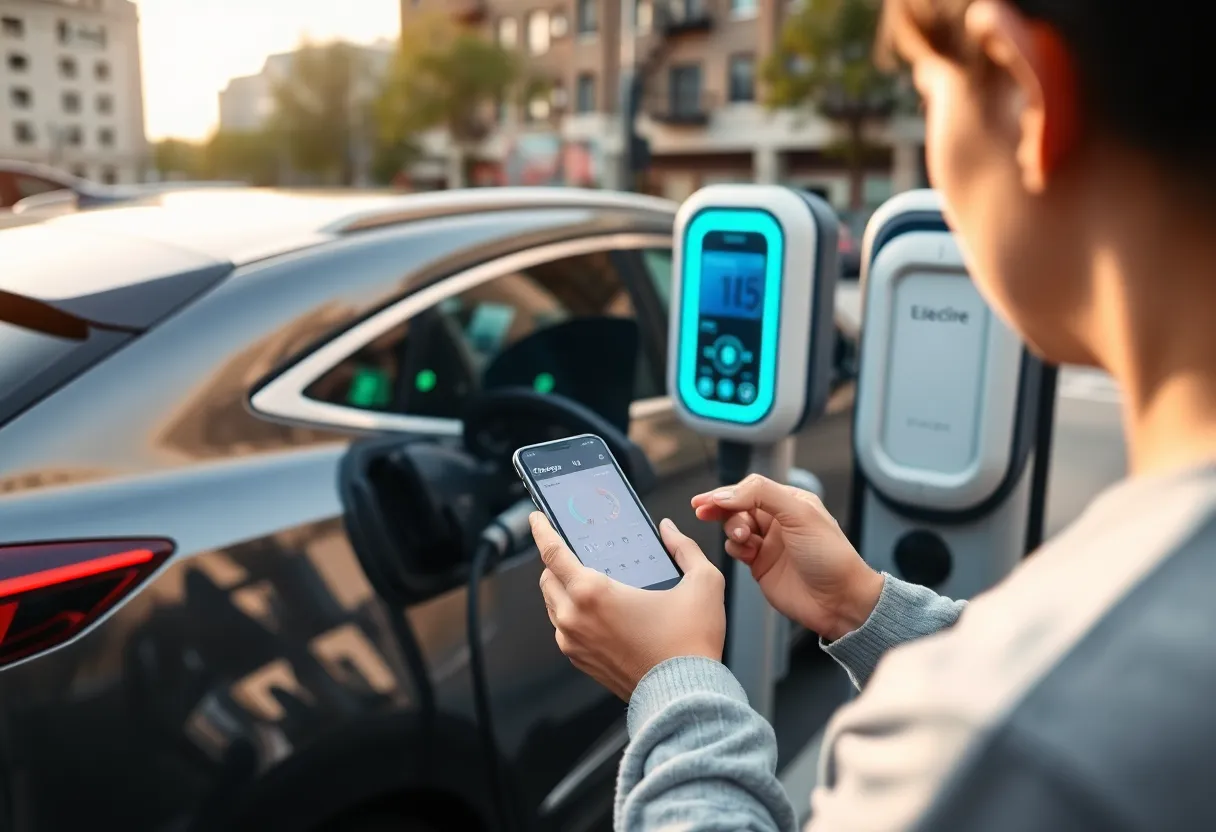
Plug-and-charge (ISO 15118, which handles automatic authentication between vehicle and charger so you literally just plug in and charging starts billing to your account) was supposed to fix most of this. The spec exists. Compatible vehicles exist. Some compatible chargers exist. The actual usage rate remains low, and the reasons are instructive.
Roaming agreements between networks are the missing piece. Plug-and-charge authentication is a vehicle-to-charger negotiation, but billing still has to flow somewhere. If your car is set up for plug-and-charge with ChargePoint but you’re at an EVgo station, the roaming agreement between those networks needs to be in place, active, and correctly implemented for the authentication to work end-to-end. Many networks have bilateral agreements, but coverage is inconsistent — especially for smaller regional networks and in international travel scenarios.
Then there’s the implementation quality problem. Vehicle firmware needs to correctly implement the ISO 15118 stack. Charger firmware needs to correctly implement it on the other side. Edge cases in that spec create interoperability failures that look to users like the feature simply doesn’t work. Some EV owners who tried plug-and-charge early in its deployment had enough failures that they stopped trusting it and went back to the app. Rebuilding that trust requires sustained reliability over time, and reliability at all points in the chain is still inconsistent.
Automaker apps complicate things further. Most EV manufacturers — Rivian, GM (via Ultium), Ford, Hyundai/Kia, BMW — have integrated charging functionality into their vehicle companion apps, which theoretically let you start sessions at multiple networks from a single interface. In practice, the coverage varies, the network integration breaks when networks update their APIs, and the payment setup flows are often less clear than just using the network’s own app. The integration quality ranges from genuinely good (Rivian’s app has been consistently reliable for multi-network charging) to frustrating (some OEM apps have known bugs that have persisted for months without fixes).
Pricing Transparency Is Getting Worse in Some Ways
EV charging pricing has always been harder to parse than gasoline, and it’s getting more complicated rather than less. The variables include: cents per kWh vs per-minute billing (some stations mix both), session initiation fees, idle fees after the session ends, network membership discounts, time-of-use pricing that varies by hour, and automaker-negotiated rates that differ from the posted price (BMW iX owners get different Electrify America rates than Chevy Blazer EV owners at the same station).
Several networks have implemented “subscription” tiers — pay $X per month and get reduced per-kWh rates — which makes the pricing comparison between networks even more opaque if you’re trying to figure out which option makes financial sense for your usage pattern. The math only works out if you charge frequently enough at that network to offset the subscription cost, which varies by vehicle, driving habits, and where you live.
PlugShare and ABRP (A Better Routeplanner) have become semi-essential third-party tools for EV drivers precisely because network apps don’t solve the comparison and routing problem. PlugShare aggregates station status and user check-in reports across networks, giving a more reliable real-time picture of which stations are actually functioning than the network apps themselves. ABRP plans multi-stop charging routes across networks, accounting for your vehicle’s consumption curve and current charge level. Neither of these are official network apps — they’re workarounds for a fragmentation problem the network apps haven’t solved.
The In-Car Navigation Gap
For drivers whose EVs came with built-in navigation that integrates charging stop planning — Tesla’s built-in routing, or Mercedes with integrated MBUX charging data, or the Ioniq 6’s built-in routing — the app problem is partially mitigated for road trips. The car handles route planning and pre-conditions the battery before arriving at a fast charger, and the charging session is tied to the car’s account rather than a separate app.
But built-in navigation charging integration is typically only reliable for the automaker’s preferred network partners. A Tesla routing to Superchargers is a seamless experience; routing a Tesla to an EVgo station because the Supercharger is occupied adds friction back in. Ioniq’s built-in routing integrates with Electrify America well (Hyundai has an agreement with EA) but treats other networks as generic waypoints without the same detail. The integration is improving but still patchwork.
Android Auto and Apple CarPlay have added charging-aware features, but the deep integration needed for truly seamless charging-stop routing (accounting for your battery’s current State of Charge in real time, the specific vehicle’s consumption curve, and accurate real-time charger availability) isn’t something a phone mirroring protocol handles elegantly. The best charging experiences remain manufacturer-native for the networks those manufacturers have partnerships with.
What Would Actually Fix This
The most plausible fix in the near term is continued consolidation — fewer networks, better roaming agreements between the ones that survive, and more widespread plug-and-charge implementation as both vehicles and chargers are refreshed with more reliable firmware. The NEVI (National Electric Vehicle Infrastructure) program funding conditions require stations to support plug-and-charge, which will gradually push more compliant hardware into the network.
Longer term, the comparison that keeps coming up is hotel or airline booking. You don’t use a different app for every hotel chain; you use Google Hotels or Booking.com or your preferred aggregator. The charging equivalent is PlugShare for information but with no equivalent payment layer — there’s no Expedia for EV charging that books and pays across networks from a single interface.
That aggregation layer requires networks to expose consistent APIs and accept billing through intermediaries, which is a business model negotiation as much as a technical one. Networks have reasons to want their own customer relationships, their own apps, and their own membership programs — those give them data, loyalty, and differentiation. The incentive to make things easy for the customer and the incentive to maintain a direct relationship with that customer point in different directions, and in 2026, the direct relationship incentive is still winning.
Which is why, for now, EV ownership still means carrying a wallet full of accounts and developing habits about which app to try first when you pull into a new charging station. It’s better than it was two years ago. It’s still meaningfully worse than it should be.