Starship Fairing Reuse and Lunar Cargo: Which Costs Dominate When Cadence Scales

Walter Pryce
April 8, 2026
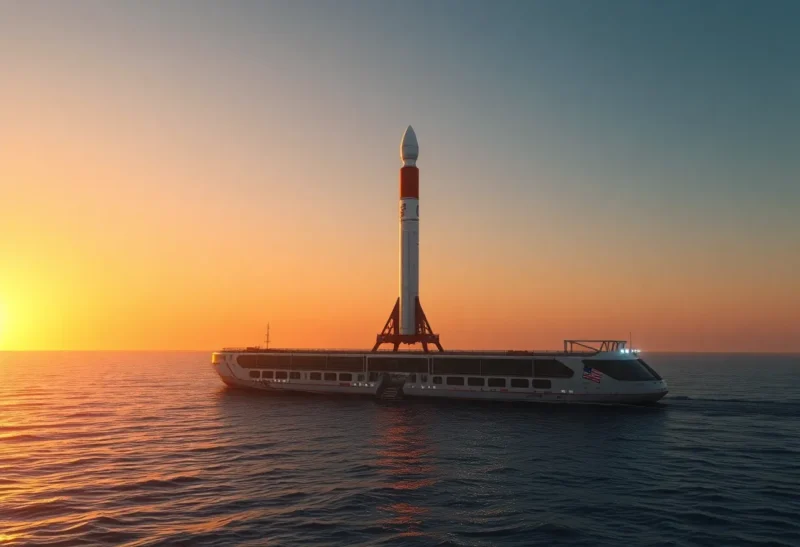
When people argue about super-heavy launch economics, two topics collide: payload fairing reuse—recovering the expensive shell that protects satellites on ascent—and lunar cargo delivery, where every kilogram competes with propellant, margins, and schedule risk. Starship-class architectures promise high cadence and large volume, but cadence changes which costs dominate. Saving a fairing matters more when flights are frequent; lunar operations can erase those savings if mission complexity explodes.
This article sketches a mental model for 2026 readers: how fairing economics scale, what lunar cargo adds to the ledger, and why “reuse” is never a single line item.
Figures in public discussions often mix apples: development costs, marginal costs, and fully burdened program costs speak different languages. Here we stay at the conceptual layer—enough to reason about trade-offs without pretending a single public number captures your favorite company’s private books.

Fairings: why they matter more at high flight rates
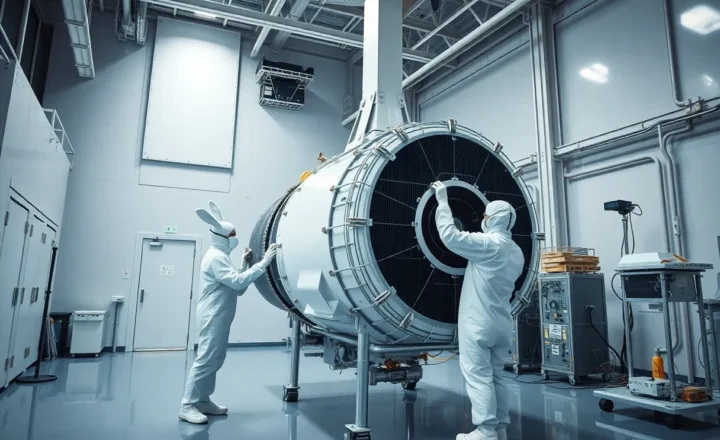
Fairings are not the biggest cost of a launch, but they are a recurring manufacturing load. Throwing them away taxes factories and supply chains. Recovery—whether by ships, nets, or controlled splashdown—front-loads capital into recovery assets and ops crews. The payoff arrives when flight rate amortizes those fixed costs. Infrequent launches make reuse look expensive; frequent launches flip the calculus.
Think of fairings as a capacity problem: if your factory can only produce N fairing halves per year, flight rate hits a ceiling even if vehicles wait on the pad. Reuse raises N effectively—if refurbishment is faster than new builds and reliable enough not to bottleneck flows.
Learning curves: why early reuse is expensive and later reuse is boring
The first recovered fairings spend engineering hours like water: instrumentation, unexpected saltwater intrusion, surprises in composite behavior. Over time, processes standardize—nondestructive tests, predictable replacement components, and crews who stop treating every catch like a PhD thesis. That maturation is where economics improve faster than raw material savings suggest.
Reuse also interacts with refurbishment: thermal protection, seals, and structural inspections do not disappear because a fairing survived splashdown. Mature programs treat refurbishment as a predictable rhythm; immature ones treat every recovery as a science project.
Lunar cargo: where the meter runs differently
Lunar delivery adds propellant margins, longer mission timelines, and often staging in Earth orbit. Even with large lift capacity, mass still matters because lunar landings spend propellant budgets that LEO deliveries never touch. Time matters too: longer missions stress avionics, thermal cycles, and operational staffing.
Payloads also change: habitats need structural interfaces; science instruments need cleanliness constraints; propellant transfer demos need sensors and software that pure cargo boxes skip. Complexity is a tax that mass alone understates.
Comparing to Apollo-era intuition: bigger rockets, different bottlenecks
Apollo’s bottleneck was partly manufacturing and partly mission operations tempo. Modern super-heavy concepts aim to industrialize launch—but lunar return adds new bottlenecks: qualified landing sites, surface power, and crew safety rules for anything near humans. Economics follows the bottleneck. If launch becomes cheap but surface systems lag, investment flows to surface infrastructure; if surface systems mature but launch remains scarce, dollars cling to ride-share and miniaturization.
Surface operations add another layer—landing precision, debris plumes, and interfaces with habitats or rovers. Those costs are not “launch costs,” but they dominate program economics if you ignore them.
Which costs dominate when cadence scales?
At low cadence, fixed costs hurt: recovery fleet depreciation, personnel training, ground systems. Fairing savings may be real but small relative to standing army expenses.
At high cadence, marginal costs per flight fall—manufacturing smooths, processes standardize, and reuse amortizes. Fairing refurbishment becomes a line item you can budget like airline maintenance.
For lunar cargo, propellant and mission operations often dominate unless launch becomes so cheap that surface systems become the bottleneck. In many architectures, the expensive part becomes integration and reliability of payloads, not the raw dollars per kilogram to LEO.
Use a simple heuristic: identify the slowest step in your end-to-end pipeline. Economics tilts toward that step until you widen it. Sometimes the slowest step is launch production; sometimes it is mission assurance; sometimes it is landing site preparation on the Moon.
Starship-class assumptions: volume is not free judgment
Large fairings enable bigger payloads and potentially fewer deployments, but they also encourage heavier spacecraft—because you can. Lunar programs still pay for every decision in mass and complexity. Volume relieves packing constraints; it does not remove systems engineering.
There is also a packaging paradox: when volume is abundant, teams sometimes defer mass discipline until late—then pay in propellant and structural margins. Cheap lift does not remove physics; it shifts where mistakes surface.
Orbit staging: TLI burns, tankers, and schedule coupling
Lunar cargo rarely looks like “one launch and done.” Depending on architecture, missions may require Earth orbit operations, cryogenic management, and multiple vehicle interactions. Each step adds operational risk hours—crew time on console, range assets, and weather windows. Those hours are costs, even if they do not show up as hardware invoices.
When cadence scales, coordination becomes the scarce resource. You stop asking only “can we lift it?” and start asking “can we process flows through the same ground systems without tripping over each other?”
Fairing reuse vs Starship integrated approach: do not mix metaphors
Traditional fairing recovery compares to expendable shells on conventional rockets. Starship-class vehicles blur lines—payload integration, door systems, and thermal protection may be intertwined with the vehicle in ways that make “fairing” an imperfect label. The economic lesson still holds: anything you can reuse at high reliability reduces manufacturing choke points. Anything you must inspect heavily after each flight reintroduces labor—sometimes enough to rival building new.
Lunar surface logistics: last mile eats optimism
Delivery to the lunar surface is not the end state; it is the beginning of handling. Offloading, anchoring, thermal management in two-week nights, and dust all create operational load. Cargo missions can dominate program attention even when launch is cheap, because surface timelines are slow and mistakes are expensive.
Risk and insurance: the quiet multiplier
High-cadence launch can reduce insurance premiums per mission if reliability proves out—eventually. Early in a program, risk capital prices uncertainty aggressively. Lunar cargo may carry higher perceived risk until landing profiles stabilize.
Customer contracts also allocate risk: who pays for delays, who insures the payload during hold, and what happens if a window slips because of range conflicts. Those clauses can dominate the spreadsheet long after launch hardware is “cheap enough.”
Commercial cargo vs NASA priorities: incentives shape what gets optimized
Commercial operators optimize for cash flow and customer backlog; agency programs optimize for mission assurance and political timelines. Those priorities allocate risk differently. A commercial lunar courier might accept higher variance if prices reflect it; a crew-support cargo line cannot. When reading headlines about per-kilogram costs, ask which incentive stack the number assumes.
Environmental and regulatory headwinds (brief reality check)
Launch cadence interacts with licensing, environmental review, and community noise budgets. These factors can cap flight rate independent of vehicle capability—turning economics back toward fixed-cost pain. Reuse helps manufacturing; it does not automatically expand airspace and waterway access.
Coastal recovery operations also contend with weather windows—another scheduling coupling that shows up in real costs even if brochures focus on engines and tanks.
What investors should watch
Not investment advice—but sensible diligence questions: refurbishment hours per flight, ground crew hours per flow, anomaly rates, and customer willingness to pay for lunar services versus LEO delivery. Fairing headlines are a slice; integrated operational metrics tell the story.
International competition and redundant supply chains
Launch economics never exist in a vacuum. Alternate providers, geopolitical constraints, and payload ITAR rules affect who can buy which ride. A super-heavy vehicle can lower nominal price per kilogram while customers still pay premiums for schedule certainty or regulatory clarity. Reuse in one program does not automatically equal lower prices for every payload class—segmentation persists.
What changes if refueling in orbit works “as advertised”
Orbital refueling—if mature—moves the lunar cost conversation from “giant single-shot stack” to “modular tanker flows.” That shifts dominance toward propellant handling reliability, boiloff management, and rendezvous cadence. Fairing reuse still matters for Earth launch throughput, but the critical path moves to orbital operations. Watch where anomalies cluster; that is where economics will tighten first.
Closing
Fairing reuse and lunar cargo economics sit on different layers of the same stack. Reuse lowers recurring manufacturing pressure; lunar logistics raises propellant and operations pressure. As launch cadence scales, the dominant cost shifts from “build new hardware each time” to “operate a reliable transportation system.” That is the transition super-heavy vehicles aim to unlock—and the reason fairing debates matter more when the launch drumbeat speeds up.
If you remember one line: cheap launch is necessary for ambitious lunar logistics; it is not sufficient. The winning programs pair reusable hardware with operational discipline on the ground and at the destination.