Indie Micro-SaaS Annual vs Monthly Pricing: Churn Signals Builders Still Ignore in 2026

Hannah Kline
April 8, 2026
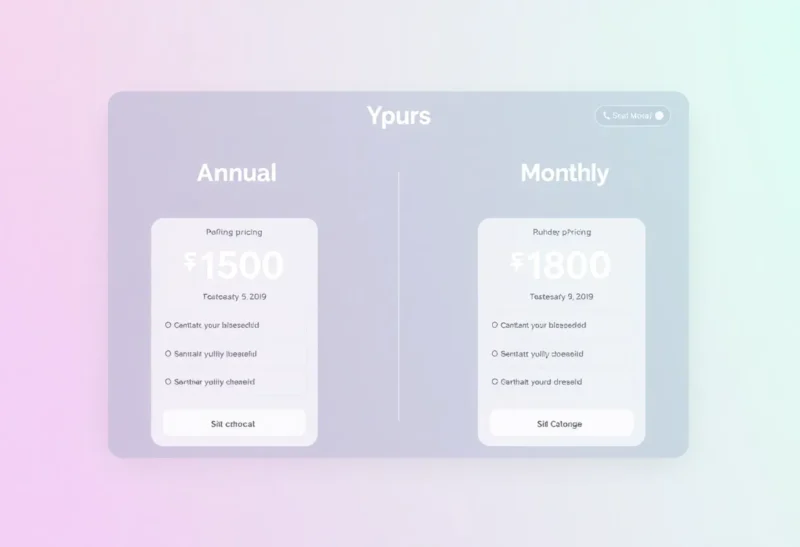
Micro-SaaS founders love to debate annual versus monthly pricing as if it were a moral choice. Monthly feels fair; annual feels like cash flow. The more useful framing is information: each billing rhythm reveals different churn signals, and ignoring those signals is how quiet revenue leaks out the side of a dashboard that still looks “up and to the right.”
This article walks through what annual and monthly plans actually measure, which early warning signs founders miss, and how to price and communicate without fooling yourself.
The micro-SaaS conversation in 2026 is louder—more AI wrappers, more templates, more “build in public” threads—yet the fundamentals of retention and cash timing did not get simpler. If anything, mixed signals are easier to find because tooling makes pretty charts out of thin data.

What monthly plans expose
Monthly billing front-loads honesty. If your onboarding is weak, your activation metric is fuzzy, or your product is merely “nice to have,” customers vote with cancellations quickly. That hurts ego and helps learning. High gross churn on monthly plans is a product signal before it is a pricing signal.
Monthly also tracks external shocks: customers’ budgets, hiring freezes, and tool consolidation waves. You will see those changes in cancellation reasons—if you collect them systematically instead of treating them as anecdotes.
What annual plans hide (until they do not)
Annual prepay smooths cash flow and can reduce churn reported per month, because customers have sunk cost and fewer renewal moments. The downside is delayed feedback. A cohort can look healthy while value is eroding; the cliff arrives at renewal, sometimes in a concentrated window that feels like a crisis.
Annual plans also attract discount hunters when you train the market to expect “two months free.” If you lean on discounts to close annual deals, you may be buying revenue that churns hard later—especially when buyers were price-sensitive, not problem-sensitive.
Churn signals founders still ignore in 2026
1. Downgrade intent. Users moving to cheaper tiers are pre-churn. Treat downgrades as product research, not victory.
2. Usage cliffs. A customer who stops logging in three weeks before renewal is not “busy.” They are disengaging.
3. Support silence. Loud complainers sometimes stay; quiet ghosting often leaves.
4. Seat collapse. In team products, shrinking active seats is an early warning of consolidation.
5. Failed payments treated as technical trivia. Card failures correlate with churn even after recovery; they are stress events.
Annual vs monthly: a practical decision framework
Choose monthly-first when you are still learning who your ICP is and you need fast feedback loops. Choose annual-heavy when retention is proven, support load is predictable, and you can finance the working-capital gap—or when enterprise buyers expect annual contracts for procurement reasons.
Hybrid is common: monthly with a modest annual incentive (not a fire sale) keeps optionality. The incentive should reflect real savings to you—lower processing overhead, reduced churn risk—not just an arbitrary percentage copied from a competitor.
Some teams add a quarterly option for mid-market buyers who want a cadence between monthly noise and annual commitment. That can soften renewal cliffs while preserving more frequent touchpoints than annual alone—useful when your roadmap is still moving quickly and you want legitimate reasons to check in.
How to read cohorts without lying
Segment churn by plan length, acquisition channel, and customer size. Blended churn across annual and monthly mixes is easy to misread: a growing annual base can mask rising monthly churn until the renewals hit. Publish internal charts with consistent denominators—logo churn versus revenue churn, and net revenue retention if upsells exist.
Cash flow vs risk: the annual trade nobody wants to spreadsheet
Annual prepayment improves cash, but it also front-loads obligation. Customers who paid upfront expect twelve months of value and timely support. If your team is still one person, a surge in annual buyers can swamp you precisely when you feel rich. Model support minutes per account before you celebrate the Stripe notification.
Conversely, monthly revenue can understate stability when you have strong retention mechanics—yet it forces you to keep earning the business. Many healthy products run mixed plans deliberately: monthly for experimentation, annual for customers who already proved fit.
Discounting discipline
Founders often slash annual prices to close end-of-quarter deals. That can work when the alternative is no revenue, but repeated deep discounts train buyers to wait for promotions. A cleaner approach is value-based add-ons: onboarding help, priority support, or data migration—things that justify a higher annual ticket without poisoning your list price.
If you must discount, document why in your CRM. Patterns emerge: certain channels only convert with cuts; certain personas only buy on promo. That is pricing intelligence, not shame.
Renewal theater: what to do ninety days out
For annual contracts, the renewal decision often solidifies weeks before the date. A lightweight playbook beats a panicked email the week of: check health scores, schedule a short QBR for accounts above a threshold, and surface new features tied to their original buying job. The point is not spam; it is proving ongoing relevance before the finance team asks why another tool exists.
When monthly churn is actually a positioning problem
Sometimes churn is not onboarding—it is that you attracted the wrong buyers. Aggressive SEO and broad templates can fill trials with tourists. Monthly plans make that visible quickly. The fix may be messaging, not product: narrower landing pages, clearer disqualifiers, and case studies that repel bad fits. Annual plans can delay that learning until renewals cluster—expensive tuition.
Metrics that pair well with billing cadence
Track time-to-value for monthly cohorts: how fast they reach the “aha” event. Track expansion rate for annual cohorts: did they add seats or usage mid-term? Pair churn with reason codes and NPS by segment. Numbers without reasons explain what happened; reasons without numbers invite storytelling.
Payment processors, taxes, and the hidden fragility of “simple” billing
Micro-SaaS stacks often outsource billing to Stripe, Paddle, or Lemon Squeezy. That is wise. It also means failure modes are shared: card expirations, SCA friction in Europe, currency quirks, and refund policies that shape how customers perceive fairness. Annual plans amplify these effects because each charge is larger—psychologically and financially.
When you see churn spike after a processor change or a new tax display, treat it as a product incident. Billing UX is part of retention.
Competitive dynamics: why copying a price page is dangerous
Incumbents can afford annual discounts because their support is automated and their brand reduces perceived risk. A solo founder copying the same headline numbers without the same retention infrastructure buys churn-shaped surprises. Benchmark competitors, but map their implied cost structure: headcount, ad spend, partner margins. Your price is a statement about what you can sustain.
Ethics and dark patterns
Annual plans should not rely on auto-renewal confusion to survive. Short cancellation windows and hidden terms create revenue spikes that collapse into reputational damage—especially in tight communities where indie tools spread by word of mouth. If your annual plan needs opacity to work, fix the product or the price, not the fine print.
Founder psychology: churn is not a personal verdict
It is easy to read monthly churn as rejection. Often it is a mismatch between promise and reality, or a buyer’s internal politics. Separate identity from instrumentation: treat cancellations as data, not grades. Teams that do this iterate faster and avoid over-correcting toward features nobody valued.
Also watch for burnout-driven pricing: discounting because you are tired of sales calls, or pushing annual because you need cash—not because the customer profile fits. Those are understandable human moments; they are also how unhealthy cohorts get baked in. Pause, run the numbers, and if you still choose the trade, document it so future-you understands the context.
What to do this week if you only have one afternoon
- Export cancellations for the last ninety days with reasons.
- Tag monthly versus annual and compare time-to-churn.
- Pick one leaky segment and interview five customers who stayed—ask what almost made them leave.
Small qualitative samples beat big blind averages when you are still under a thousand accounts.
If nothing else, schedule a recurring calendar block to review churn reasons—even thirty minutes. Consistency beats intensity; most blind spots come from never looking, not from sophisticated math.
Closing
Annual and monthly pricing are not opposites; they are different sampling rates on customer health. Monthly tells you fast; annual tells you late but can fund the journey—if you respect the renewal cliff. Build playbooks for both rhythms: save flows for failed payments, reactivation for quiet accounts, and honest win-loss reviews when annual customers leave. The goal is not zero churn; it is visible churn—failures you can see while there is still time to fix them.
Pick your billing mix on purpose, measure it honestly, and revisit it when your product or your market moves. Pricing is not a tattoo—it is a hypothesis you can test. The founders who win in 2026 are not the ones with the cleverest price page; they are the ones who notice when the signals change.