Solo SaaS Founders and AI Customer Support: What Still Needs a Human in 2026

Casey Holt
April 8, 2026
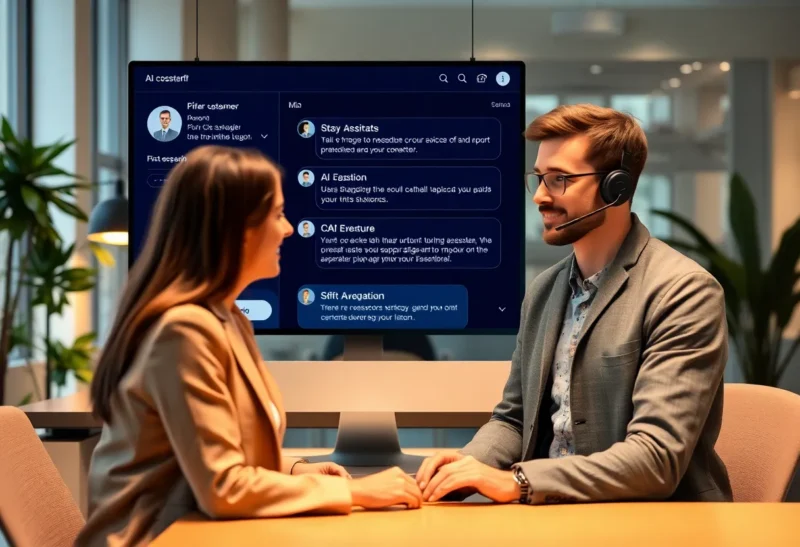
Customer support used to be the place where solo founders paid rent with their evenings. AI promised relief—draft replies, triage tickets, summarize threads—without hiring a department. In 2026, those promises are partly real. Models are better at tone, tools are better at retrieval, and integrations are easier than the brittle chatbots of a few years ago. The uncomfortable part is not whether AI can answer questions; it is whether it should answer your questions—the ones tied to refunds, account risk, and the fragile trust of early customers.
This article draws a practical line: what AI can own in solo SaaS support today, what still needs a human, and how to design workflows that do not confuse speed with safety. It is written for builders who want leverage without turning their inbox into an experiment their customers did not consent to.
What AI handles well (if you do the homework)
Great AI support is mostly great knowledge management. If your docs are current, your limits are explicit, and your product’s sharp edges are documented, AI can resolve a surprising share of tickets: password resets, billing portal links, how-to steps, and “is this expected behavior?” questions where the answer is stable.

AI also shines at summarization—turning a rambling email into bullet points, extracting environment details, or suggesting labels. Those are force multipliers for a solo operator who would otherwise reread the same thread three times before coffee.
Where humans still matter
Money and morality. Refunds, credits, and edge-case billing are not mere policy lookups; they are judgments. Customers read generosity as character. A model can propose a response; it cannot carry accountability.
Account safety. Anything resembling takeover, suspicious login patterns, or social engineering belongs to a human with procedures. Speed is not the priority—correctness is.
Anger that is actually grief. Sometimes a bug cost someone their deadline. The fix is technical; the repair is relational. Humans apologize differently when they mean it.

Novel failures. When your monitoring is screaming and you do not know why, customers need honesty, not fluent guesses. AI can hallucinate confidence; humans can say “we are investigating.”
The solo-founder trap: automation without a safety net
Automation fails twice: once technically, once socially. If the bot closes a ticket incorrectly, you lose more than the ticket—you lose the customer’s belief that you are reachable. Solo founders should treat AI as a junior agent on probation: supervised, audited, and never the only escalation path.
Workflow design that survives reality
Use AI drafts, but keep human approval for high-risk categories. Log every automated action with a trace ID. Provide a visible “talk to a human” path that does not feel like punishment. Measure not only time-to-first-response but also reopen rate after “resolution.”
Retrieval and the “almost correct” failure mode
Modern assistants often rely on retrieval-augmented generation: pull snippets from the help center, then compose an answer. That works until the snippet is outdated by a week-old release. The model looks authoritative because the prose is fluent. The customer receives a confident wrong answer—the worst kind of support.
Mitigations are unglamorous: versioned docs, release notes that link to diffs, and a habit of marking “deprecated” loudly. If you cannot maintain your knowledge base, AI will not maintain it for you; it will automate your confusion at scale.
Voice, brand, and the limits of polish
Solo brands often win because they sound human—slightly quirky, direct, and accountable. Over-polished AI can feel like a corporate mask slipped onto a one-person company. Customers notice inconsistency: “yesterday you sounded like a person; today you sound like a brochure.” If you use AI, tune for your voice and edit ruthlessly. Templates are fine; identity drift is not.
What to measure beyond CSAT
Customer satisfaction surveys lag and skew. Pair them with operational metrics: time to resolution, reopen rate, refund rate after support contact, and churn among users who opened tickets. For solo SaaS, a small number of angry users can dominate your week—track whether AI touches correlate with escalations. If automated replies precede chargebacks, your funnel is warning you.
Security and privacy: the boring slide that matters
Support threads contain emails, URLs, sometimes credentials pasted accidentally. If you pipe conversations into external models, understand retention policies, redact aggressively, and minimize what leaves your boundary. A breach in support is a breach of customer trust—often worse than a bug in a feature they barely use.
When to hire the first human helper
Founders often ask when to outsource. A useful rule: hire when your AI-plus-you system cannot keep reopen rates stable during growth—not when you are merely busy. Busyness can be solved with better docs and tighter scope. Trust erosion needs a person with judgment and time to learn your customers.
Internationalization and time zones
AI can answer at 3 a.m. local time, which feels magical until the answer needs a judgment call. Decide whether overnight coverage is truly “support” or triage. Many solo founders adopt an explicit SLA: instant automated acknowledgment, human follow-up within business hours. Clarity beats pretending you never sleep.
Playbooks: what to automate first
Start with the tickets that are high volume and low risk: password resets, invoice downloads, “where do I change my plan?”—anything that maps cleanly to a help article and does not change weekly. Build a short list of forbidden topics—billing disputes, security concerns, legal threats—where the AI should only hand off.
Next, automate internal prep, not only customer-facing replies. Auto-summarize threads, pull account metadata, and suggest next actions for the founder. That keeps humans in the loop while removing the drudgery that makes humans bitter.
Playbooks: what to keep manual longer than you want
Anything that touches churn risk, enterprise deals, or compliance should stay manual until you have repeatable procedures. Early-stage SaaS is often a story of exceptions—discounts, migrations, custom exports. Exceptions are where models guess wrong with high confidence.
Training the AI on your reality
Useful assistants are not generic; they are narrow. Feed them your phrasing, your known failure modes, and your honest limitations. If your product cannot do something, say so plainly in the knowledge base—otherwise the model will bridge gaps with plausible nonsense. Negative knowledge—“we do not support X yet”—saves more tickets than another shiny feature list.
Handling public anger without feeding the fire
Sometimes a customer vents in public—social posts, forums, comment threads. AI can draft a response, but tone control is a human job. The goal is de-escalation, not winning. Founders underestimate how much a calm, specific reply repairs harm; models can sound correct and still escalate if they argue semantics.
Ethics in small teams
You do not need a committee to have ethics; you need boundaries. Do not pretend customers are talking to a human when they are not. Label automation clearly enough that informed users understand the stack. Transparency is not only moral—it reduces weird trust dynamics when the bot confidently misfires.
Cost realism: tokens, seats, and your attention
AI support has a price beyond API bills: review time. If you must edit every draft, you have not removed work—you have shifted it. Measure end-to-end handle time, not just generation latency. Sometimes a shorter human reply beats a long AI draft plus edits.
What changed in 2026
Tooling matured: better connectors, better guardrails, better evaluation harnesses for retrieval. The human questions did not mature away. Customers still want accountability when money moves, data leaks, or promises break. AI can scale answers; it cannot scale responsibility.
Incident response: when the product is down
Outages are the purest test of support philosophy. Customers do not want poetry; they want timelines, workarounds, and proof you are awake. AI can publish status boilerplate, but humans should own the cadence of updates—especially the moment you admit uncertainty. People forgive downtime more easily than evasion.
Prepare a simple incident comms template: what we know, what we do not know, what we are doing next, where to watch for updates. AI can fill blanks, but the founder’s voice should be recognizable—your customers chose you, not a generic SaaS persona.
Integrations and third-party blame
Many tickets are actually about Stripe, OAuth providers, email deliverability, or browser extensions. AI can easily misattribute root causes if your internal runbooks are thin. Maintain a “common not-our-bug” list with diagnostic steps. It saves everyone from the worst support experience: two vendors pointing fingers while the customer pays the bill.
A simple decision checklist
Before you let automation send a customer-visible message, ask: would I sign my name to this without edits? If not, it is not ready. That single habit prevents most reputational damage. Speed is a tactic; trust is the strategy—and trust compounds slower than tokens.
Takeaways
AI can carry most of the support load only when your product and documentation are disciplined. For money, safety, and emotional repair, keep humans in the loop. The goal is not fewer tickets—it is trust that scales without turning your inbox into a roulette wheel. If you remember only one sentence: automate clarity, keep accountability human. That is the bar for serious 2026 solo SaaS.