Starship Launch Cadence vs Lunar Cargo Demands: The Math Early Adopters Ignore

Robin Hayes
April 7, 2026
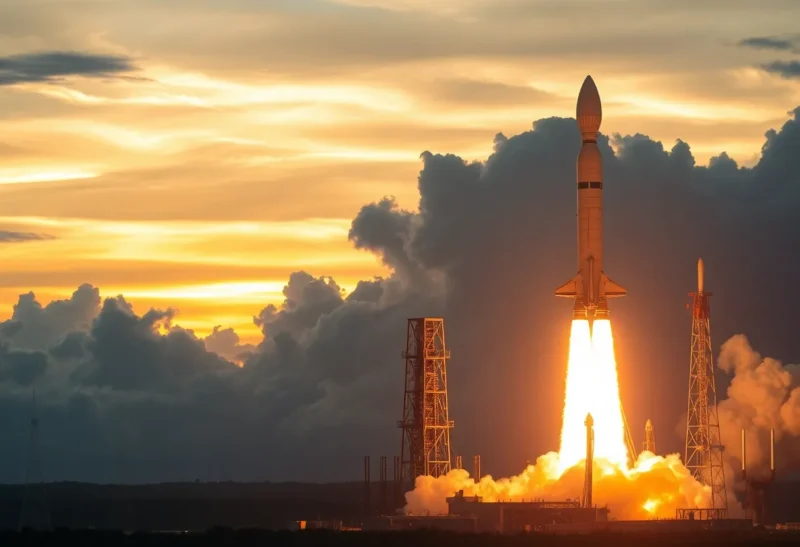
Headlines love a simple story: bigger rocket, bigger fairing, problem solved. Lunar logistics are not one problem—they are a stack of rate problems. Launch cadence, orbital refueling throughput, payload handling timelines, and surface operations margins multiply. Enthusiasts and early commercial planners sometimes anchor on a single impressive capability—tons to orbit—while quietly assuming the calendar will cooperate. It usually does not.
This article unpacks the coupling between Starship-class launch rates and lunar cargo campaigns, and where back-of-envelope math tends to be optimistic in 2026.
Cadence is a variable, not a promise
Every architecture slide has an assumed flights-per-month. Reality distributes scrubs, weather, range conflicts, vehicle anomalies, and pad turnaround work. A program that needs eight successes in a narrow window behaves differently from one that can absorb a two-month slip without cascading.
Lunar surface setups are especially unforgiving because launch windows and lighting constraints interact with commodity delivery schedules. Treat advertised cadence as a sensitivity parameter, not a constant.
Mass to orbit is only the first bottleneck
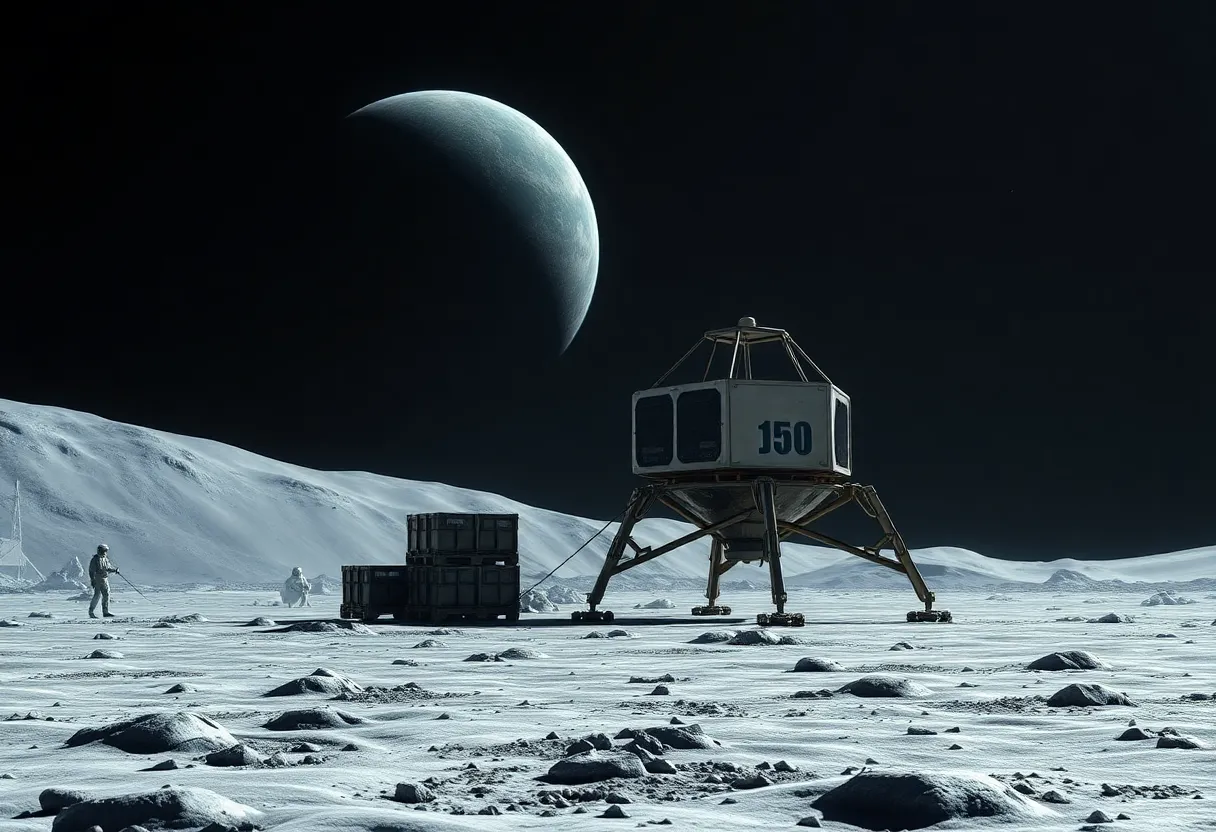
Heavy lift removes one class of excuses but introduces another: manifest integration, hazardous materials handling, and fairing volume packing become dominant questions. Two large pieces that cannot launch together due to safety rules may force an extra flight even when mass budget says you are fine.
Cargo campaigns also care about arrival phasing—getting the right kit before dependent hardware lands. A habitat shell without power modules is an expensive lawn ornament.
Refueling and depot math (the hidden multiplier)
Architectures that lean on orbital propellant transfer add flights that do not show up in “cargo manifest” summaries. Tanker sorties, boil-off management, and contingency propellant margins can dominate the flight count. Early spreadsheets often lowball these because they are less photogenic than moonbase renders.

Surface-side absorption rate
Landing pads, cranes, robotics, and crew time limit how fast you convert delivered mass into working capability. Doubling annual tonnage does not double useful infrastructure if berthing and checkout are the constraint. Think in terms of critical path surface hours, not just kilograms.
What early adopters should model instead
- Monte Carlo slips—distributions on scrubs and rework, not single-point schedules.
- Parallel vs serial dependencies—which cargoes must arrive in sequence.
- Redundancy rules—when a duplicate flight is cheaper than a stranded asset.
International and commercial interfaces
Multi-partner campaigns add paperwork latency: customs-adjacent processes for tech export, interface agreements for berthing, shared risk rules when one partner’s delay blocks another’s window. These show up as calendar drag more often than as mass shortfalls.
Why this matters beyond PowerPoint
Investors, agencies, and engineering teams make different decisions when they internalize cadence risk. Some payloads shrink to fit smaller, more frequent vehicles; others accept on-orbit staging. The “ignore math” failure mode is not stupidity—it is anchoring on the most legible number in a brochure.
Range capacity and shared infrastructure
Launch cadence is not defined by a single vehicle’s theoretical turnaround. Ranges, telemetry assets, recovery vessels, and regulatory clearances sit on shared calendars. A busy Earth-to-LEO pipeline can crowd slots needed for lunar-supporting missions unless planners negotiate priority frameworks years ahead. Treat range contention as a first-class risk, especially when multiple heavy programs peak simultaneously.
Cargo classes and certification drag
Not all kilograms are equal. Propellants, pressurized modules, and nuclear-adjacent power demos move through different safety boards. A campaign that mixes classes inherits the longest pole. Early spreadsheets that assume uniform processing times underestimate how certification queues serialize work.
Learning curves vs steady state
Early vehicles spend extra time on inspections, fixes, and data reviews. Steady-state cadence assumptions should not be applied to the first dozen operational flights without a learning-curve discount. Conversely, mature systems still suffer black-swan delays—models need both infant-mortality padding and tail-risk awareness.
Downmass and return logistics
Lunar programs are not only uphill. Sample return, failed hardware swaps, and reuse experiments create downmass and Earth-entry constraints that ripple back into launch planning. Ignoring return lanes skews manifest balance and leaves surface assets stranded without maintenance cycles.
Communication with stakeholders
Executives anchor on peak performance numbers; engineers live in distributions. Bridge the gap with scenario bands—p50, p80, p95 timelines—for milestone readiness. It prevents the organization from treating a lucky quarter as a permanent law of physics.
Conclusion
Starship-scale lift changes the lunar conversation, but cadence and ground throughput still set the pace. Early adopters who stress-test schedules—with honest scrub rates, refueling counts, and surface ops limits—build architectures that survive contact with reality. Everyone else gets pretty graphics and fragile timelines.