AI Agent Observation Logs: What You Actually Need to Retain for Debugging

Casey Holt
April 7, 2026
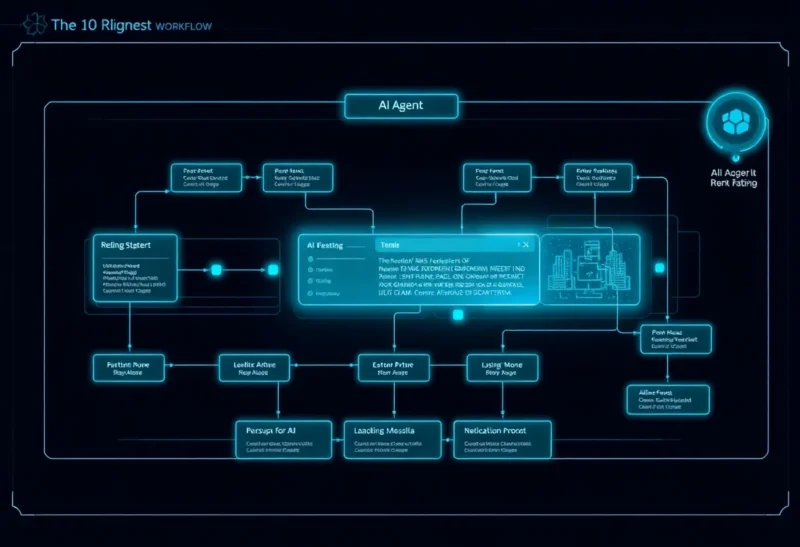
Agentic systems are fun to demo and miserable to debug when the only artifact you kept is a final answer. The middle—the tool calls, the partial plans, the retries, the model’s self-corrections—vanishes into token streams nobody persisted. In 2026, teams shipping real agents learned a blunt lesson: observation logs are not “nice to have.” They are the difference between a one-hour fix and a week of reproducing flaky behavior.
This article defines a pragmatic retention policy: what to log, what to redact, how long to keep it, and which fields actually help when something catches fire at 2 a.m.
What counts as an “observation”
In agent jargon, observations are the model-readable results of actions—search snippets, API JSON, database rows, file excerpts, error bodies. They are distinct from hidden chain-of-thought you may choose never to store. For debugging, you care about observations because they anchor why the agent chose the next tool.

Minimum viable log shape
Regardless of stack, capture these per step:
- Correlation ID spanning user session, request, and downstream services.
- Step index and tool name—human-readable labels, not only hashes.
- Inputs summary—sanitized parameters; never raw secrets.
- Observation digest—bounded-size payload or hash + storage pointer for large blobs.
- Latency and token usage—to separate model drift from infrastructure timeouts.
- Outcome—success, retriable error, fatal error, human escalation.
Large observations belong in object storage with signed URLs or internal fetches, not inlined into Elasticsearch as megabyte documents.
What you can safely skip
Storing full prompts including system instructions for every micro-step often duplicates static text and burns retention budget. Store prompt templates by version hash and log only dynamic inserts. Likewise, skip verbatim duplicates: if an observation repeats unchanged, reference the prior hash.

Redaction and compliance
Assume logs will leak. Build redaction pipelines before production traffic: emails, phone numbers, government IDs, payment artifacts, auth tokens. For healthcare or regulated contexts, tighten field-level policies and shorten retention. Legal may ask for proof you cannot reconstruct prohibited content from backups—design accordingly.
Retention windows that map to real incidents
Most production bugs surface within days; subtle model regressions may take weeks. A tiered strategy works:
- Hot storage (hours to days): detailed step logs for active debugging.
- Warm storage (weeks): digests and correlation metadata.
- Cold archives (months, optional): aggregates for safety reviews, not full prompts.
Align deletion jobs with customer contracts—some enterprises forbid long retention of derived observations even if anonymized.
Linking logs to evaluations
When a benchmark score drops, you need traces tied to dataset IDs. Tag logs with evaluation run identifiers and model versions. Without that linkage, offline metrics float free from online behavior and nobody trusts either.
Anti-patterns
- Logging everything “just in case”—creates toxic dumps nobody reads.
- Logging nothing sensitive but also nothing useful—empty shells.
- Split-brain tracing—tool gateway logs missing model router context.
Sampling strategies under cost pressure
Full-fidelity logging for every user in high-volume products is expensive. Use head-based sampling for happy paths and tail-based sampling that triggers on elevated latency, tool errors, or safety classifier scores. Always capture complete traces for internal dogfood accounts and canary tenants so regressions surface before broad rollout.
Cross-service causality
Agents rarely live in one process. A router may call a planner, which fans out to tool workers. Propagate the same correlation ID through queues and async jobs; include parent step IDs so you can reconstruct trees. Without hierarchical IDs, you get flat log piles where order implies causality incorrectly.
Reproducibility limits
Even perfect logs cannot reproduce nondeterministic models bit-for-bit. Log seeds where applicable, temperature settings, and tool versions. When exact replay is impossible, aim for behavioral replay: enough observation context to understand mistakes, not necessarily identical tokens next run.
Human-in-the-loop handoffs
When agents escalate to operators, package a bounded trace bundle automatically—last N steps, redacted observations, and attempted fixes. Support teams should not grep raw infrastructure dumps. Well-designed handoff payloads shorten mean-time-to-recover and reduce accidental PII exposure in tickets.
Conclusion
Agent debugging lives in the observations. Retain enough to replay decision context, redact aggressively, tier storage by usefulness, and bind logs to model versions and eval runs. Do that and your agents stop being oracles and start being systems you can ship—and fix—with confidence.