Artemis Surface Power: Why Nuclear Microreactors Keep Appearing on NASA Slides

Robin Hayes
April 7, 2026
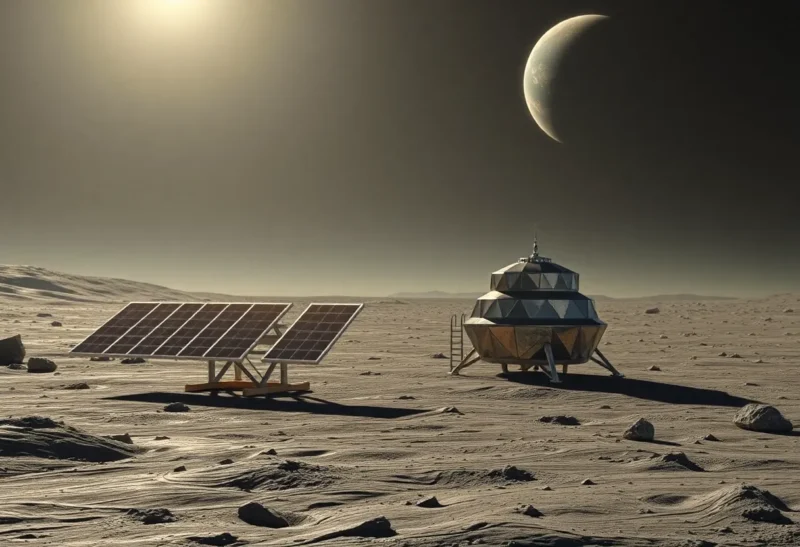
If you skim enough Artemis architecture charts, a motif repeats: solar arrays fanning beside a habitat, batteries stacked like LEGO, and—more often than casual readers expect—a small box labeled “fission surface power” or a similarly careful euphemism. It is easy to dismiss as slide-deck optimism. It is also a blunt acknowledgment of lunar physics. The Moon’s nights are long, polar shadows are greedy, and kilowatts multiply quickly once you treat the surface as a workplace instead of a camping trip.
This article explains why nuclear microreactors keep showing up in serious lunar power discussions, what problem they solve that photovoltaics struggle with, and where the real engineering fights remain in 2026.
The lunar power budget is not “a few RV panels”
Low-energy sorties can lean on solar plus storage. Sustained surface presence—habitats, ISRU pilots, rovers charging between sites, comms relays—needs continuity. Every interruption cascades: thermal control works harder, cryogens boil off, and crews or robots idle through unplanned dark gaps.
Solar at the poles can be attractive because some crater rims see more sun than equatorial flatland. Even there, eclipses by terrain, seasonal lighting shifts, and dust deposition move the goalposts. Designers end up oversized on array area and battery mass just to sleep through the scary parts of the cycle.
What a microreactor buys you on the Moon
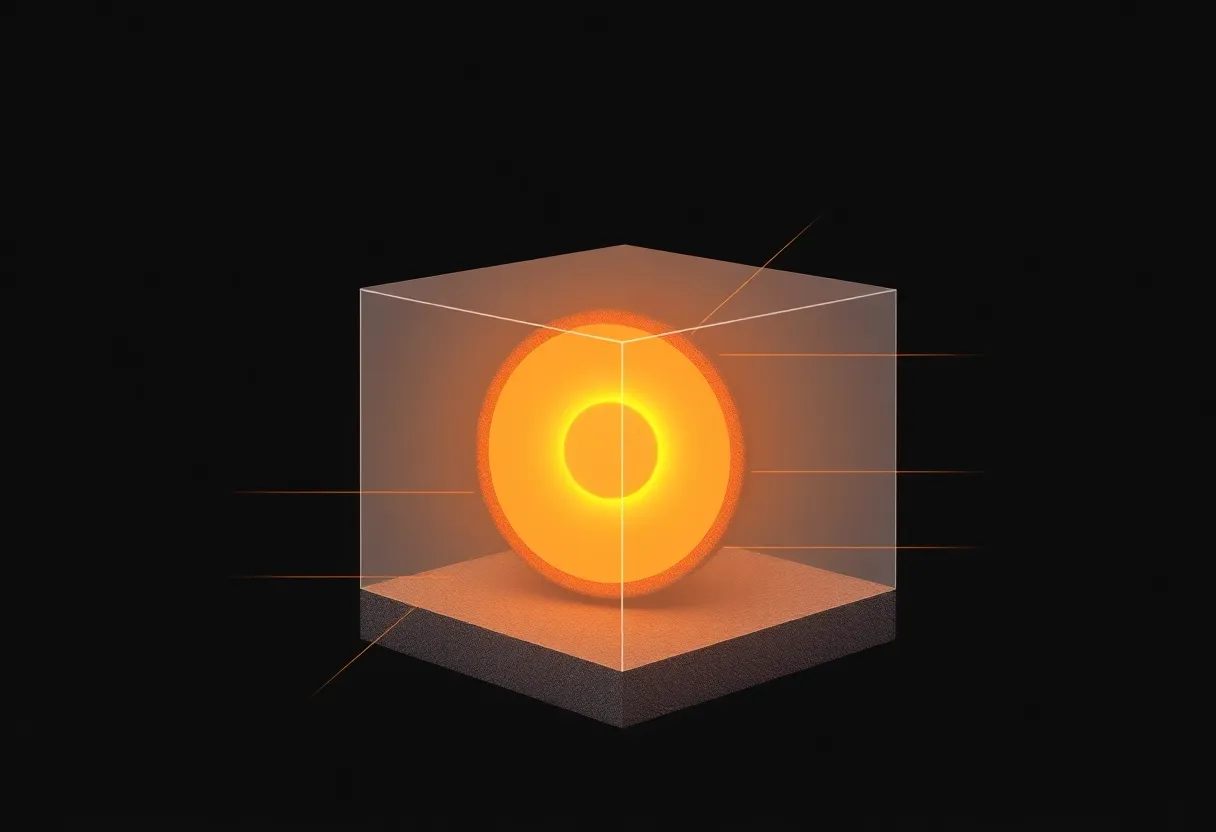
Fission sources convert tiny fuel mass into sustained electricity and usable heat. For a given multiyear mission, the mass penalty of enormous battery farms and backup generation can exceed a hardened reactor package—if you solve heat rejection, safety, and operations. That last clause is why charts show reactors as options, not commitments.
The lunar case is not about city-scale grids. It is about dispatchable baseload when the sun is wrong, the regolith is in the way, or your process chemistry needs steady thermal input. Nuclear also decouples survival power from astronomical luck—valuable when a lander tips a few degrees or dust storms on Mars analogs teach harsh lessons about optical surfaces.
Why NASA slides emphasize it without promising a date
Space agencies live at the intersection of physics and politics. Fission triggers export control, public perception, and international treaty interpretation in ways solar panels do not. Putting microreactors on roadmaps signals to engineers, contractors, and Congress that leadership understands the energy cliff. It also invites oversight questions nobody wants to answer prematurely.
So you see cautious iconography: small modules, remote emplacement, autonomous shutdown narratives. The engineering story and the communications story move at different speeds.
Heat rejection is the rude awakening
Reactors make heat on purpose and as a byproduct. In a vacuum, you shed thermal energy mostly via radiation. Radiators are large, fragile-looking, and dust-sensitive. Any lunar power architecture that hand-waves cooling with a small fin sketch is skipping the hardest subsystem integration. Microreactor advocates know this; hence the overlap with advanced radiator concepts and buried regolith heat paths in longer-range studies.
Safety and testing on Earth first
Terrestrial prototypes for space-rated fission aim to prove autonomous control, launch survivability, and lifetime maintenance without astronaut mechanics leaning on the vessel with a wrench. Qualification paths are slow. That is another reason slides outpace hardware—iterations happen in labs and deserts long before regolith deployments.
How solar-plus-storage still wins early missions
Near-term Artemis-class activities prioritize flight heritage and simplicity. Solar works when missions are short, routes are sun-friendly, and failures are recoverable by aborting. Microreactors matter when timelines stretch and energy stops being a line item and becomes the constraint on everything else—including how bold ISRU trials can be.
International and commercial angles
Lunar power is not purely a NASA story anymore. Commercial landers, national partners, and future consortia will negotiate interoperability standards for power ports the way they negotiate comms bands. A microreactor camp and a solar camp may coexist—different outposts, different latitudes, different risk appetites. The interesting fights will be about shared emergency power, interference, and rescue assumptions when one node goes dark.
What to watch in 2026 and beyond
- Ground demonstrations of scaled reactor hardware with credible radiator packaging.
- Policy clarity on launch approval pathways and liability for nuclear sources beyond Earth orbit.
- Mission-level trades that publish numbers—not vibes—on mass, volume, and duty cycles for solar-heavy vs fission-augmented camps.
- ISRU pilots that admit how much steady heat and electricity chemistry actually needs.
How this differs from classic RTGs
Radioisotope thermoelectric generators trade heat from decaying material for electricity at modest efficiencies. They are unmatched for long-lived deep-space probes and some rover classes, but scaling to crew-scale kilowatts becomes unwieldy. Fission microreactors target higher sustained output with different fueling and control assumptions. Confusing the two breeds false expectations—RTGs are not “baby reactors,” and reactors are not drop-in replacements for every RTG success story.
Lunar night length in plain terms
At most equatorial sites, night lasts about two Earth weeks. That is not a battery tweak; it is an architecture statement. Polar sites mitigate sunlight issues but introduce navigation constraints, terrain risk, and thermal environments that swing differently. Any honest power study loops those realities until the mass accounting stops lying.
Public acceptance and transparency
Space nuclear programs succeed or fail partly in town halls, not just clean rooms. Agencies that publish clear failure modes, autonomous shutdown behaviors, and launch contingencies reduce mystique-driven fear. The slides keep appearing because engineers need optionality; sustained public support requires translation without condescension—especially when partners with different regulatory cultures join lunar logistics chains.
Partnership with solar, not opposition
The mature lunar grid likely blends sources: solar for peak efficiency when geometry cooperates, storage for transients, nuclear—or other baseload—for backbone loads. Treating the debate as a cage match misrepresents how outposts evolve. The real question is which backbone arrives first for a given site’s latitude, shadow map, and mission duration.
Conclusion
Nuclear microreactors linger on NASA charts because honest lunar energy math points at long nights, polar shadows, and processes that hate intermittency. They are not magic, not imminent wallpaper for every habitat, and not free of social and technical risk. They are a hedge—one that keeps reappearing because the Moon rewards dispatchable power, and the Moon is not impressed by Earthbound slogans.