Lunar Regolith Simulant: Why Earth Dirt Can’t Substitute for the Moon

Robin Hayes
April 7, 2026
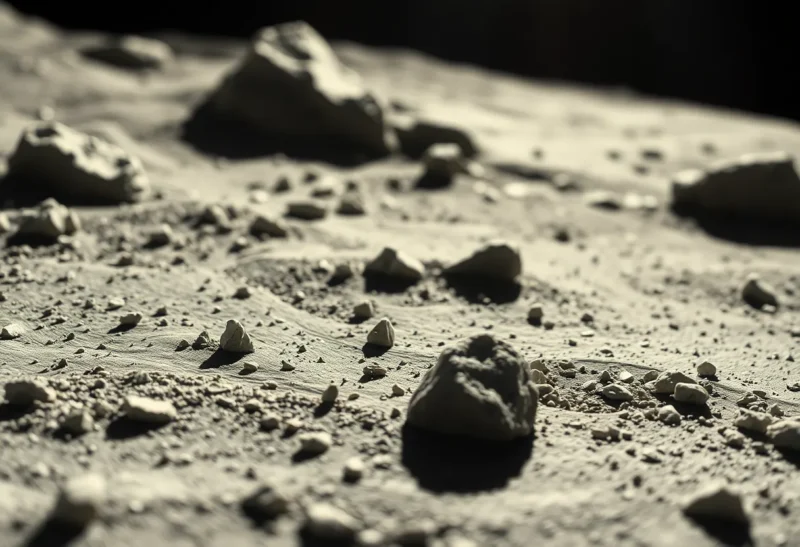
Headlines love the phrase “moon dirt,” but regolith is not garden soil with better PR. It is fractured rock, glassy agglutinates, and jagged grains shaped by micrometeorites and solar wind in hard vacuum. When engineers test excavation drills or sinter bricks for a lunar base, they reach for simulants—Earth-made mixes that approximate key properties. Those mixes are useful, limited, and never perfect substitutes for the Moon itself.
This article explains why terrestrial stand-ins differ from the real surface, what researchers optimise for, and why “close enough” depends on which experiment you are running.
What lunar regolith actually is
Returned samples and remote sensing tell a consistent story: razor-sharp particles, poor organic content (none), electrostatic charging behaviour unlike desert dust, and mineralogy tied to ancient volcanism and impact gardening. Grain shapes break equipment differently from rounded river sand. Abrasion chews seals; clingy dust fouls bearings. Any Earth analogue must decide which nightmares to mimic first.

Why not just use desert sand or crushed rock?
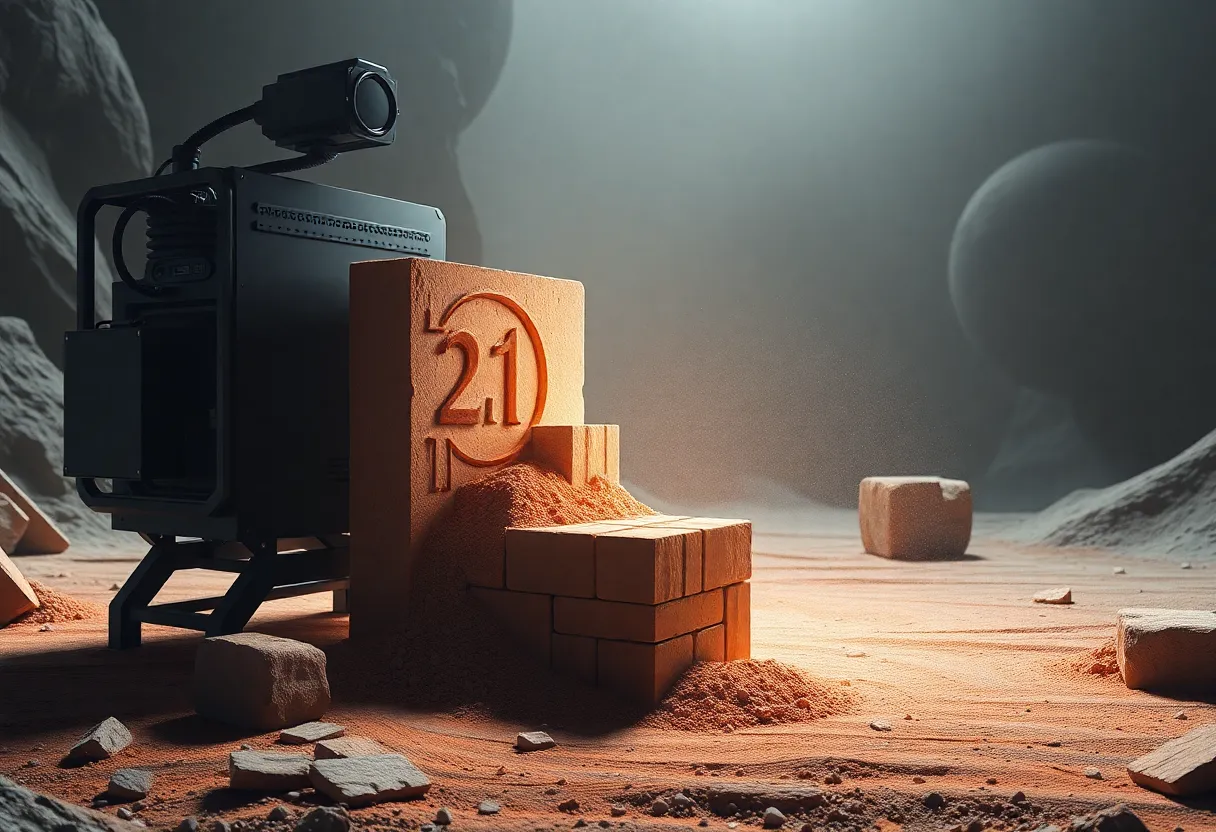
Convenience seduces teams into grabbing whatever silicate is cheap. Mechanical dig tests might tolerate that shortcut; processes sensitive to chemistry will not. Sintering bricks, extracting oxygen from oxides, or testing microwave heating depends on mineral phases and glass content—not just “gray powder looks moonish.” Wrong chemistry yields beautiful demos that fail off-world.
What simulant designers tune
- Particle size distribution — matching the way dust packs, bridges, and jams hoppers.
- Angularity and surface texture — wear on tools, friction angles, and clogging in conveyors.
- Mineral assemblage — plagioclase, pyroxene, ilmenite fractions for process chemistry.
- Glass and agglutinate analogues — some simulants add synthetic glass to mimic unique lunar textures.
- Fidelity vs cost — high-fidelity batches are expensive; programmes blend grades for different subtests.
Vacuum and charging: the usual missing ingredients
Terrestrial labs often test at ambient pressure with simplified charging assumptions. Real regolith levitates and sticks under UV and plasma conditions that are expensive to reproduce. Simulant fidelity for mechanics can be excellent while electrostatic behaviour remains Earth-biased. Honest papers separate those domains.
Mare versus highlands: pick your poison
Lunar geography is not uniform. Mare basalts differ from highland anorthosite-rich sites where Artemis planners eye ice-adjacent shadows. Simulants therefore come in flavours—LHS-1, JSC-1A descendants, and newer commercial blends—each a compromise tied to a reference dataset. Using “the wrong Moon” invalidates extraction yields even when the powder photographs beautifully.
What simulants are good for
Hardware qualification for drills, rovers, and sample handling; teaching students tactile intuition; screening dozens of process ideas before precious flight hardware touches real samples. They democratise access—no mission badge required to run a bench test.
What simulants cannot sign off alone
Final verification still wants returned material, high-fidelity chambers, or flight experiments. Regulatory and safety cases for crew habitats lean on layered evidence, not one bag of dust with a cool name.
ISRU pathways: oxygen, metals, and structural binders
Oxygen extraction prototypes care about oxide chemistry and energy per kilogram; structural sintering cares about melt behaviour and thermal cycling. A simulant optimised for excavation torque may mislead microwave sintering teams if glass content is off. Programme leads map experiment classes to simulant grades the way machinists pick steel alloys—generic “moon dust” labels invite errors.
Standards, traceability, and batch variance
Unlike commodity cement, boutique simulants vary batch to batch. Labs that publish comparability studies help the field; teams that silently switch suppliers without retesting risk invisible drift. Document lot numbers, milling history, and any additives—future you debugging a cracked brick will thank present you.
Ethics and communication
Marketing sometimes blurs “lunar-like” with “lunar-identical.” Journalists can help by asking which properties were matched and which were traded away. Overclaiming slows science when investors expect bricks that only worked because Earth gravity helped compaction.
Conclusion
Lunar regolith simulants are engineering prosthetics: they let Earthbound teams learn faster and cheaper while respecting that the Moon is its own material. Earth dirt cannot substitute because chemistry, grain shape, and environment co-evolved into something nastier and more useful than sand. Treat simulants as calibrated tools—with known limits—and lunar development stays grounded in reality.