Starship Tanker Flights: What Has to Work Before Lunar Landings Scale

Robin Hayes
April 7, 2026
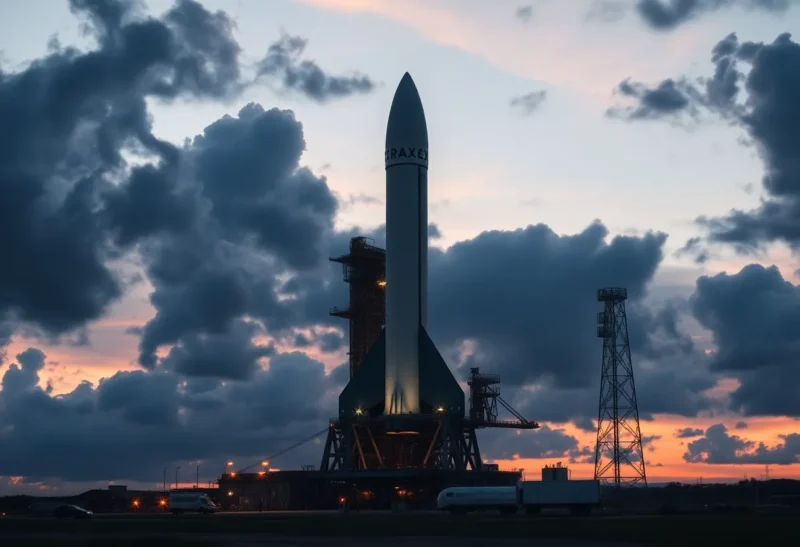
Lunar landings at scale are not a single-launch story. Even optimistic architectures assume propellant in orbit—tanked, transferred, and trusted before a lander commits to descent. For SpaceX’s Starship programme, “tanker flights” are the connective tissue between Earth-side production cadence and deep-space ambition. The public watches hop tests and catch towers; engineers worry about couplings, boil-off, and the dull mathematics of margin.
This article explains what tanker flights must prove before lunar timelines stop being slides, why orbital refuelling is the long pole for many scenarios, and how to read milestones without confusing hype with closure of technical risk.
Why the Moon cares about tankers
Earth’s gravity well punishes every kilogram. Staging helps, but a reusable deep-space lander still needs propellant after it reaches orbit. Tanker variants—or the same vehicle in a tanker role—lift fuel to a staging orbit where a mission vehicle tops up. Without that choreography, payload mass to the Moon collapses or flight rate explodes in ways no manifest can sustain.
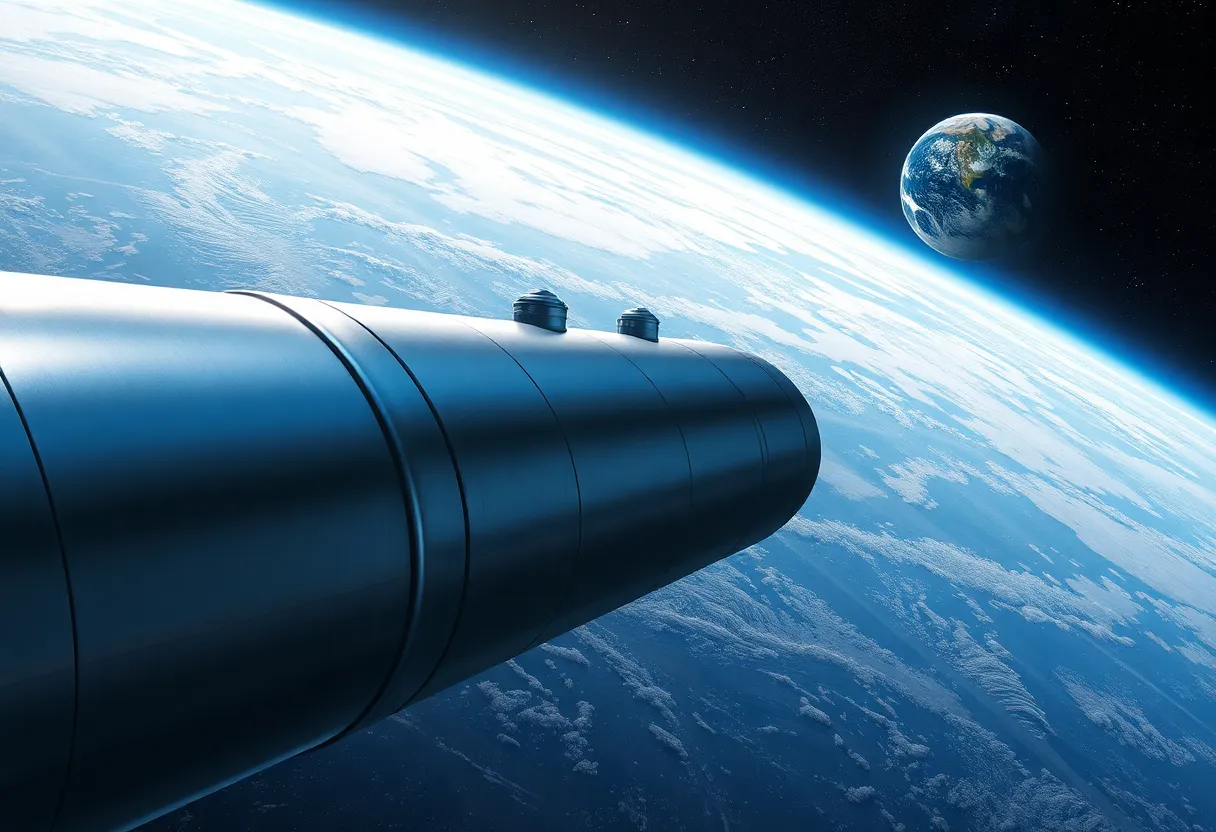
NASA’s commercial partnerships and Artemis-derived requirements pushed orbital refuelling from whiteboard to contract language. Whether the customer is the agency or a private lunar operator, the physics invoice is the same: cryogens, ullage management, and repeated cycles without accumulating failure modes.
What “successful tanker flight” minimally means
Demonstrating launch and catch is necessary but insufficient. A credible tanker campaign must show:
- Stable propellant condition on orbit — managing heating, slosh, and pressure so transfer is predictable, not a dice roll.
- Rendezvous and docking or mating — guidance tolerances tight enough for fluid interfaces, with abort paths that do not strand either vehicle.
- Transfer at required rates — throughput matters for campaign length; slow transfers tax boil-off budgets and crew timelines if humans are downstream.
- Verification and leak budgets — sensors, sampling strategy, and operational rules that say “ship” versus “scrub.”
- Repeatability across weather, pad flow, and vehicle variance — one immaculate demo does not equal a programme.
Boil-off: the quiet tax on every hour
Cryogenic propellants warm up; tanks pressurise; venting loses mass. Passive insulation, active cooling, sun pointing, and transfer scheduling all interact. Tanker architectures that look elegant on a chart can founder when loiter times stretch because of range conflicts or upstream delays. This is why flight rate and ground flow are not “operations details”—they are thermodynamics inputs.
Human-rating vs cargo: different nerves
Cargo precursors can accept more risk early; crewed lunar missions fold in redundancy, fault detection, and procedural depth that lengthens timelines. Tanker flights that suffice for robotic demos may still be short of the evidence package needed before astronauts ride downstream vehicles. Watch for language like “closed-loop control verified” versus “initial transfer demonstrated”—the gap is years, not adjectives.
Integration with the broader lunar stack
Tankers do not exist in isolation. Gateway logistics, lander variants, surface ascent stages, and return trajectories each imply different propellant species, orbits, and margins. A change in lunar insertion strategy can ripple back to how many tanker sorties economics tolerate. Programme managers call this systems engineering; outsiders experience it as schedule fog.
How to read public milestones without losing the plot
Prefer checklists over headlines. Ask: Was mass actually moved? Was interface symmetry demonstrated both directions if required? Were holds and aborts exercised? Did the team publish enough instrumentation detail for independent analysts to bound claims? Secrecy is normal; absence of evidence is not evidence of failure—but it should temper confidence intervals.
Risks that historically bite propellant transfer programmes
- Contamination introduced during ground processing that only appears in microgravity flow
- Unexpected fluid dynamics coupling with vehicle attitude control
- Schedule pressure shortening test matrices—paying later in flight anomalies
- Interface standards drifting between vehicle revisions mid-programme
What would accelerate confidence
Higher cadence tanker missions with incremental objectives—each adding a stress axis—beat rare mega-demonstrations. Transparent anomaly closure, even when embarrassing, signals maturity. Cross-agency witnessing matters when public money underwrites lunar timelines; private capital still benefits from third-party scrutiny when insurance and partners ask hard questions.
Apollo nostalgia versus modern propellant economics
The Apollo stack brute-forced the Moon with disposable stages and singular missions. Sustainability rhetoric aside, Artemis-era thinking assumes some mixture of reusability, commercial services, and refuelling to avoid rebuilding a Saturn-class throwaway for every sortie. Tanker flights are where that economic story either becomes engineering or reverts to slogans. If transfer stays expensive or flaky, planners revert to heavier throw mass or fewer missions per year—both have political consequences.
Regulatory and range realities
Launch licensing, environmental reviews, and airspace coordination cap how fast any operator can iterate—even with mature hardware. Tanker campaigns need windows that align with downrange safety, recovery assets, and sometimes international notifications for reentries and debris footprints. These frictions do not show up in CAD models but they consume calendar time alongside pure R&D.
International partners and depot fantasies
Global lunar roadmaps flirt with propellant depots, in-situ resource utilisation, and shared logistics standards. Tanker demonstrations on Earth orbit are the sandbox where mating interfaces, telemetry sharing, and fault messaging get hashed out before flags and liability clauses multiply. Early interoperability—even modest—reduces the chance that every nation builds an incompatible straw in the same celestial milkshake.
Why this matters beyond SpaceX
Orbital propellant transfer is a generic capability. Competitors and allies exploring alternate landers or depots face parallel physics. Advances or setbacks in tanker flights recalibrate what global lunar logistics assume feasible this decade. That is bigger than any one logo on the fairing.
Conclusion
Starship tanker flights are the hinge between impressive Earthly test cadence and lunar missions that close on mass, time, and safety. Success is measured in repeated, instrumented transfers under realistic loiter and operational constraints—not in a single cinematic hookup. Until those boxes accumulate, lunar landing schedules remain negotiations between ambition and the thermal realities of cryogens in orbit.