CLPS Lunar Landers: Why Commercial Delivery Schedules Still Slip

Robin Hayes
April 7, 2026
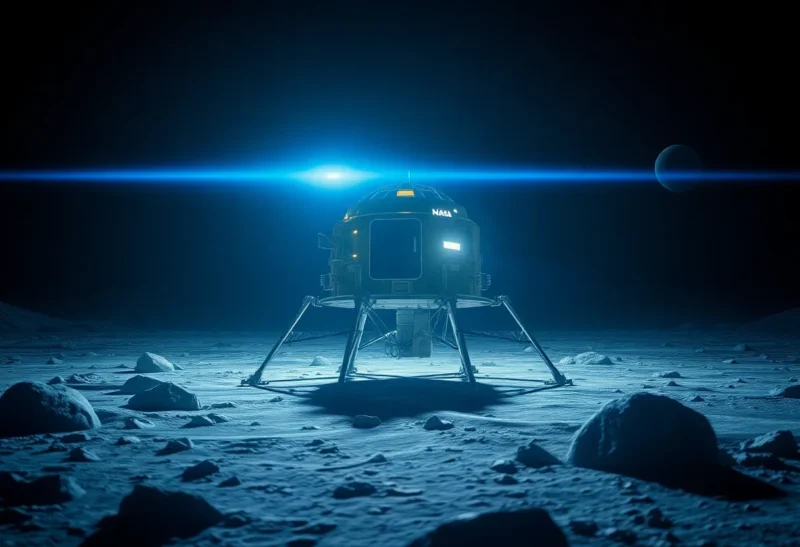
NASA’s Commercial Lunar Payload Services (CLPS) program was built on a seductive premise: instead of the agency acting as a vertically integrated moon-machine factory, it buys rides from companies that shoulder development risk and move at startup speed. The results have been genuinely historic—commercial hardware touching the lunar surface is no longer science fiction—but the calendar has been stubborn. If you watch CLPS the way flight programs are usually watched, the story looks like delay after delay. If you watch it the way aerospace actually works, it looks like a predictable collision between ambition, novelty, and the moon’s indifference to press releases.
This article explains why CLPS lander schedules slip without treating the program as a failure, and without pretending schedules are meaningless. The slips are information. They tell you what still has to be invented, integrated, and proven.
What CLPS is trying to do
CLPS is not a single vehicle. It is a contracting framework that invites multiple vendors to bid on delivering NASA payloads to the Moon. The goal is cadence and capability: science instruments, technology demos, and pathfinding missions that support Artemis-era exploration. NASA remains the customer, but the engineering and capital stack spreads across firms with different architectures, suppliers, and cultures.
That diversity is a feature. It is also a scheduling multiplier, because “the program” is not one critical path—it is several parallel critical paths that occasionally share nothing except a press conference theme.

First-time systems punish optimistic calendars
Moon landers are not airplanes. You cannot amortize risk across thousands of flights. Many CLPS-class efforts are effectively bespoke integrations of propulsion, guidance, structures, thermal control, communications, and software—each subsystem validated on Earth under imperfect analogs of lunar conditions.
When a schedule assumes that tests will pass cleanly, it is not lying; it is gambling. Real programs discover coupling: a propulsion test reveals vibration issues; a software patch changes fault responses; a supplier swap alters mass margins. Each correction ripples outward.
Commercial teams can move faster than traditional cost-plus giants in some dimensions, but physics and test matrices do not respect org charts. Speed in procurement does not automatically shorten thermal vacuum campaigns.
NASA oversight is not theater
CLPS embraces commercial norms, but the payloads are still NASA missions with science goals and risk posture requirements. That means reviews, verification, and sometimes painful stops when evidence does not line up with claims. Oversight is often described as bureaucracy in comment sections; inside programs, it is how you keep a single shortcut from turning into a public crater.
Friction between “move fast” and “prove it” shows up on timelines as pauses. Pauses are easy to report as slips. They are harder to report as quality gates doing their job—which is not the same as saying every pause is wise, only that the system is designed to interrupt momentum when uncertainty spikes.
Funding, milestones, and the capital clock
Commercial lunar companies live on engineering reality and financing reality. Milestones trigger investment; investment enables hiring; hiring accelerates testing. If a test slips, the capital clock does not politely wait. Schedules are therefore both technical documents and fundraising narratives. When those two functions conflict, public dates move.
This is not unique to space—it is startup dynamics with higher stakes. The difference is that rocket hardware cannot be faked into a demo the way software sometimes can. A lander leg either survives load cases or it does not.
Integration with Artemis expectations
CLPS missions are often discussed beside Artemis crew timelines. That proximity creates narrative pressure: every lunar slip reads like an Artemis slip even when the coupling is loose. Some CLPS deliveries are critical path to specific science objectives; others are parallel learning efforts.
Readers should separate “the Moon program” headlines from the specific contract and payload in question. Otherwise you will misread a vendor-specific integration issue as proof that humanity forgot how to dream.
Supply chains and the post-pandemic hangover
Space hardware still depends on earthly supply chains: specialty alloys, precision valves, radiation-hardened parts, cleanroom consumables. Lead times for niche components can dominate schedules more than software sprints. A vendor that misses a delivery by a quarter can silently eat a year of margin in systems engineering rework.
Landing sites, terrain, and the map you wish you had
Precision landing is not only guidance software; it is geology, lighting, hazard avoidance, and the courage to commit to a target long before you have boots on the ground to check it. Payload teams argue about sites; trajectory designers argue about margins; scientists argue about scientific value. Consensus takes time, and changing a site can ripple through propellant budgets and communication plans.
Commercial providers also face a branding tension: exciting landing narratives versus conservative safety envelopes. Conservative choices can add mass and complexity—another quiet source of schedule friction.
Parallel vendors, different architectures
CLPS is sometimes discussed as if “the industry” learns once and shares the lesson. In practice, competitors iterate privately. One company’s successful hop test does not automatically de-risk another’s throttleable engine architecture. Public milestones create the illusion of transferability; engineering reality is stickier.
That is good for redundancy—if one architecture stalls, another may proceed—but bad for simple storytelling. The press likes a single arrow on a timeline; CLPS offers a bundle of arrows that bend independently.
Robotics now, crewed ambitions later
Many CLPS missions are robotic precursors. They still interact with crewed exploration psychology: policymakers and the public map all lunar activity onto a single narrative of “returning humans.” When a robotic lander slips, commentators sometimes treat it as a referendum on astronauts, even when the technical link is indirect.
Keeping robotic schedules intelligible matters for political support, which in turn matters for budgets, which in turn matters for schedules—a feedback loop that has nothing to do with propellant slosh.
Lessons from earlier lunar attempts—without false equivalence
Historical successes and failures teach humility, but they do not substitute for modern qualification data. Materials, sensors, and simulation fidelity have improved. The moon has not become friendlier. Each generation must re-earn its landing through test evidence, not through pedigree.
When schedules slip, you sometimes hear voices say “we did it in the 1960s,” as if schedules were trivial then. They were not; they were just less visible in your pocket screen. CLPS slips are loud because transparency is higher, not because physics got harder.
What a “slip” actually measures
When a lander target date moves, ask what class of problem moved it:
- Subsystem maturity — Tests failed, redesign required.
- Integration — Subsystems work alone but fight together.
- Launch logistics — Range dates, ride-share constraints, vehicle readiness.
- Customer verification — Payload acceptance, documentation, safety boards.
Those categories suggest different remedies and different levels of concern. A launch logistics slip is annoying; a propulsion architecture slip is structural.
Why CLPS is still worth the impatience
Commercial lunar delivery is how you get iteration on the lunar surface without pretending each attempt is the final form of a moon base. Failures and partial successes produce data—thermal behavior, landing dispersion, communications quirks—that textbooks cannot replace.
The alternative to CLPS is not instant perfection; it is slower centralization. History suggests monolithic programs slip too, just with different PowerPoint aesthetics.
How to read the next headline
When you see a moved landing date, look for the payload manifest change, the test article story, and whether the slip is months or years. Months often reflect integration churn; years can signal architecture re-baselining. Avoid mythmaking in both directions: neither “commercial space fixes everything” nor “government space is the only adult in the room” matches the messy middle we occupy in 2026.
Environmental testing: where optimism goes to become data
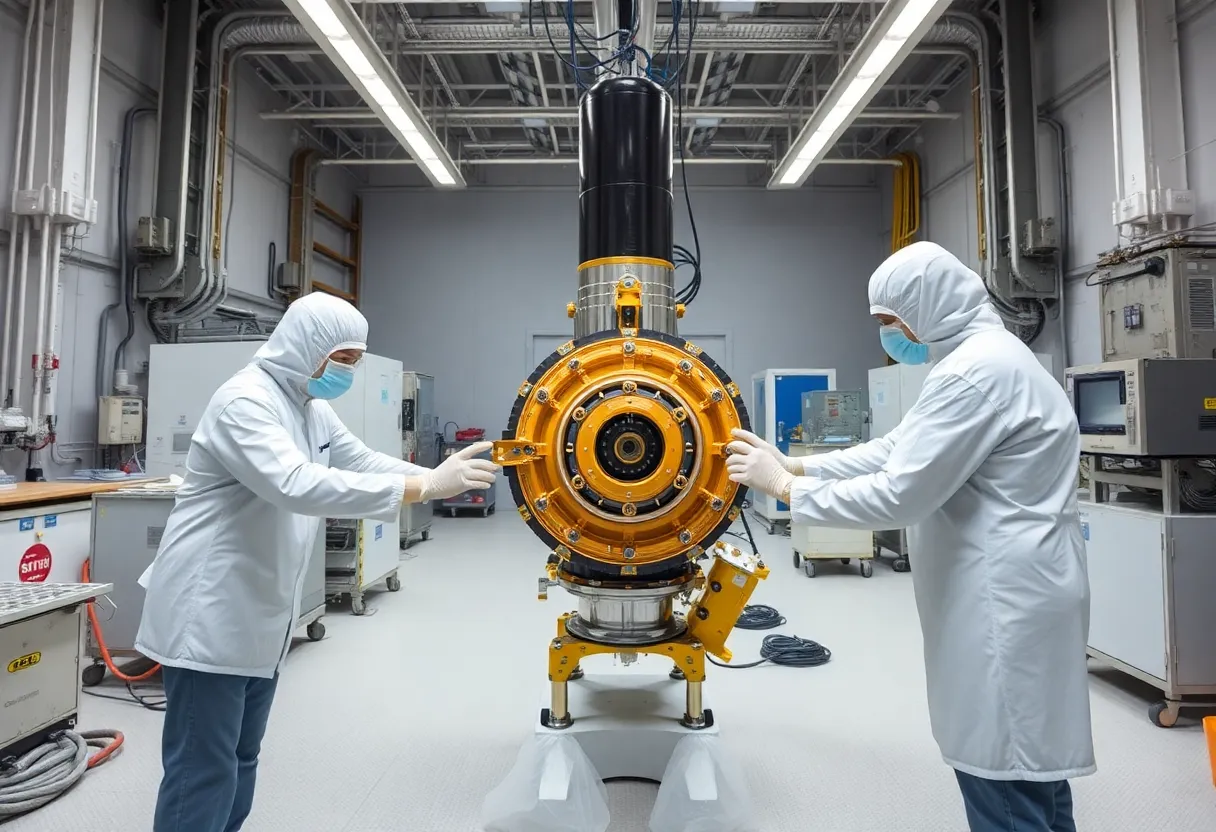
Vibration, acoustic, thermal vacuum, and electromagnetic compatibility campaigns sound like checkboxes until you live through them. A “small” harness routing change can force retest. A power supply substitution can invalidate immunity margins. These are not delays for drama; they are delays because spacecraft cannot be debugged with printf and a redeploy once they are committed to translunar injection.
Commercial teams sometimes promise overlapping test and build phases to compress calendars. That can work until it does not—when a failure late in the sequence forces rework that would have been cheaper earlier. Schedules slip when reality reintroduces sequencing discipline.
International context and the new lunar economy
Lunar activity is no longer a duopoly of memory. Other nations and firms are pursuing landings, orbiters, and surface experiments. That changes supplier demand, talent markets, and even frequency coordination conversations. A crowded moon is a more interesting moon; it is also a more complicated project management environment.
CLPS is one thread in a larger fabric. Its slips are visible partly because American civil space communication is loud. That visibility is useful for accountability, even when it exaggerates the sense that “everything is late.”
Conclusion
CLPS schedules slip because lunar landers are hard, because oversight matters, because capital and engineering calendars interact, and because multiple companies are learning in public. The slips are not proof the model is broken; they are proof the work is real. The right question is not whether dates move—they will—but whether each slip buys down risk before hardware is committed to a trajectory with no roadside service.