Indie Micro-SaaS: When Product Hunt Stops Moving the Needle in 2026

Devon Walsh
April 7, 2026

For a long time, Product Hunt was the closest thing indie builders had to a predictable launch ritual: ship at midnight Pacific, beg your friends for upvotes without technically begging, refresh the leaderboard, and hope a stranger with a big Twitter account notices. It worked often enough to become muscle memory.
In 2026, the ritual still exists—but the transfer from leaderboard placement to durable growth is harder to count on, especially for micro-SaaS products with narrow audiences. This is not a eulogy. Product Hunt can still spike traffic. The shift is that a spike is no longer a strategy, and many founders are discovering that their launch “worked” in every visible metric except the one that pays rent: qualified signups that stick around.
This piece is about what changes when distribution channels mature, what micro-SaaS founders should optimize for instead of a single-day peak, and how to design launches that compound rather than collapse.
If you are shipping something small, opinionated, and useful, you still deserve a moment in the sun—just do not confuse sunlight with soil. Plants need both; so do products. The goal is not to avoid launch theater; it is to pair theater with follow-through.
What “moving the needle” should mean for micro-SaaS
A consumer app might celebrate raw downloads. A micro-SaaS should care about a narrower funnel: visitors who understand the problem, trials or purchases that match willingness to pay, and retention that proves the product solved something recurring. A Product Hunt upvote is not any of those things. It is a lightweight social signal—useful, but easy to confuse with demand.
When founders say Product Hunt “stopped working,” they sometimes mean the platform betrayed them. More often, they mean their expectations drifted away from the platform’s physics. A directory-shaped traffic burst rarely produces subscription economics by itself unless the audience overlap is uncanny.

Why leaderboard launches decouple from revenue
First, novelty fatigue. There are simply more launches, more tools, and more polished pages. Attention is contested all day, every day, not only on launch Wednesday.
Second, audience composition. A broad tech-curious crowd is wonderful for feedback and ego and occasional hires. It is not automatically wonderful for a vertical workflow tool priced for small teams.
Third, incentives. Upvote dynamics reward spectacle, clarity, and networks. They do not reward boring reliability—the thing many micro-SaaS businesses sell.
Fourth, attribution blindness. A spike creates a beautiful chart. Without intentional tracking, you will not know whether conversions came from Hunt, from a newsletter mention the same week, or from SEO you seeded months earlier.
Fifth, survival bias in public stories. You see the rocket-ship screenshots; you do not see the median launch that returned a handful of trials. It is easy to assume you are failing a golden path when you are actually experiencing a normal path without the filter.
The post-PH playbook nobody wants—because it is unglamorous
If you still launch on Product Hunt, treat it as one channel in a week-long story, not the story. The unglamorous playbook is where micro-SaaS wins tend to hide:
- Pre-launch proof — A small set of paying users beats a fictional “waitlist of 10,000.”
- Founder-led sales — Short emails to people who already have the problem, with specifics.
- Integrations and marketplaces — Be where the workflow already lives.
- Content aimed at search intent — Especially for tools that replace tedious manual work.
- Referral loops inside the product — If teams use you, make inviting a teammate natural.
None of that replaces the fun of a launch day. It replaces the fantasy that fun equals revenue.

Micro-SaaS positioning: why “cool demo” loses to “boring invoice”
Micro-SaaS survives on repeat use. The demo that makes strangers clap is not always the workflow that makes accountants pay yearly. If your Product Hunt page emphasizes cinematic UI but your onboarding asks users to map fields and configure webhooks, you will lose the mismatch battle.
Align the launch story with the activation path. If the real magic is a CSV import that saves four hours, show the CSV import. If the real magic is compliance, say compliance. Cool is optional; legible value is not.
How to measure a launch without lying to yourself
Pick three numbers ahead of time:
- Qualified visits — Landings from contexts where the problem is plausible (not just “internet random”).
- Activation — The smallest step that proves the user tried to solve the problem with your tool.
- Payment or serious intent — Trial-to-paid, annual prepay, or a booked call—whatever matches your motion.
If Product Hunt lifts the first number but not the second, you learned your funnel is leaky—not that Hunt failed. If it lifts none, you learned overlap is weak. Both lessons are cheaper than repeating the same launch template six times.
What to do when your category is crowded
Crowding is not death; vagueness is. Micro-SaaS wins come from wedges: a sharper niche, a painful integration, a regulated industry, a geography, a tech stack segment. Launch pages should sound uncomfortably specific. Specificity repels some upvotes; it attracts the right trials.
Also remember compounding channels. SEO compounds. Partnerships compound. Community answers compound. Leaderboards mostly reset.
Keeping Product Hunt in the mix—without dependency
Use it as social proof and feedback. Use it to train your pitch. Use it to recruit contributors. Do not use it as your only bridge to customers unless your ICP genuinely lives there—which is rarer than founders hope.
Schedule launches so they do not cannibalize each other: if you have a major integration shipping Tuesday, maybe do not burn your audience’s attention on Monday’s vanity metrics.
Communities, forums, and the difference between applause and intent
Indie communities can feel like oxygen early on. They are also easy to mistake for your market. A thread that earns hundreds of supportive replies might yield fewer paying customers than twenty DMs to operations leads who already budget for tools like yours.
That is not an argument against community. It is an argument for segmentation. Share progress where peers understand the grind; sell where buyers feel the pain. When the same account tries to do both in identical posts, the result is usually lots of sympathy and few cards on file.
The pricing page is part of the launch
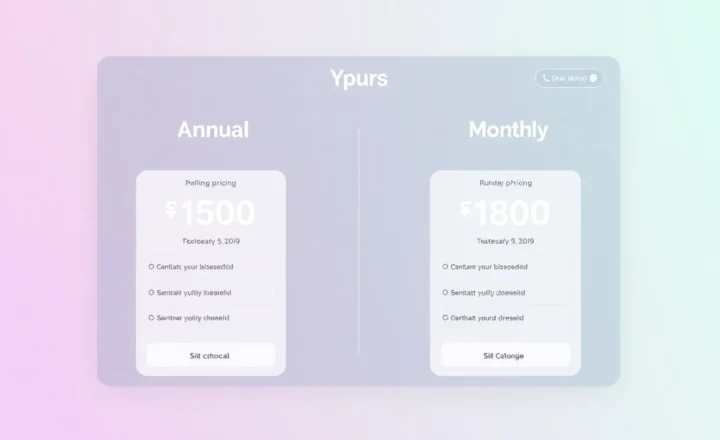
Micro-SaaS conversions die on the pricing page more often than on the hero headline. Hunt traffic arrives hot and impatient. If your tiers require a spreadsheet and a call to understand, you will watch visitors bounce while the leaderboard still looks flattering.
Before launch week, test pricing comprehension with someone outside your bubble. Can they pick a tier in thirty seconds? Do annual options make sense for the workflow? Is there a sensible entry point for a team of three? If you are embarrassed by your pricing because it is too simple, you might finally be doing it right.
Launch mistakes that look like “Product Hunt died”
Some postmortems blame the channel when the product story was incompatible with one-day traffic. Common culprits include: long signup walls before value, missing integration setup, unclear differentiation from three obvious competitors, and mobile-first pages for a desktop workflow tool.
Another sneaky failure mode is shipping the launch before shipping the onboarding. A spike of curious clicks will not wait politely while you fix email verification on Saturday. If you are not ready to support humans in real time for forty-eight hours, postpone—not because perfection matters, but because first impressions calcify fast for small brands.
Building a second channel while the first still feels fine
The best time to diversify distribution is when something already works a little. If Product Hunt gives you a modest lift today, pour part of that energy into a channel that compounds: write the definitive guide to your niche problem, ship the integration that puts you inside an existing billing flow, or start a lightweight outbound list of fifty plausible buyers.
Waiting until “PH stopped working” usually means waiting until you are stressed—exactly when experimentation feels risky. A steady cadence beats heroic sprints. Micro-SaaS rewards systems, not vibes.
A simple launch-week schedule that is not heroic
You can keep launch week sane without turning it into a content marathon. Monday: tighten onboarding and analytics. Tuesday: email a short list of people who asked for the product. Wednesday: run the public launch in the channels that fit your ICP—not every channel on earth. Thursday: personally follow up with everyone who activated. Friday: write down what broke and fix the top one item before you chase the next idea.
The point is continuity. Launches fail softly when the team treats the spike as the finish line. The spike is the starting pistol for support tickets, objections, feature requests, and the unglamorous work of turning attention into habit.
Conclusion
Product Hunt did not take anything away from indie builders. The market just got more honest about what a spike buys. For micro-SaaS in 2026, the needle moves when you treat distribution like product work: narrow, measurable, repetitive, and a little bit boring. Launch loud if you want—but build quiet systems that still work on Thursday.