Artemis Astronaut Suits: Why Lunar Dust Is Harder Than Radiation

Alex Vance
April 7, 2026
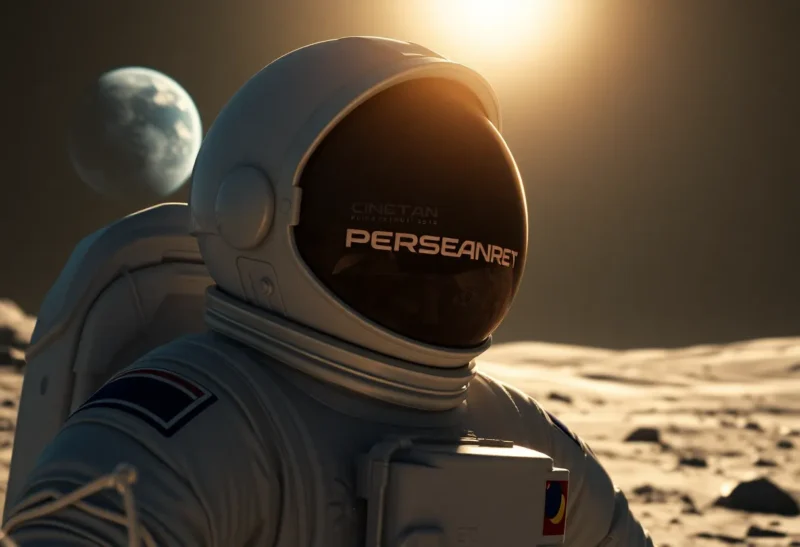
Ask a casual reader what endangers astronauts on the Moon, and you will hear the obvious word: radiation. It is a fair answer. Space beyond Earth’s magnetic umbrella is an environment of particles and solar weather that human biology did not evolve to tolerate. Suit designers and habitat planners absolutely have to treat radiation as a life-limiting constraint.
But if you talk to engineers who worry about boots on regolith for days and weeks—not a short Apollo sortie—the conversation often pivots to something grittier: lunar dust. Not because dust is more lethal in a single moment, but because it is relentless, insidious, and spectacularly good at turning every mechanical interface into a maintenance problem.
This is the uncomfortable truth behind many Artemis-era spacesuit stories. Radiation is a boundary you can model with shielding, timing, and habitat design. Dust is a process that gets into your boundary layer—seals, zippers, bearings, connectors, lungs (indirectly, via contamination pathways), and optics—and keeps working while you sleep.
What lunar dust actually is (and why “dust” undersells it)
Lunar regolith is not household dust. It is a fractured geology created by billions of years of micrometeorite bombardment and thermal cycling. Particles can be extremely fine, jagged at microscopic scales, and electrostatically clingy—especially after being disturbed by boots, wheels, or tools. Apollo crews called it abrasive; modern analysis makes that anecdote look polite.
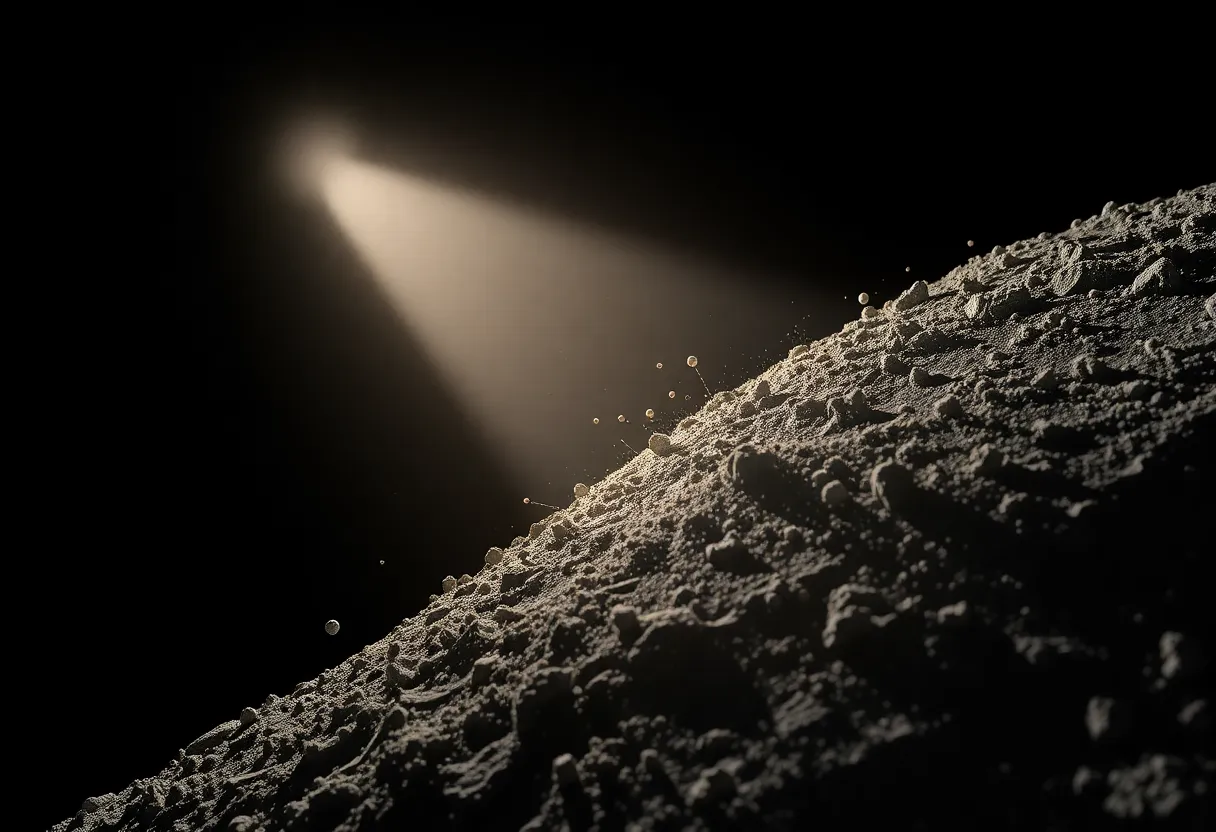
On Earth, dust is often rounded by water and biology. On the Moon, you get a powder that behaves like a fluid in low gravity yet cuts like sandpaper when forced into moving parts. It also travels: electrostatic lofting and simple mechanical transport mean the stuff does not stay politely underfoot.
Why spacesuits hate dust more than spreadsheets suggest
A spacesuit is a portable spacecraft: pressure boundary, thermal control, communications, life support, mobility. Each of those functions depends on interfaces—wrist bearings, waist bearings, glove disconnects, helmet seals, valves, umbilicals, and layers of garments that must remain reliable after repeated cycles.
Dust attacks reliability in boring, expensive ways:
- Seal wear and leakage risk: abrasive particles at a sealing surface can create micro-gouges. The failure mode is not always dramatic; it is an increased probability of leak paths over time.
- Increased torque and binding: joints that need to move smoothly for eight hours can stiffen when grit works into tolerances.
- Optical degradation: visors and lights matter for safety. Scratching and coating damage are not cosmetic on the Moon.
- Thermal and contamination coupling: dust changes radiative properties and can interfere with sensors or connectors in ways that are hard to diagnose quickly.
Radiation, by contrast, is dangerous but often addressable with a layered strategy: limit EVA duration, schedule for solar conditions when possible, use shielding mass where it helps most, and retreat to a hardened habitat. Dust follows you back to the airlock.
Radiation is catastrophic; dust is cumulative
It is useful to separate acute risk from chronic engineering pain. A severe solar particle event is the kind of problem that mission rules and monitoring exist to mitigate—still scary, still uncertain, but framed as an event class.
Dust is chronic. Every EVA deposits material into interfaces. Every brush-cleaning scheme risks redistribution rather than elimination. Every new suit iteration has to answer the same question: how do we keep the pressure boundary trustworthy after N dirty cycles?
That is why program-level discussions often treat dust as a “systems” problem, not a janitorial one. It intersects with suit maintenance, habitat cleanliness, tool design, rover ingress protocols, and even how you stage equipment so that the clean-ish path remains clean-ish.
Health and habitat: dust is not only a mechanical villain
Lunar regolith includes fine fractions that can become aerosolized during handling—especially if crews disturb soil aggressively or if cleaning methods rely on airflow and agitation. The Apollo experience included “lunar hay fever”-type irritation reports; modern planning treats particulate control as part of occupational health, not just housekeeping. A suit’s exterior can become a transport vector: what clings to fabric and hardware outside can become what you fight to keep out of cabin air systems.
That linkage matters for Artemis because habitats are tight volumes with limited filter capacity and high stakes for any respiratory or allergic response. Radiation shielding does not solve a particulate problem in the cabin; ventilation architecture, deposition surfaces, and disciplined ingress protocols do.
South polar operations add complications—not simplifications
Artemis interest in the lunar south pole introduces lighting extremes and thermal gradients that change how crews move, how long tasks take, and how often they transition through interfaces. Long shadows and low sun angles can make visual inspection of suit contamination harder, not easier. Cold hardware can change tribology: materials feel different, seals behave differently, and gloves stiffen. Dust does not care about your timeline; it simply keeps accumulating while the work gets slower.
Comparison point: why “Mars dust” is a different screenplay
Martian dust has its own nightmares (oxidizers, fines, electrostatic effects), but lunar dust is often described as more aggressively abrasive in mechanical contexts because of the particle shapes and the absence of erosive rounding processes familiar on wet worlds. The lesson is not that one environment is “worse” in every dimension—it is that suit programs must optimize for the specific failure physics of the destination. A lunar suit is not a Mars suit with a different paint job.
Apollo lessons and Artemis scale
Apollo proved humans could work on the lunar surface, but the operational tempo was limited compared to what Artemis ambitions imply. Short EVAs, fewer cumulative cycles, and a different maintenance philosophy. Artemis-era suits are asked to support longer campaigns, more partners, more complex tasks, and a sustainability narrative—reuse, repair, and rational logistics.
At that scale, “we wiped it down” stops being an adequate engineering closure. You need predictable wear budgets, inspection methods, and design margins that assume dust is always trying to migrate from the outside world to the places you cannot tolerate it.
That migration is why dust competes with radiation for attention in suit design reviews: radiation risk is often managed at the mission architecture level, while dust risk shows up as repeated micro-events at every interface a human touches.
How engineers test for a problem you cannot fully simulate
Earth labs use lunar regolith simulants, vacuum chambers, thermal plates, and mechanical rigs to approximate EVA wear. Simulants are useful—and also famously imperfect. Particle size distributions, mineralogy, electrostatic behavior in vacuum, and the way dust clumps after repeated mechanical working all influence outcomes. The engineering response is not “simulate perfectly,” it is “bound the risk with conservative margins and update as flight data arrives.”
That is why dust feels harder than radiation in program management terms: radiation models start from physics cross-sections and shielding geometry. Dust models start from messy empirical wear, operator variability, and the reality that a single bad ingress day can redistribute particles in ways a chart did not predict.
What mitigation actually looks like (conceptually)
There is no magic fix—only layered mitigation. Concepts that show up repeatedly in serious discussions include:
- Airlock choreography: staged cleaning, negative pressure gradients, vibration or brushing stations, and careful tool transfer to keep the habitat side cleaner.
- Materials and coatings: surfaces engineered to shed particles or resist scratching; trade-offs with mass, durability, and thermal performance.
- Modular wear items: gloves and other high-contact components designed for swap rather than heroic refurbishment in a cave on the Moon.
- Operational rules: limits driven by inspection findings, not just calendar time—because dust exposure is workload-dependent.
None of that removes radiation concerns. It simply acknowledges that radiation is not the only long-term adversary—and in the daily life of a suit, dust may be the more persistent gremlin.
Why the headline matters for public understanding
Space storytelling loves invisible killers: radiation, vacuum, temperature extremes. Those are real. But audiences underweight the mundane failure modes that decide whether a lunar base is operable: clogged mechanisms, scratched seals, degraded visibility, and maintenance hours that eat mission time.
If Artemis is going to be more than flags and footprints, dust management is as much a part of survival as shielding. Radiation sets the limits of human exposure. Dust sets the limits of equipment exposure—and on the Moon, your equipment is your life support.
So yes: protect astronauts from radiation. But do not underestimate the way lunar grit turns a spacesuit from a marvel of engineering into a high-maintenance instrument. On a long enough timeline, the dust does not scream—but it still wins if you ignore it.
The Artemis wardrobe conversation is often framed as fashion for astronauts: mobility, comfort, cameras, cool helmets. Underneath the aesthetics is a maintenance story. The suit that moves beautifully on day one still has to remain trustworthy on day thirty after repeated contact with an environment that is, quite literally, crushed rock flour. Radiation commands respect in headlines. Dust commands respect in the shop—and on the Moon, the shop is wherever you are standing.
Treat lunar dust as engineering debt that accrues every time a boot touches regolith—and you will understand why suit teams lose sleep over seals, not just solar storms.