Zapier Webhooks vs Polling: Where Event-Driven Automation Still Breaks

Sam Rivera
April 7, 2026
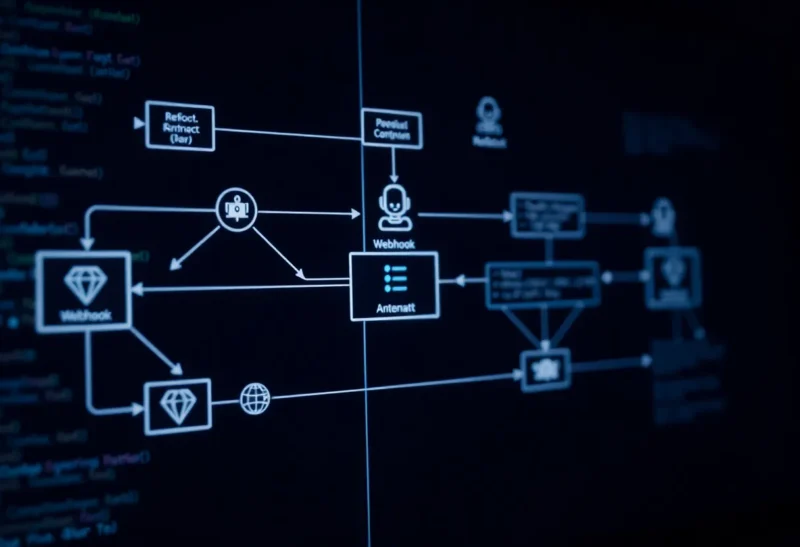
Zapier sells the dream of instant reactions: a form fills, a row appears, a deal closes—and your automation fires before you finish sipping coffee. Under the hood, “instant” is a negotiation between apps, protocols, and the platform’s own delivery guarantees. Sometimes the path is a webhook, a push notification straight from the source. Other times it is polling, a robot tapping the window every few minutes asking, “Anything new?” Both work until they do not, usually at the worst possible hour.
This article compares webhook-driven and polling-style automation in Zapier-shaped workflows—not to crown a winner, but to show where each breaks, how retries and duplicates sneak in, and what to design around if your business truly depends on timely events. Think of it as a field guide for the gray zone between demo and production.
Definitions without the jargon fog
A webhook is an HTTP callback: when something happens in App A, App A sends a signed request to a URL you control—or to Zapier’s ingest endpoint—with a payload describing the event. The model is push: work begins when the world changes.
Polling means Zapier (or a middle layer) periodically asks App B’s API for new records or changes since a cursor. The model is pull: work begins when the poller notices a delta, which might be seconds—or many minutes—after reality moved on.
Zapier’s instant triggers lean on webhooks where partners support them. Where partners do not, schedules and polling intervals fill the gap. The UX may still say “instant” in marketing copy; your logs tell the truth. Translation for operators: read each app’s trigger documentation for the actual mechanism, note any caveats about enterprise vs personal tiers, and test from a sandbox tenant before you wire money-moving steps.
Where webhooks feel magical—and why magic is conditional
Webhooks shine when the upstream system emits well-formed events, retries sensibly on failure, and documents versioning. You get low latency, fewer wasted API calls, and a clean story for scaling: you pay work proportional to activity, not to clock ticks.
The cracks appear around reliability semantics. If your endpoint returns a 500 because a downstream database hiccupped, does the sender retry? Exponentially? Forever? If retries are aggressive, you may process duplicates unless your handler is idempotent. If retries are timid, you may silently drop edge cases the vendor considers “your fault.” Zapier’s side can also time out waiting for your chain of steps; long-running transformations punish webhook flows more than they punish batched jobs.

Where polling is sneaky-good—and sneaky-bad
Polling is coarse but honest. You can often reconstruct state by diffing lists, which helps when webhooks are flaky or unavailable for a legacy API. Polling also plays nicer with strict corporate networks that fear inbound HTTP from random SaaS IPs—there is nothing to punch through if your automation reaches out on a schedule.
The downside is latency tied to the interval and API rate limits. Poll too often and you burn credits or get throttled. Poll too rarely and “real-time” customer experiences become “eventually.” Worse, some APIs return partial data unless you know pagination tokens; a naive poll can miss records that arrived between pages, especially under high churn.
The duplicate event problem
Both models duplicate. Webhook retries plus your own replays multiply rows. Polling with weak cursors can double-count items if clocks skew or if the API’s “updated_at” field lies. The fix is not optimism—it is keys: store external IDs, enforce uniqueness, and design Zaps (or post-Zap scripts) so a second identical event is a no-op.
Zapier’s built-in filters help, but filters are not a database constraint. If you need hard guarantees, land events in a system you own first, dedupe there, then fan out.

Timeouts, step limits, and “instant” illusions
Webhook-triggered Zaps still execute step-by-step with platform timeouts. A chain that calls five APIs sequentially may exceed practical limits when one partner slows down. Polling triggers spread load more predictably but can batch surprises: fifty new rows arrive in one poll, and your Zap tries to sprint through them with the same fragile chain.
Breaking work into a queue—Zap to enqueue, worker to process—is the adult version. It adds moving parts, yet it is how you graduate from demos to operations.
Ordering and causality
Webhooks do not promise global ordering across event types. “Invoice paid” might arrive before “customer updated,” even if business logic says otherwise. Polling ordered by timestamp helps only if timestamps are trustworthy and monotonic. If your automation assumes causal order, model it explicitly: state machines, deferred actions, or reconciliation jobs that run on a timer.
Security: shared secrets and replay attacks
Webhook endpoints must verify signatures, rotate secrets, and reject stale timestamps when vendors support it. Treat unexpected payloads as hostile: validate shape, size, and schema before touching downstream systems. For polling, rotate API keys on the same discipline you use for production databases—especially when contractors touch the Zap—and audit scopes after every integration change so orphaned permissions do not linger.
Polling shifts risk to stored API tokens—often long-lived—so scopes and vaulting matter. Neither model removes the need for least privilege; they just move where the keys live.
Choosing a pattern in practice
- Prefer webhooks when the provider’s delivery semantics are documented, retries are sane, and you need sub-minute reactions.
- Prefer polling when APIs are legacy, webhooks are admin-only enterprise features, or your environment blocks inbound callbacks.
- Hybridize by using webhooks for alerts and nightly polling for reconciliation—catching anything the push path dropped.
Plans, tasks, and the hidden cost of “cheap” polling
Zapier bills in tasks; polling can inflate task counts when each poll fans out to multiple downstream steps. A webhook might fire once per order; a poll might sweep dozens of unchanged rows unless you filter aggressively. Before declaring victory on a template, load-test with production-like volumes. The failure mode is not only money—it is throttling from upstream APIs once your poller scales with success.
CRM and support desk realities
Customer objects rarely update atomically. A ticket’s tags might change before its status; a deal might move stages while custom fields lag replication. Webhooks keyed to “record updated” can arrive out of business order. Polling sorted by “last modified” still races if the API rounds timestamps. Automations that post public replies or financial entries need guards: only act when required fields stabilize, or when a second confirmation poll matches.
Observability: treat Zaps like services
Log external IDs at ingress. Alert on error rates per step, not only on Zap-off notifications. For webhooks, persist raw payloads briefly—redacted for privacy—so you can replay safely after fixing a bug. For polling, track high-water marks in a store you control, not just in Zapier’s memory, so rebuilding after accidental edits does not rewind time.
Idempotency keys and human expectations
Business stakeholders hear “instant” and picture milliseconds. Engineers hear “at least once delivery” and picture duplicates. Close that gap in writing: define acceptable latency, define duplicate handling, and define who owns reconciliation when the source system lies. The webhook-versus-polling debate is easier once everyone agrees which failures are operational incidents versus expected edge cases.
When to leave Zapier for code—or a queue
If your webhook handler needs branching logic, large transforms, or durable retries, Zapier may still be the right front door—but not the whole house. A small Cloud Function or worker with a real queue turns “automation” into software you can test. The break point is not snobbery; it is incident frequency. If you wake up twice a month to partial syncs, you have already paid the engineering tax in sleep.
Vendor webhooks that pause in the real world
Even reputable SaaS platforms pause webhook delivery during incidents, replay bursts after recovery, or silently disable endpoints that fail health checks too often. Your Zap might look fine while the provider queues a backlog that arrives as a thundering herd. Design handlers to shed load gracefully: respond quickly with 200 after enqueueing work, and process asynchronously where the platform allows. Slow synchronous chains are where “instant” webhooks go to die.
Mapping patterns to Zapier primitives
Instant triggers map to webhook paths when available; otherwise, they are marketing language for “faster than the slowest poll we offer.” Scheduled triggers are honest polls. Multi-step Zaps with Paths duplicate complexity—each branch still shares the same timeout budget. When in doubt, prototype with logging first: measure arrival time variance across a week of real traffic before you promise SLAs to a customer-facing team.
Closing
Webhooks versus polling is not a moral contest; it is a reliability contract. Push is fast until retries and timeouts bite. Pull is simple until intervals and limits lie about how fresh your data is. Build for duplicates, plan for disorder, and measure end-to-end latency with the cynicism of someone who has seen a CRM swear a record updated when it did not. The automation that survives contact with customers is the one that assumes the network is not your friend—it is a busy coworker who means well and occasionally ghosts you.