Why Drone Cameras Still Beat Smartphones for Aerial Footage in 2026

Finn Mercer
March 15, 2026

Your smartphone can shoot 4K, run computational HDR, and fit in your pocket. So why do serious creators still reach for a dedicated drone when they want aerial footage? The answer isn’t just resolution or gimbals—it’s physics, control, and the kind of shots that phones simply cannot get. If you’ve ever tried to get a usable aerial shot with a phone, you’ve probably run into the same walls: shaky footage, limited altitude, and a device that was never meant to fly. Here’s why that hasn’t changed in 2026, and why dedicated drone cameras still win.
The Physics Problem Smartphones Can’t Solve
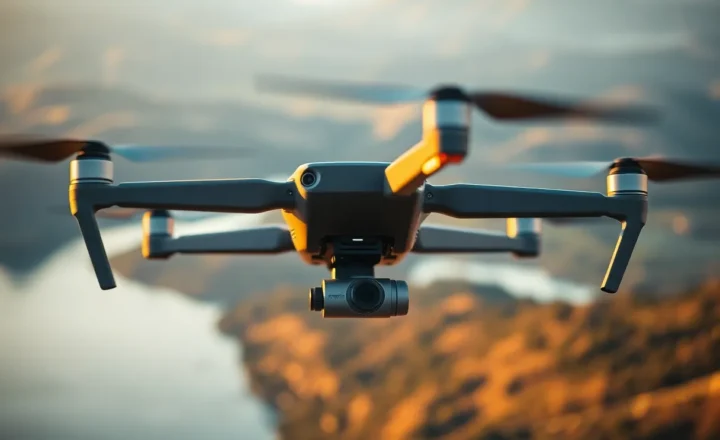
Smartphones are getting better at “aerial” tricks: throw them in the air for a slow-mo burst, strap them to a selfie stick, or use a tiny accessory drone that carries the phone. But none of that changes a fundamental limit: to get a true bird’s-eye view, the camera has to be up there, and it has to stay there steadily. Phone-on-a-stick and phone-toss gimmicks give you a few seconds of unstable, low-altitude footage. A real drone gives you minutes of stable flight at dozens or hundreds of meters, with a dedicated camera and gimbal built for that job.
Drones are designed for aerial work. Their sensors are tuned for the kind of light and motion you get in the sky; their gimbals compensate for wind and movement in three axes. A phone camera is built for hand-held, arm’s-length use. When you try to repurpose it for the sky, you’re fighting the design. In 2026, that gap hasn’t closed. Dedicated drone cameras still offer better dynamic range in bright sky-and-ground scenes, less rolling shutter distortion when the craft moves, and optics that prioritize sharpness at distance rather than close-up selfies.
Sensor Size, Optics, and the Sky
Phone cameras have improved enormously, but they’re still tiny-sensor systems optimized for close subjects and computational tricks. In the air, you’re often shooting landscapes, architecture, or wide scenes where the sky and the ground fight for exposure. Dedicated drone cameras—even the ones on consumer drones—typically offer better handling of that contrast, and their lenses are designed for infinity focus and sharpness across the frame at distance. Phone lenses are tuned for the opposite: near-field sharpness and portrait-style blur. When you’re hundreds of feet up, that mismatch shows.
Rolling shutter is another issue. When the drone moves or rotates quickly, a phone sensor reading line-by-line can produce severe skew and jelly effect. Drone cameras often use sensors and readout patterns that minimize this, and the gimbal does the rest. For smooth, professional-looking aerial video, that combination still beats a phone strapped to a cheap frame.
Control and Repeatability
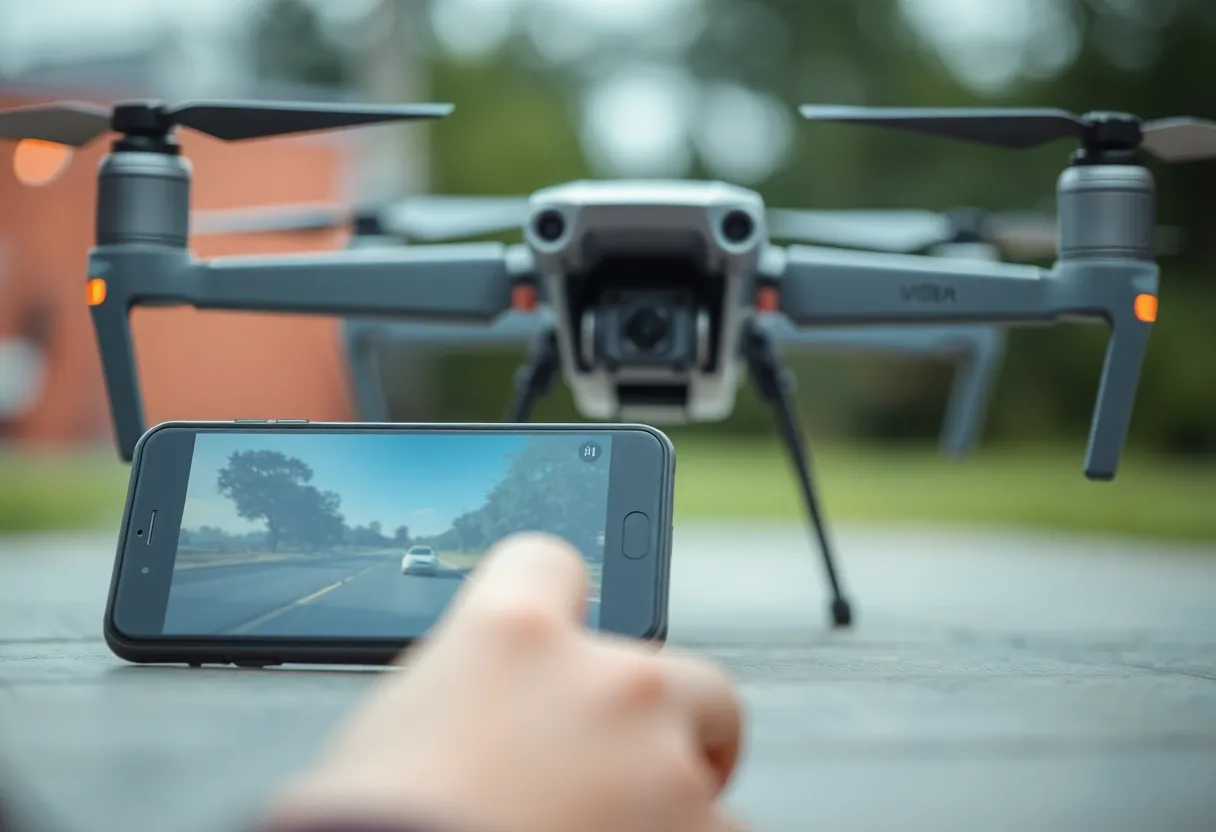
When you fly a proper drone, you’re not just “getting a high angle.” You’re controlling altitude, speed, and framing in real time. You can orbit a subject, track a road or river, or hold a locked position while the light changes. That level of control doesn’t exist when you’re tossing your phone or relying on a tiny follow-me drone with a phone mount. Those solutions are either one-shot stunts or limited to simple “follow” modes that rarely give you the exact composition you want.
Repeatability matters too. If you’re building a brand, a documentary, or a real estate portfolio, you need shots you can get again and again. Drone flight paths can be programmed and repeated; lighting and time of day can be matched. With a phone-based hack, every take is a gamble. In 2026, the gap between “I got something cool once” and “I can deliver this shot on demand” still favors dedicated drone cameras.
Battery and Flight Time
Real camera drones are built around flight time. You get 20 to 40 minutes on a charge depending on the model, and you can carry spare batteries. That’s enough to scout, set up, and nail the shot. Phone-carrying contraptions and toy drones, by contrast, often give you five to ten minutes and put your primary communication device at risk. When you’re on location and the light is right, you need multiple attempts and the freedom to adjust. Dedicated drones are built for that workflow; phones in the sky are not.
When Phones Are Good Enough (And When They’re Not)
Phones have gotten genuinely good for ground-level and low-angle video. For vlogs, walkthroughs, and social clips, a modern smartphone is often the right tool. The issue is specifically aerial footage—the kind that requires sustained, stable flight at meaningful altitude. For that, a dedicated drone still wins on stability, control, and the ability to use a sensor and lens built for the use case.
If your needs are casual—a quick vertical clip for Instagram, a single overhead shot for a personal project—then phone tricks or a cheap phone-carrying drone might be enough. But if you care about quality, composition, and the ability to get the same shot again, a real drone with a proper camera is still the answer. The market has spoken: pros and serious hobbyists haven’t switched to phones for aerial work because the tools aren’t interchangeable yet. Think of it like this: your phone can take a decent photo of a document, but you wouldn’t use it to replace a flatbed scanner for a print shop. Same idea—different tools for different jobs.
Regulation and Practicality
Drone regulations in most countries assume a dedicated aircraft with a visible pilot and, in many cases, registration. Flying a phone on a small drone or throwing it in the air doesn’t change the rules; in some places it complicates them. Dedicated drones are built to comply with geofencing, altitude limits, and remote ID where required. They’re also built to be flown repeatedly without risking a $1,000 phone. The “phone as drone camera” idea is fun until the first hard landing or flyaway. Losing a drone hurts; losing your primary phone and all its data is a different level of pain.
From a pure workflow standpoint, dedicated drones also win. You don’t have to unmount your phone, reconnect to cellular, or worry about your camera draining the same battery as your maps and communication. The drone is a dedicated tool that does one thing well. In 2026, the practical choice for anyone who regularly needs aerial footage is still a purpose-built drone. The cost of entry has dropped—decent camera drones are available at mid-range prices—and the quality and reliability gap over phone-based solutions remains real. If you’re serious about aerial video, the right move is to invest in the right tool.
The Bottom Line
Smartphones are incredible all-rounders. They’re not, however, a replacement for a proper drone when it comes to aerial footage. Physics, control, repeatability, and regulation all favor a dedicated drone camera in 2026. Use your phone for everything it’s great at—but when you need the view from above, reach for the drone.