No Smartphone for 7 Days: What Happens to Your Attention

Sage Collier
March 15, 2026

I put my smartphone in a drawer for a week. Not as a stunt—I wanted to see what would actually change when the default option wasn’t “check the device.” Here’s what happened to my attention, my habits, and the things I’d been telling myself I needed the phone for.
Day One: The Reach
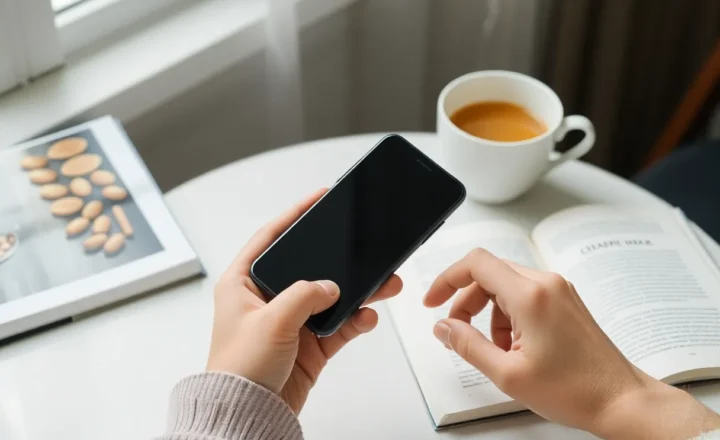
The first thing I noticed wasn’t boredom; it was the physical habit. My hand kept moving to my pocket or the spot on the desk where the phone usually sits. Nothing was pulling me; there was no notification. It was pure muscle memory—the reach that had been reinforced hundreds of times a day. By the end of day one, I’d “reached” for the phone dozens of times without thinking. That told me something: a lot of phone use isn’t driven by a conscious desire to check something. It’s a default action that fills small gaps—waiting for the kettle, standing in a queue, sitting down at a desk. Without the device, those gaps stayed open. I didn’t always fill them with something “productive”; sometimes I just stood there or looked out the window. But the gaps became visible. I’d been masking them with the phone without realising how often they occurred.
Days Two and Three: What I Actually Needed
I’d assumed I’d miss maps, messages, and the camera. I did miss them—but not equally. Maps were the hardest. I had to plan routes in advance or ask for directions. That was inconvenient but not impossible; it just required a bit of forethought. Messages were different. I used a laptop for email and a tablet for the one messaging app I couldn’t avoid (work). So I wasn’t offline; I was just not carrying the internet in my pocket. The result: I checked messages in batches instead of in real time. Nothing broke. Some people got slower replies; nobody seemed to mind. The camera was the other real loss—I missed snapping a few moments. But I also noticed how often I’d used the phone as a way to “capture” an experience instead of just having it. Without the camera, I had no option but to be there. Whether that was better or worse depended on the moment; the point is that the default changed.
The Middle: Attention Without a Drain
By day four, the reach was less frequent. By day five, I’d stopped expecting the phone to be there. What surprised me was the effect on sustained attention. I wasn’t suddenly able to focus for hours—I’ve never been that person. But the little checks that had punctuated reading, writing, or conversation dropped away. There was no “I’ll just see who texted” or “I’ll quick check the weather.” Those micro-decisions had been costing something: not huge chunks of time, but a constant low-level fragmentation. Without the phone, I had fewer reasons to leave the current task. Again, that didn’t make me a productivity machine. It just made the cost of the phone’s presence more visible. The phone had been a standing invitation to switch context; without it, the invitation wasn’t there.
What I Didn’t Miss
Social media, news feeds, and “quick” lookups were easier to let go than I’d expected. I’d told myself I needed to stay informed and connected. In practice, most of what I’d been checking was repetitive or forgettable. When I came back to the phone after the week, I scrolled through a few days of feeds and realised I hadn’t missed anything that mattered. The FOMO I’d anticipated didn’t really show up. What showed up instead was a clearer sense of what I’d been using the phone for: not for urgent information, but for something to do when I had nothing to do. That’s not inherently bad—but it’s different from “staying connected” or “staying informed.” The experiment made the gap between the story I told myself and the actual behaviour harder to ignore.
Coming Back
Reintroducing the phone was stranger than putting it away. For a day or two, I felt the old pull: check, check, check. I had to consciously leave it in another room or turn off notifications for a while to keep the new baseline. I didn’t “quit” the phone; I still use it. But the experiment changed the default. I’m more aware of the reach, the gaps, and the difference between “I need to check something” and “I have nothing to do and the phone is right here.” I don’t think everyone should do a full week without a smartphone—for many people, that’s not practical or desirable. But even a day or two, or just paying attention to how often you reach for the device without a clear reason, can make the habit visible. And once you see it, you can choose a bit more deliberately what you want that default to be.
Sleep and the Last Check
One change I hadn’t predicted: the last check of the day disappeared. I’d gotten into the habit of a final scroll or message check before turning off the light. Without the phone, there was no device by the bed. I didn’t measure my sleep with a tracker, so I can’t claim better sleep—but the ritual of “one more look” was gone. That might be the single habit that’s easiest to change without giving up the phone entirely: not taking it to bed, or putting it in another room an hour before sleep. The week without the phone made that ritual obvious; for a lot of people, changing just that part could shift the relationship with the device without a full detox.
The Takeaway
Seven days without a smartphone didn’t fix my attention or make me a different person. It showed me how much of my phone use was habit rather than need, how many small gaps I’d been filling with the device, and how much of “staying connected” was really just having something to do. If you’re curious what would happen to your attention without the phone, you don’t have to do a week—but you might find that the reach is more automatic than you think, and that the gaps, once visible, are worth noticing.