Why Wi-Fi Is Called Wi-Fi—And What It Tells Us About Tech Naming

David Shaw
March 15, 2026
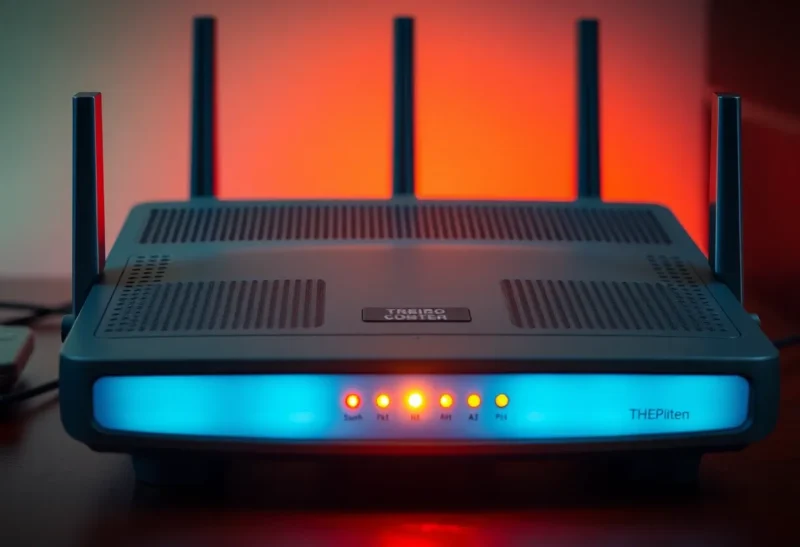
You see the word dozens of times a day: on your router, your phone, the coffee shop sign. “Wi-Fi” is so baked into the language that it’s easy to forget it was ever a brand, a piece of marketing, or the subject of a naming debate. But the story of how wireless networking got its friendly, memorable name says a lot about how tech companies name things—and why some stick while others vanish.
The Technical Name Nobody Wanted to Say
Before “Wi-Fi,” the technology had a name only an engineer could love: IEEE 802.11. The Institute of Electrical and Electronics Engineers (IEEE) had defined a family of standards for wireless local area networks (WLANs), and 802.11 was the designation. It was precise, correct, and completely unsellable. No one was going to ask the salesperson for “an 802.11b card” in a way that felt natural, and no consumer brand wanted to lead with a string of numbers and letters.
The “802” comes from the IEEE’s project for local area networks, and the “.11” was simply the eleventh working group in that project. So 802.11 was bureaucratic, accurate, and utterly unsexy. When the first consumer products started shipping in the late 1990s, vendors had to explain to customers that this new “wireless” feature was based on something called 802.11. Retailers and advertisers needed a handle that fit on a box and in a 30-second spot.
By the late 1990s, the technology was real: you could send data over radio waves without cables. Apple had introduced AirPort for the iBook; other vendors had their own branded solutions—each with a different name. What was missing was a single, simple name that meant “this device talks wirelessly to your network” and that every company could use. The industry needed something that sounded like a technology, not a part number. Without a shared consumer-facing name, wireless networking would stay in the realm of early adopters and IT departments.
Where “Wi-Fi” Actually Came From
The Wi-Fi Alliance—then called the Wireless Ethernet Compatibility Alliance (WECA)—hired the branding firm Interbrand to come up with a name. Interbrand was the same company that later helped coin names like “Prozac” and “Compaq.” Their job was to create a consumer-friendly term that could sit alongside “Ethernet” and “Bluetooth” as a recognizable standard. The goal wasn’t to describe the technology in detail; it was to give the industry a single word that could go on packaging, ads, and store shelves.
The result was “Wi-Fi.” A common myth is that it stands for “Wireless Fidelity,” a play on “Hi-Fi” (high fidelity). The Alliance has said that’s not true: “Wi-Fi” was never an acronym. It was a pun-friendly, easy-to-say brand that evoked “wireless” without spelling it out. The “Wi” suggested “wireless”; the rest was rhythm and memorability. “Wireless Fidelity” was a backronym invented later to give the name a plausible story. It stuck in the public imagination, but the creators were thinking about sound and recognition, not acronym expansion.
That backronym did something useful, though. “Hi-Fi” was already a familiar term for high-quality audio; linking “Wi-Fi” to “fidelity” gave people a mental hook. Even if the technical meaning was fuzzy, it suggested “this wireless stuff is legitimate and reliable.” So the myth persisted in part because it was good marketing—and the Alliance didn’t rush to correct it in every ad. The name did its job: it was short, it was friendly, and it didn’t require a whiteboard to explain.
Why the Name Worked
Good tech naming does a few things at once. It has to be short enough to say in a sentence, distinct enough to trademark, and vague enough to age well. “Wi-Fi” nailed all of that. It’s two syllables. It doesn’t lock you into a specific version of the technology—802.11a, b, g, n, ac, ax could all be “Wi-Fi.” And it didn’t try to describe the mechanism; it described the experience. You turn on Wi-Fi, you’re connected. The name didn’t need to explain radio or spectrum or modulation.
Contrast that with names that failed or aged poorly. “Wireless Ethernet” was accurate but clunky. “WLAN” was for specialists. “Wi-Fi” was something you could put on a sticker and have a non-technical person understand: this thing does wireless. That’s why it spread from laptops to phones, watches, cars, and smart home gear. The name scaled because it never promised more than “wireless connectivity here.”
Another factor: the Wi-Fi Alliance didn’t just invent the name; they certified products. The “Wi-Fi Certified” logo meant interoperability. So “Wi-Fi” wasn’t just a word—it was a promise that your laptop’s wireless would work with your router. That combination of a friendly name and a clear certification program made it easy for retailers and consumers to trust the term. When you bought something with the Wi-Fi logo, you knew what you were getting. The name carried both branding and technical meaning.
What Tech Naming Gets Right (and Wrong)
The Wi-Fi story is a useful lens for other tech names. Bluetooth, for example, was named after a tenth-century king who united Scandinavian tribes—the idea was “uniting devices.” It’s quirky, memorable, and says nothing about frequency-hopping spread spectrum. USB is an acronym that stuck because it was short and backed by a single standard. “Cloud” is deliberately vague: it doesn’t say “someone else’s server,” it says “your stuff, somewhere else.” In each case, the name does emotional and practical work without getting stuck in implementation details.
Where naming goes wrong is when it’s too literal, too tied to one product, or too clever. Names that describe the exact technology can feel dated when the tech changes—imagine if we still called everything “802.11g” or “4G LTE” in casual conversation. Names that are inside jokes or acronyms only experts get don’t travel. And names that are too clever can backfire: they’re hard to spell, hard to say, or easy to confuse with something else. Wi-Fi worked because it was abstract, friendly, and owned by an alliance that could license it and keep the meaning consistent. It became the default word for “wireless internet” in many languages, even though strictly speaking it’s the brand for a set of IEEE standards.
There’s also a lesson about who names things. IEEE created the standard; Interbrand and the Alliance created the consumer face. The same split happens elsewhere: technical bodies define how things work, while marketers and industry groups define how we talk about them. When those two align—when the technical standard is solid and the name is sticky—you get a term that outlives its original context. “Wi-Fi” will probably still be in use when 802.11 has evolved through several more letter suffixes, because the name was designed to be version-agnostic from the start.
The Takeaway
So the next time you tap the Wi-Fi icon, you’re using a name that was focus-grouped and trademarked to be simple and sticky—not an acronym, not a technical term, just a two-syllable handle for “wireless.” That’s tech naming at its best: invisible until you look, and then a reminder that the words we use for technology are as much about marketing and memory as they are about engineering. The engineers gave us 802.11; the brand gave us a word we could all say. Both mattered. And the fact that we still say “Wi-Fi” instead of “wireless” or “WLAN” is a small proof that naming, done right, becomes part of the infrastructure we take for granted.