Indoor Air Quality Monitors: What the Sensors Actually Measure

Maya Chen
March 7, 2026
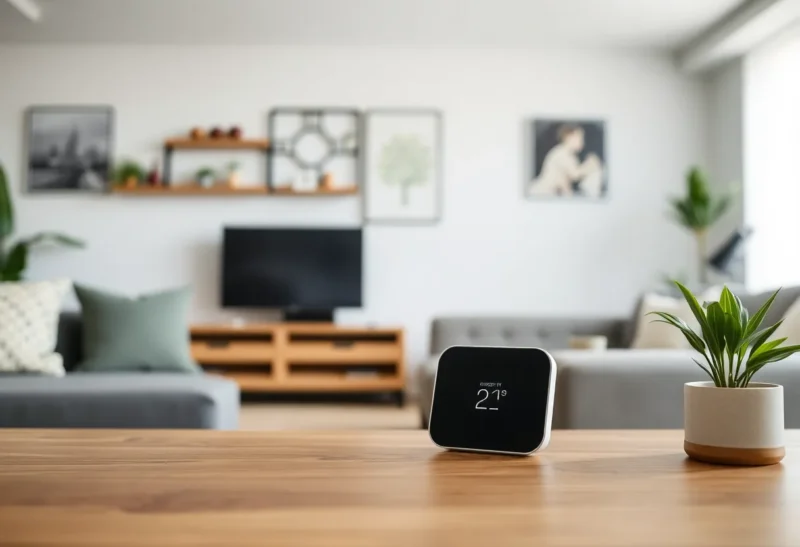
Indoor air quality monitors have gone from niche gadgets to common countertop devices. They promise to tell you what’s in the air you’re breathing—particulates, CO2, volatile organic compounds (VOCs), humidity, and sometimes more. But not all sensors are created equal, and the numbers on the screen can mean different things depending on what’s actually inside the device. Before you trust a reading or compare one monitor to another, it helps to know what the sensors measure, how they work, and where they fall short.
Particulate Matter (PM2.5 and PM10)
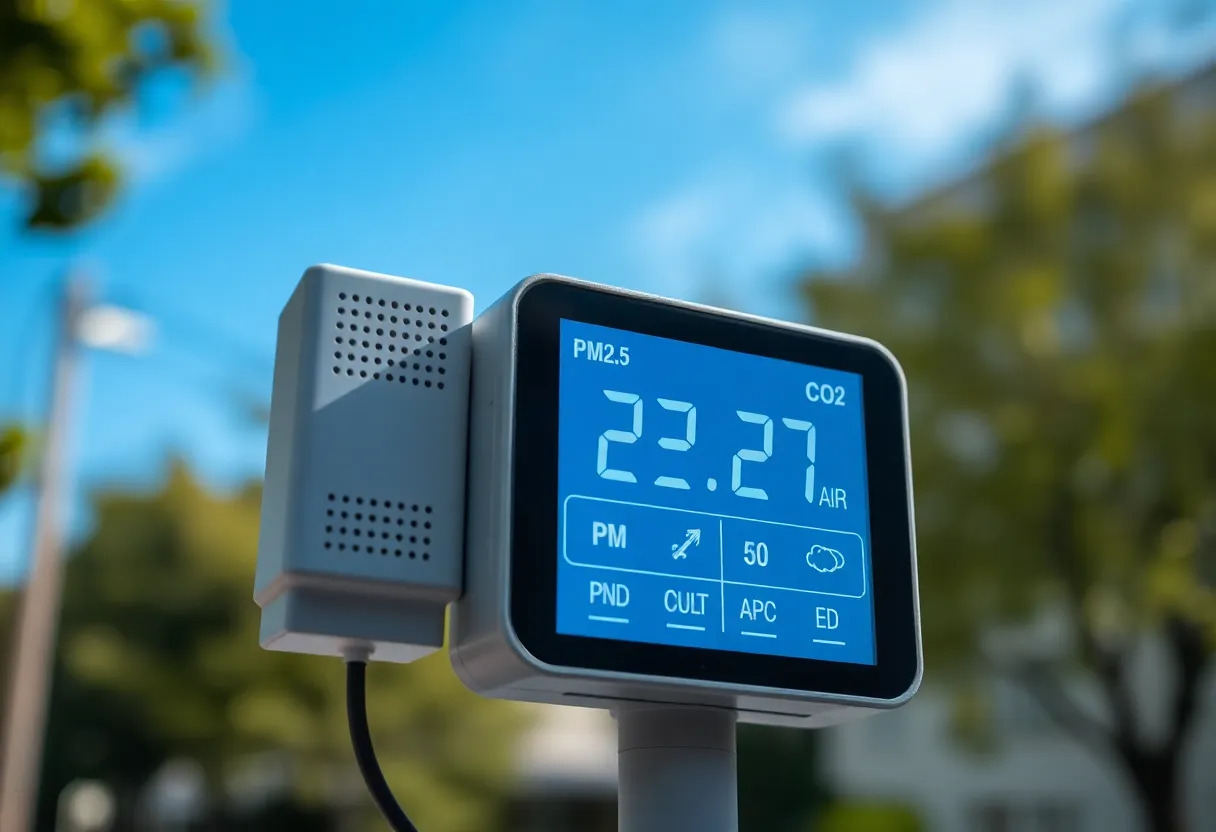
Many monitors report PM2.5—particles smaller than 2.5 micrometres—and sometimes PM10. These come from cooking, candles, outdoor pollution leaking in, and dust. Cheap devices often use a laser-scattering sensor: a laser shines through a small chamber, and a photodetector measures how much light is scattered by particles passing through. The sensor infers particle count and size from that scatter. It’s a proxy, not a direct weigh or count, and it can be thrown off by humidity, very fine or very coarse particles, and calibration drift. Still, for relative changes—”is it worse now than an hour ago?”—these sensors are useful. For absolute accuracy, you’d need something like a gravimetric or reference-grade monitor, which is lab equipment, not consumer gear.
PM10 is less commonly reported on consumer devices. When it is, it’s often derived from the same optical sensor with different size bins. Don’t assume the PM2.5 and PM10 readings are from separate physical sensors; check the spec sheet.
Carbon Dioxide (CO2)
CO2 is a proxy for ventilation. When people breathe in a closed room, CO2 rises. High CO2 (e.g. above 1000–1500 ppm) often means stale air and can correlate with drowsiness and reduced focus. Consumer monitors usually use NDIR (non-dispersive infrared) sensors: CO2 absorbs specific infrared wavelengths, so the sensor measures how much of that light is absorbed and infers CO2 concentration. NDIR is relatively accurate and stable over time, though it can drift and may need recalibration or fresh-air baseline settings. Some cheap units use “eCO2,” a derived estimate from VOC sensors rather than a real CO2 sensor—useful for trend but not a true CO2 reading. If the spec doesn’t say “NDIR” or “real CO2,” assume it’s estimated.
Volatile Organic Compounds (VOCs)
VOCs are a broad class of gases—cleaning products, paint, off-gassing furniture, cooking fumes. Consumer monitors typically use a metal-oxide (MOS) sensor. The sensor’s resistance changes when certain gases interact with it, but it’s not selective: it responds to many VOCs and sometimes other things (alcohol, humidity). So you get a combined “VOC” or “air quality index” that goes up or down, but you don’t know which compound or how much. These sensors also drift and can be sensitive to temperature and humidity. They’re good for “something changed—maybe open a window” rather than “your formaldehyde level is X.”

Temperature and Humidity
These are usually straightforward: a combined temp/humidity sensor (e.g. capacitive for humidity, thermistor for temperature). They’re accurate enough for comfort and for interpreting other readings—e.g. high humidity can affect particle sensors. Some devices use these to compute a “comfort” or “dew point” index.
What’s Often Missing
Consumer monitors rarely measure carbon monoxide (CO), radon, or specific gases like formaldehyde or nitrogen dioxide (NO2). Those require different sensor types and are more expensive or regulated. If you’re worried about CO or radon, you need dedicated detectors. Don’t assume your all-in-one air quality monitor covers them.
Calibration is another gap. Many sensors drift over months or years. Some devices support manual calibration (e.g. placing them outside in “clean” air to set a baseline); others don’t. Without that, absolute numbers can be off even if relative trends are still informative.
Placement matters too. A monitor on a bookshelf might not represent the air you’re breathing at your desk. CO2 and VOCs can vary by room and height. For a single room, one monitor is usually enough to see patterns; for a whole house, you might want several or to move one around to find problem spots. Avoid putting the unit right next to a window, a vent, or a source of particles (e.g. kitchen) if you want a representative reading for the rest of the space.
How to Use the Numbers
Treat readings as trends and triggers, not lab-grade data. If PM2.5 spikes when you cook or when wildfire smoke is outside, that’s useful. If CO2 climbs in your home office during the day, that’s a cue to ventilate. If the VOC index jumps after using a cleaning product, you know the sensor is responding. Use the monitor to learn patterns and improve habits—more ventilation, fewer sources of particulates or VOCs—rather than to hit a specific number. And when in doubt, open a window; real ventilation still beats any sensor.
If you’re comparing devices, look at the spec sheet for sensor types: NDIR for CO2, optical for PM2.5, and be wary of “eCO2” or “estimated” unless you’re only interested in relative changes. Reviews that test against reference equipment are rare but valuable. For most people, a monitor that gives you consistent, interpretable trends is enough—you’re not running a lab, you’re trying to breathe a bit better at home.
The Bottom Line
Indoor air quality monitors give you a window into what’s in your air, but the sensors have limits. PM2.5 is usually from optical scatter; CO2 is often real (NDIR) or estimated (eCO2); VOCs are a broad, non-specific signal. Use the readings to spot trends and improve ventilation, not as medical or regulatory data. Know what your device actually measures, and you’ll get more out of it.